Circadian Rhythms in Murine Ocular Tissues Including Sclera Are Affected by Neurobasal A Medium Preincubation and Mouse Strain, but Not Sex
Nemanja Milićević, Cristina Sandu, Etienne Challet, Teemu O. Ihalainen, Soile Nymark, Marie-Paule Felder-Schmittbuhl

TL;DR
This study shows that mouse strain and culturing conditions affect circadian rhythms in eye tissues, including the sclera, but not sex.
Contribution
The discovery of a novel circadian oscillator in the sclera and the effect of Neurobasal A medium and mouse strain on ocular rhythms.
Findings
Scraped posterior eye cups (PECs) exhibit circadian rhythms, indicating a novel oscillator in the sclera.
RjOrl:SWISS mice show higher amplitude rhythms in ocular tissues compared to C57BL/6J mice.
Neurobasal A medium preincubation alters rhythms in ocular tissues, but no sex differences were observed.
Abstract
Our understanding of ocular clocks has been profoundly advanced by the development of real-time recording of bioluminescence of PER2-luciferase (PER2::LUC) knock-in mouse explants. However, the effect of sex, mouse strain, and culturing conditions on ocular clocks remains unknown. Here, we studied the role these variables play on PER2::LUC bioluminescence rhythms of ocular tissues: retinas, corneas, and posterior eye cups (PECs). We also tested the hypothesis that the sclera contains a circadian oscillator by using scraped PECs as a proxy. Retinas, corneas, and intact and scraped PECs were obtained from male and female PER2::LUC knock-in mice maintained on either a pigmented C57BL/6J or albino RjOrl:SWISS background. PER2::LUC bioluminescence rhythms in ocular tissues were measured using a Lumicycle. We compared PER2::LUC bioluminescence rhythms between ocular tissues and found that…
Genes, proteins, chemicals, diseases, species, mutations and cell lines named across the full text — each resolved to its canonical identifier and authoritative record.
Click any figure to enlarge with its caption.
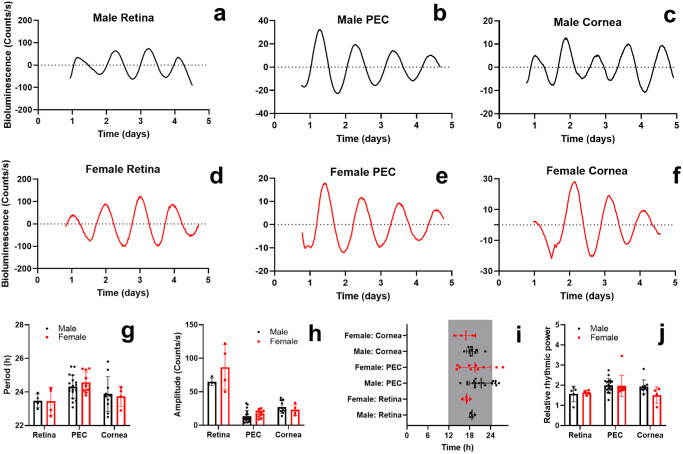 Figure 1
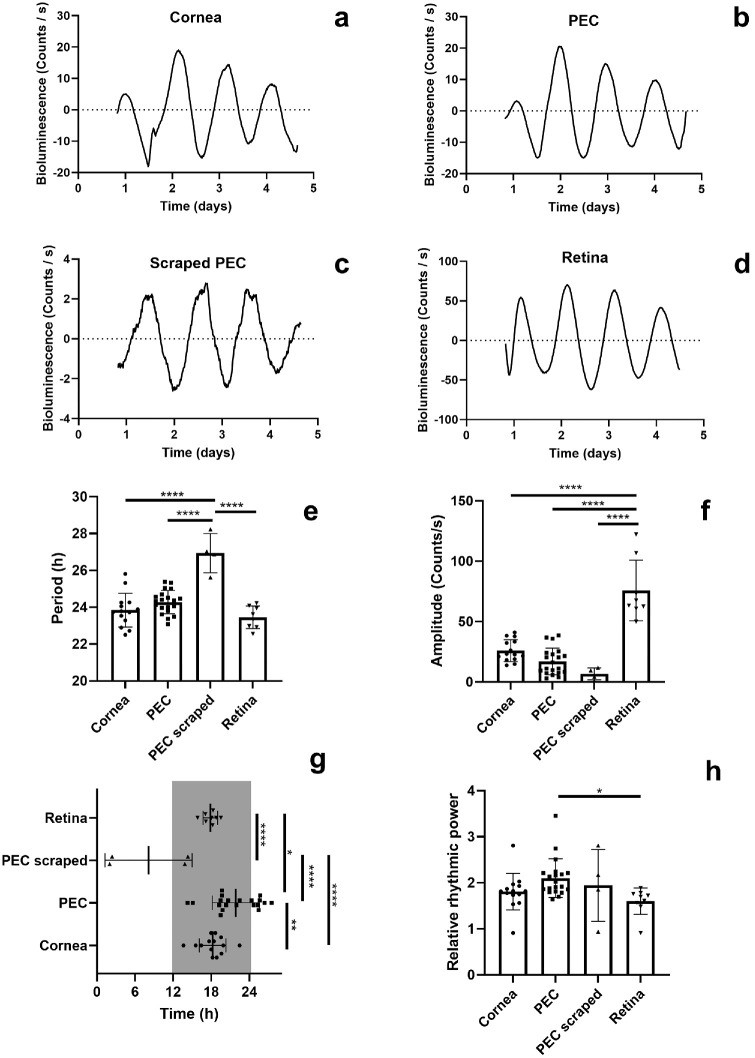 Figure 2
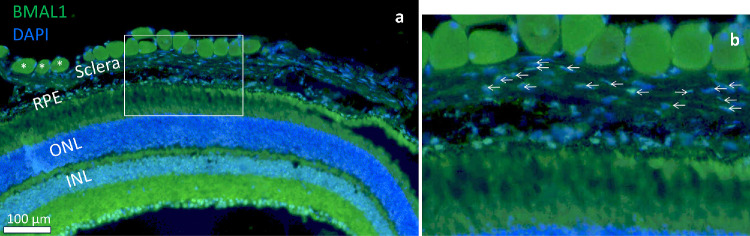 Figure 3
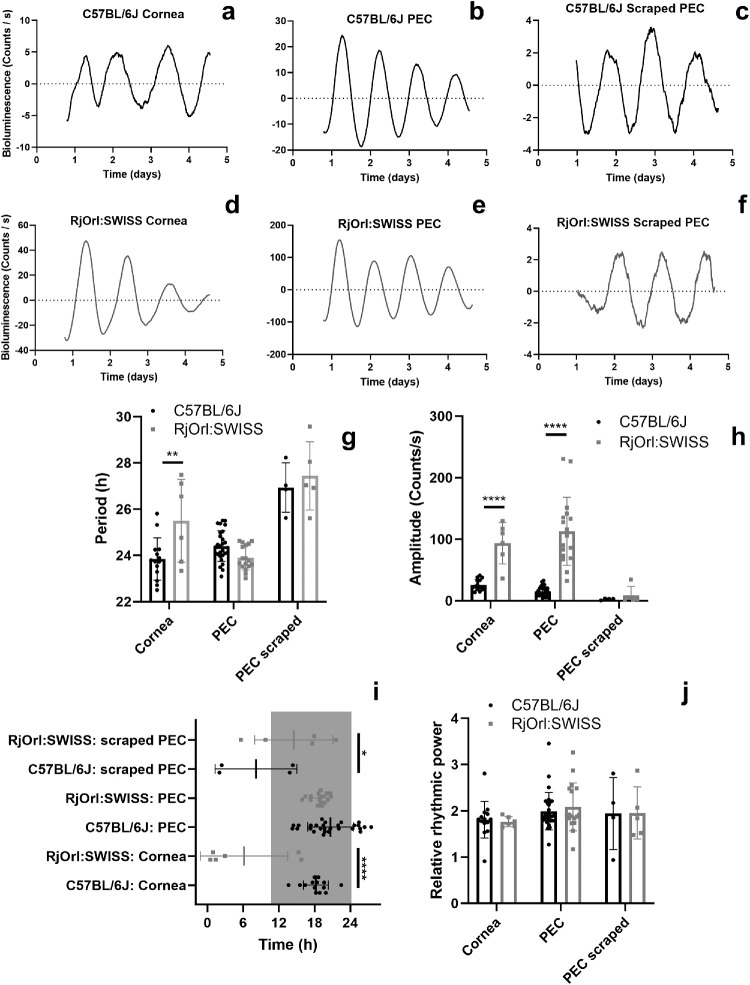 Figure 4
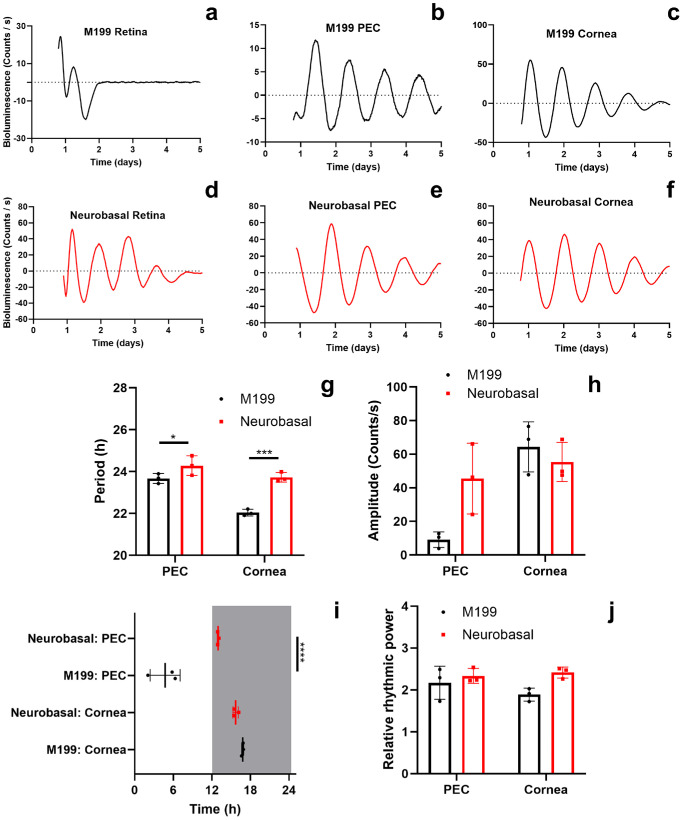 Figure 5
Peer Reviews
No public reviews on file for this paper yet. If you reviewed it on a platform where reviews are public (OpenReview, ICLR, NeurIPS, ICML), you can paste yours below so the community can read it here.
Videos
No videos yet. Explain this paper in a talk, walkthrough, or lecture? Add one.
Taxonomy
TopicsCircadian rhythm and melatonin · Photoreceptor and optogenetics research · Genetics, Aging, and Longevity in Model Organisms