Targeting ryanodine receptors with allopurinol and xanthine derivatives for the treatment of cardiac and musculoskeletal weakness disorders
Marco C. Miotto, Estefania Luna-Figueroa, Carl Tchagou, Laith Bahlouli, Steven Reiken, Haikel Dridi, Yang Liu, Gunnar Weninger, Andrew R. Marks

TL;DR
This paper explores using allopurinol and xanthine derivatives to improve muscle function by targeting ryanodine receptors, potentially treating heart and muscle weakness.
Contribution
The study identifies 4-oxopyrimidine as the minimal chemical motif for activating ryanodine receptors using xanthine derivatives.
Findings
Xanthine derivatives bind to and activate ryanodine receptors via a specific binding site.
4-oxopyrimidine is the minimal motif required for ryanodine receptor activation.
Allopurinol and xanthine derivatives show potential for treating muscle and heart diseases.
Abstract
Cardiac and skeletal muscle weakness are serious health problems resulting from hereditary or age-related diseases. We study the ryanodine receptors, proteins that play an essential role in cardiac and skeletal muscle contraction. Genetic variations in ryanodine receptors lead to debilitating and deadly diseases. Age-related changes in the expression or function of ryanodine receptors play a role in the development of heart failure and sarcopenia. Our aim is to develop drugs that bind to and improve the function of ryanodine receptors, resulting in improved cardiac and skeletal muscle contraction. Using cryo-EM, we determined the minimal chemical motif for compounds to bind to and activate ryanodine receptors, opening avenues to develop drugs for potential therapeutic use. Ryanodine receptors (RyRs) are intracellular Ca2+ channels essential for muscle contraction. Caffeine, a xanthine…
Genes, proteins, chemicals, diseases, species, mutations and cell lines named across the full text — each resolved to its canonical identifier and authoritative record.
Click any figure to enlarge with its caption.
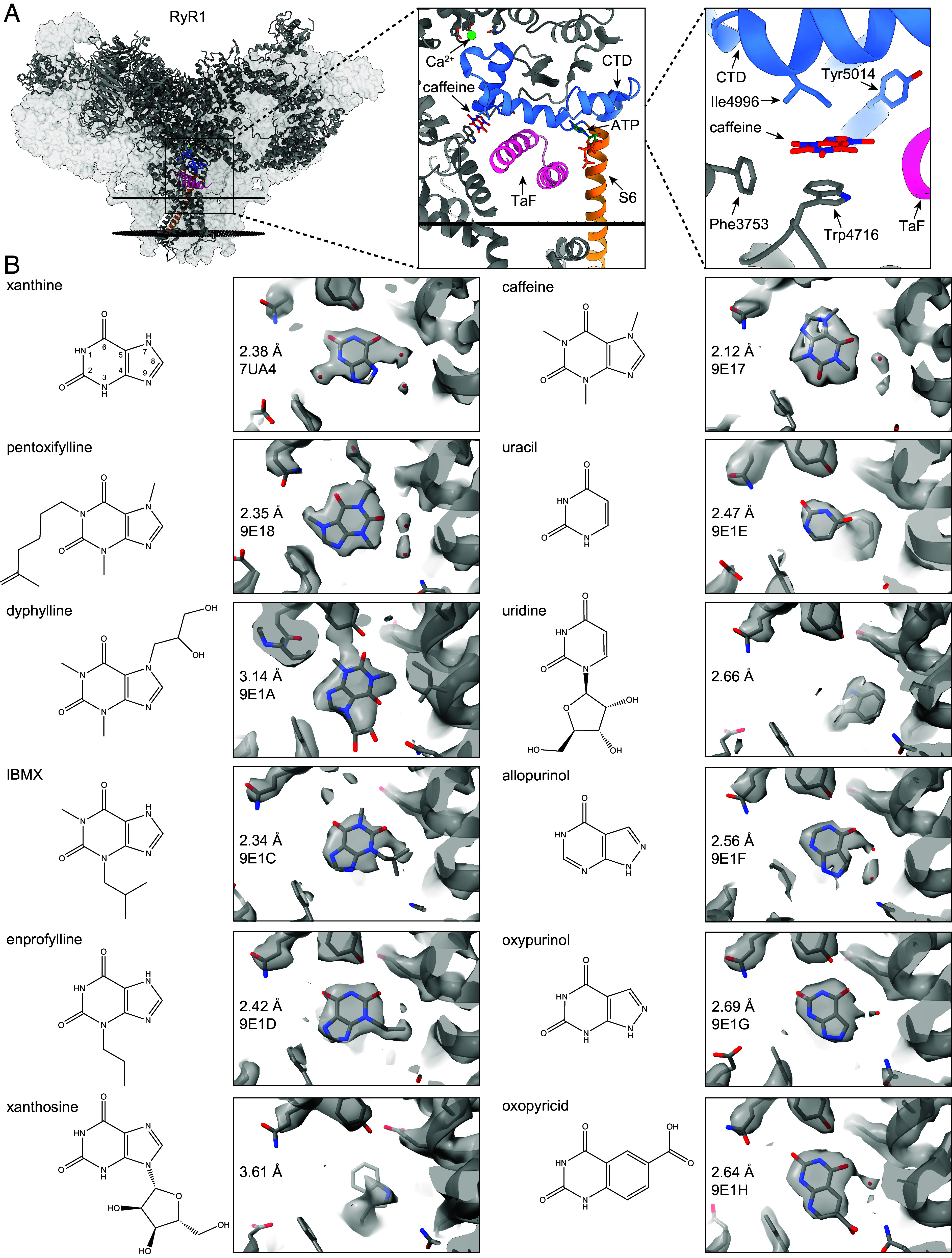 Figure 1
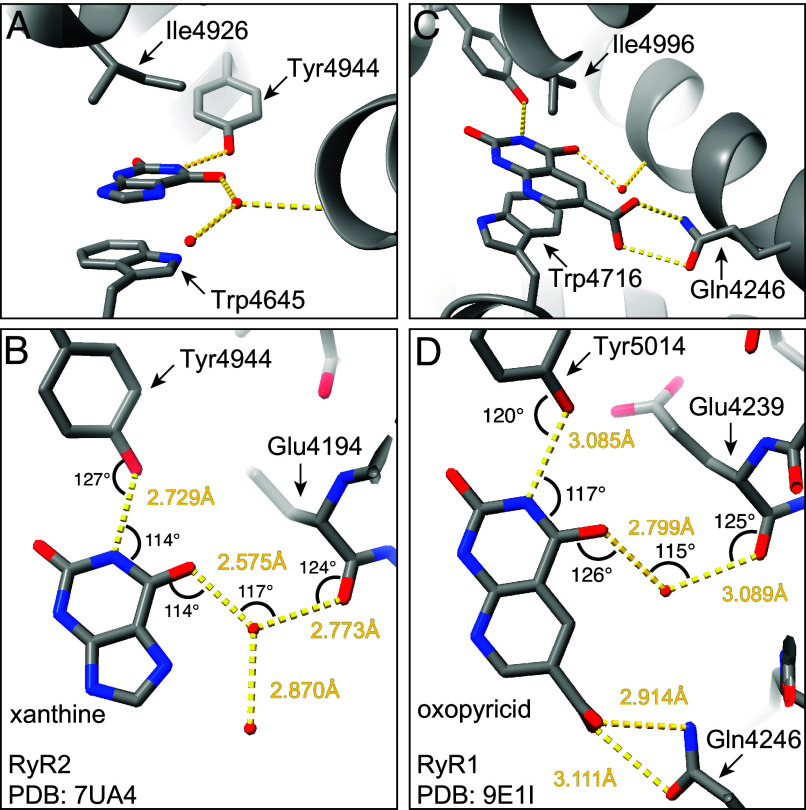 Figure 2
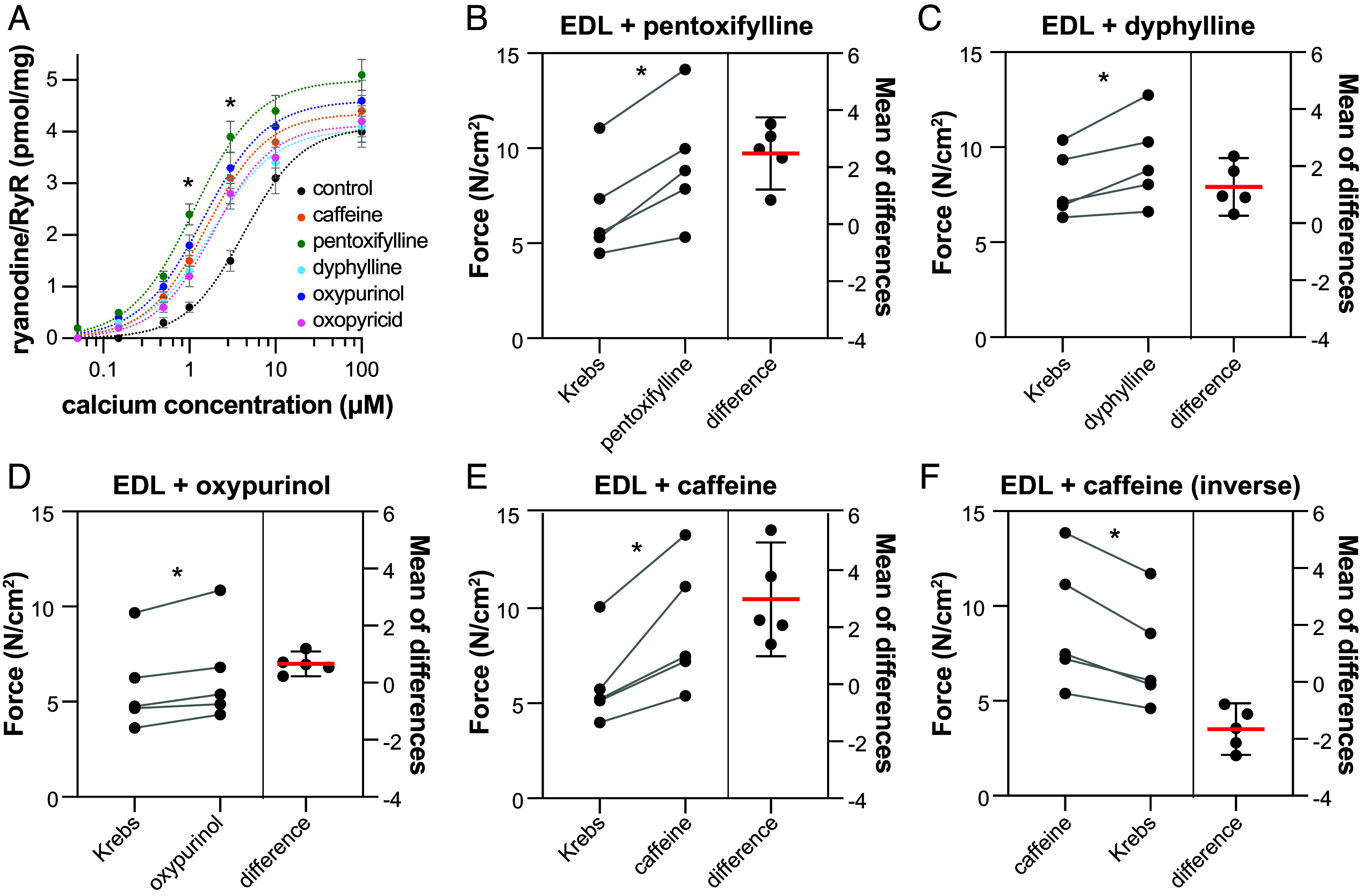 Figure 3
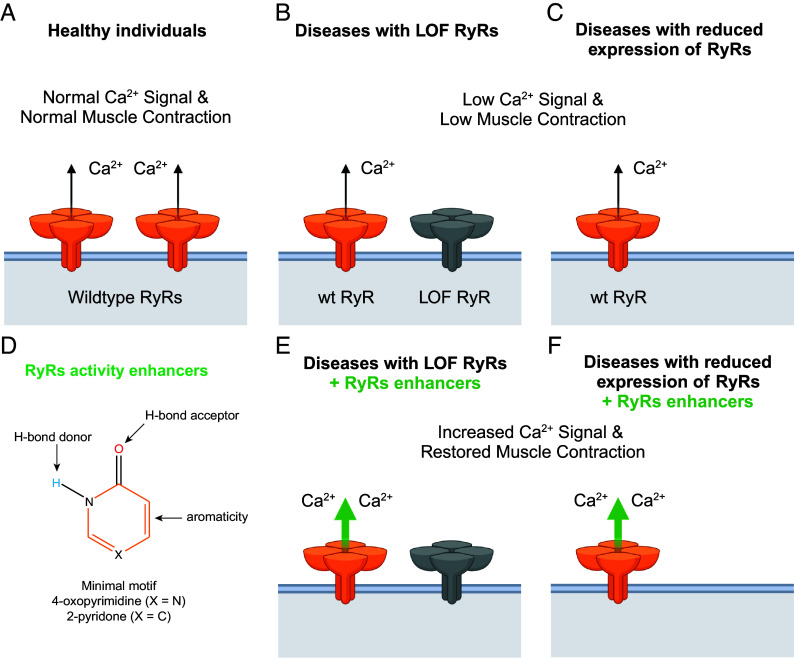 Figure 4
Peer Reviews
No public reviews on file for this paper yet. If you reviewed it on a platform where reviews are public (OpenReview, ICLR, NeurIPS, ICML), you can paste yours below so the community can read it here.
Videos
No videos yet. Explain this paper in a talk, walkthrough, or lecture? Add one.
Taxonomy
TopicsViral Infections and Immunology Research · Gout, Hyperuricemia, Uric Acid · Trypanosoma species research and implications