Cardiac MRI-derived mean right atrial pressure and its prognostic importance
Tom Alexander Howard Newman, Gareth Matthews, Hosamadin Assadi, Rui Li, Ciaran Grafton-Clarke, Zia Mehmood, Bahman Kasmai, Chris Sawh, Liang Zhong, Samer Alabed, Joao L Cavalcante, Ross J Thomson, Nay Aung, Rob J van der Geest, Andrew J Swift, Pankaj Garg

TL;DR
This study shows how cardiac MRI can estimate right atrial pressure, which helps predict heart failure outcomes like hospitalization and mortality.
Contribution
The study introduces a novel method to estimate mean right atrial pressure using cardiac MRI and validates its prognostic value.
Findings
Right atrial end-systolic volume strongly correlates with invasive mean right atrial pressure (Pearson’s coefficient 0.58).
CMR-derived mRAP ≥10 mm Hg is a strong predictor of heart failure hospitalization and mortality.
Raised CMR-derived mRAP is associated with reduced survival over a 6.8-year follow-up.
Abstract
Right atrial pressure (RAP) is a key variable that cardiac MRI (CMR) cannot currently measure. We aimed to develop a model to estimate mean RAP (mRAP) using CMR and assess the prognostic value of CMR-derived mRAP in an independent patient cohort. The derivation cohort consisted of patients investigated for heart failure symptoms with right heart catheterisation and CMR. Right atrial and ventricular CMR measurements were correlated with invasive mRAP to inform multivariable linear regression models incorporating patient characteristics. CMR-derived mRAP was tested as a predictor for clinical outcomes (lower-limb oedema, heart failure hospitalisation and all-cause mortality) on an independent cohort of patients receiving CMR. Both cohorts were derived from hospital registries. In the derivation cohort (n=672), invasive mRAP was >8 mm Hg in 56% of patients. Right atrial end-systolic…
Genes, proteins, chemicals, diseases, species, mutations and cell lines named across the full text — each resolved to its canonical identifier and authoritative record.
Click any figure to enlarge with its caption.
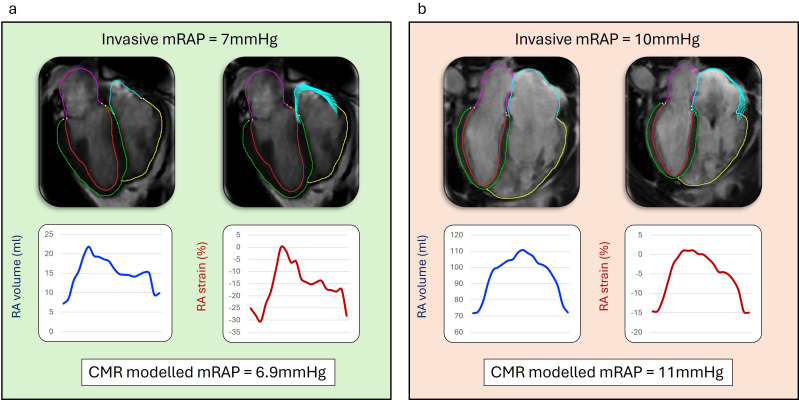 Figure 1
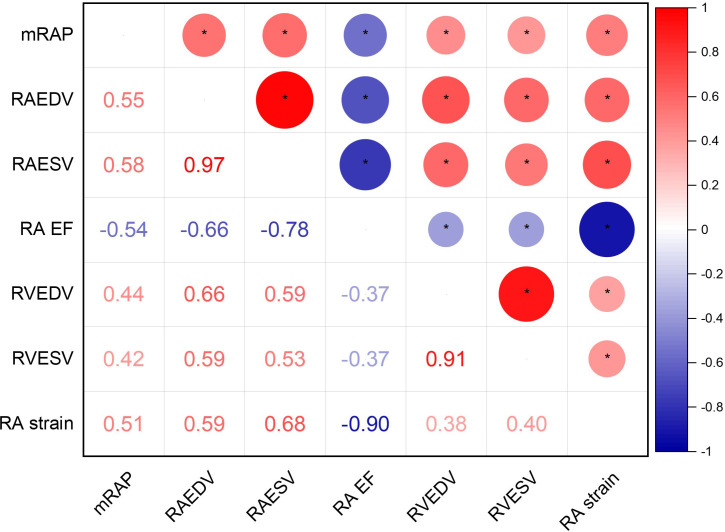 Figure 2
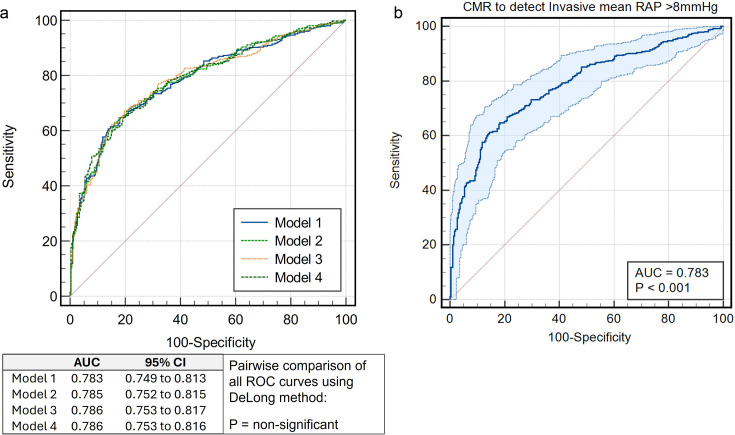 Figure 3
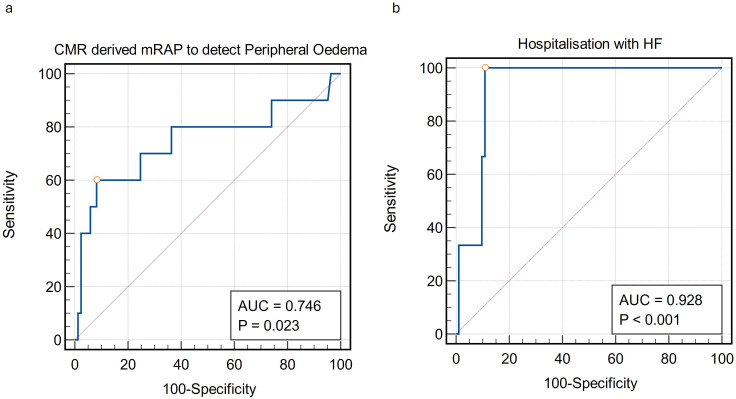 Figure 4
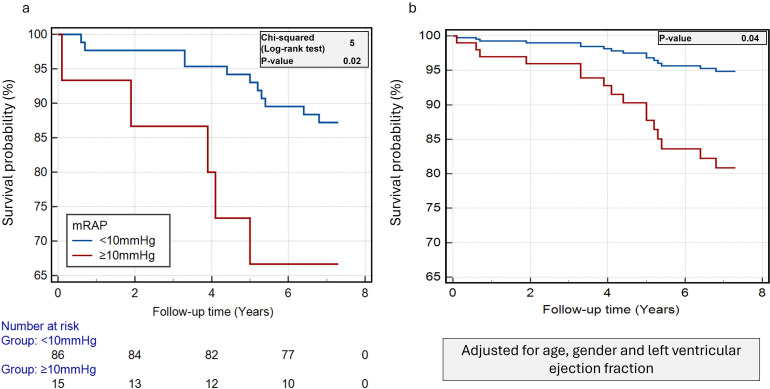 Figure 5
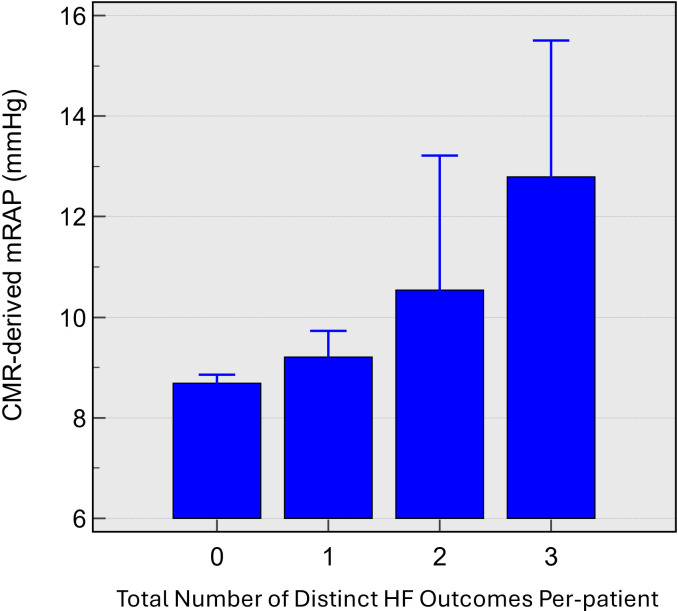 Figure 6
Peer Reviews
No public reviews on file for this paper yet. If you reviewed it on a platform where reviews are public (OpenReview, ICLR, NeurIPS, ICML), you can paste yours below so the community can read it here.
Videos
No videos yet. Explain this paper in a talk, walkthrough, or lecture? Add one.
Taxonomy
TopicsCardiovascular Function and Risk Factors · Cardiac Imaging and Diagnostics · Pulmonary Hypertension Research and Treatments