Mitotic MTH1 inhibitor karonudib kills epithelial ovarian cancer independent of platinum sensitivity
Rachel M. Hurley, Jill M. Wagner, Arun Kanakkanthara, Annapoorna Venkatachalam, Aaron M. Deisinger, Cristina Correia, Paula A. Schneider, Kevin L. Peterson, Elaine P. Macon, Ethan P. Heinzen, Kumar Sanjiv, Xiaonan Hou, Marc A. Becker, Matthew J. Maurer, Melissa C. Larson

TL;DR
A new drug called karonudib can kill ovarian cancer cells, even those resistant to standard platinum-based treatments, by causing DNA damage and cell death.
Contribution
Karonudib, a mitotic MTH1 inhibitor, shows efficacy against platinum-resistant ovarian cancer both alone and in combination with carboplatin.
Findings
Karonudib reduced colony formation in both platinum-sensitive and platinum-resistant ovarian cancer cells.
Karonudib induced DNA damage and apoptosis in ovarian cancer cells by increasing 8-oxo-dG levels and stalling mitosis.
Combining karonudib with carboplatin significantly improved survival in ovarian cancer xenograft models.
Abstract
The prognosis for women with ovarian cancer (OC) is particularly poor if resistance to platinum compounds, the mainstay of standard-of-care therapy, develops. Inhibitors of the Nudix hydrolase MuT Homolog 1 (MTH1) have previously been shown to arrest cancer cells in mitosis, increase 8-oxo-2’-deoxyguanosine (8-oxo-dG) incorporation into DNA, and selectively kill neoplastic cells while sparing normal cells. Here we explored the cytotoxic mechanism of these agents as well as their activity against platinum-resistant OC in vitro and in vivo. Two mitotic MTH1 inhibitors (mMTH1is), TH588 and karonudib, decreased colony formation indistinguishably in platinum-sensitive OC cell lines and their platinum-resistant counterparts in vitro but had limited effects on fallopian tube and immortalized ovarian surface epithelial cells. Treatment with karonudib stalled OC cells in mitosis and caused…
Genes, proteins, chemicals, diseases, species, mutations and cell lines named across the full text — each resolved to its canonical identifier and authoritative record.
Click any figure to enlarge with its caption.
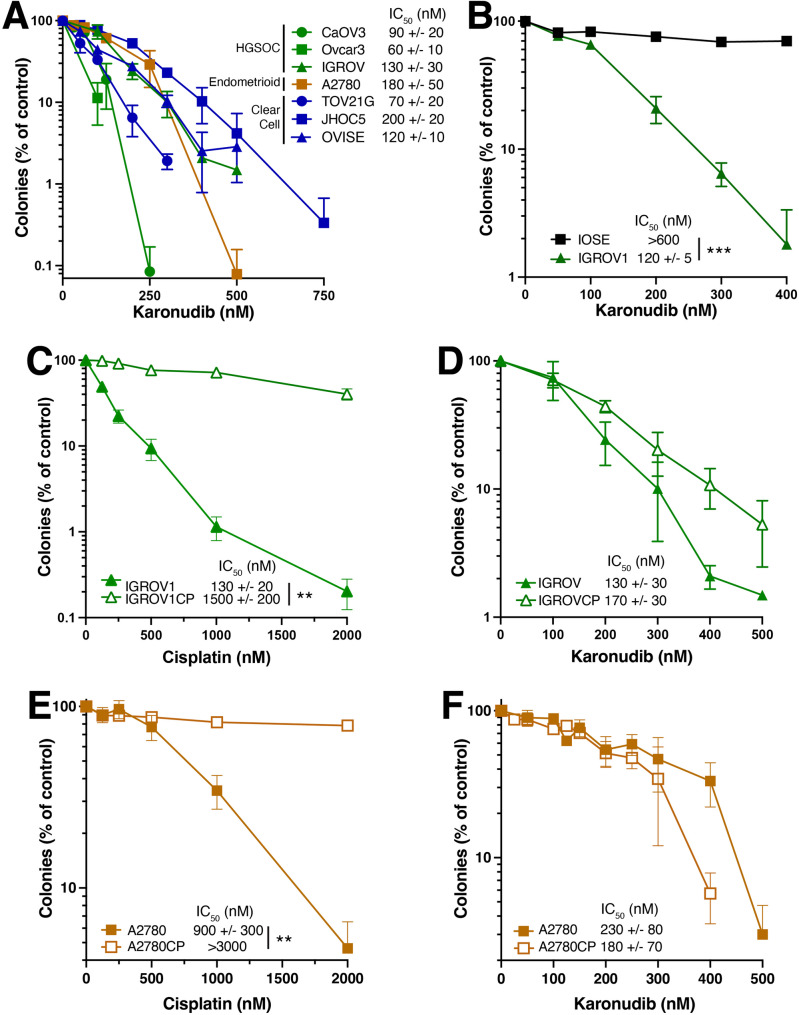 Figure 1
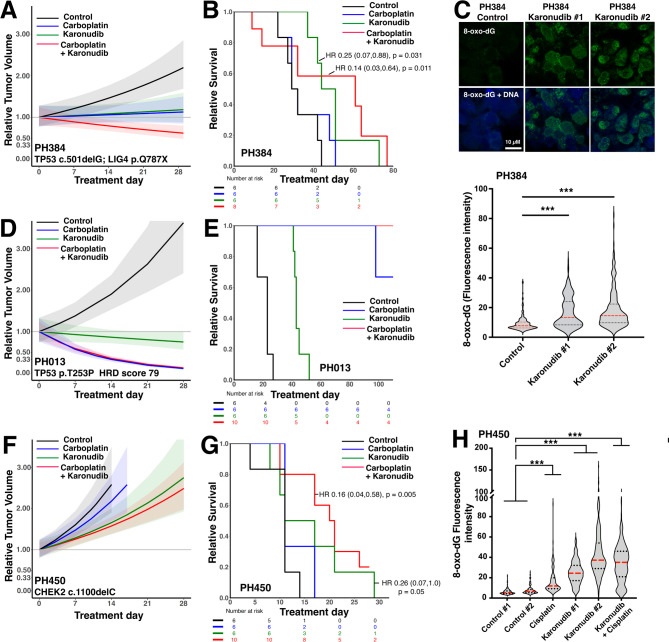 Figure 2
Peer Reviews
No public reviews on file for this paper yet. If you reviewed it on a platform where reviews are public (OpenReview, ICLR, NeurIPS, ICML), you can paste yours below so the community can read it here.
Videos
No videos yet. Explain this paper in a talk, walkthrough, or lecture? Add one.
Taxonomy
TopicsOvarian cancer diagnosis and treatment · Chromatin Remodeling and Cancer · Renal and related cancers