Molecular Characterization of Nascent and Aged Sea Spray Aerosol
Dilini K. Gamage, Elias Hasenecz, Glorianne P. Dorcé, Kathryn J. Mayer, Jon S. Sauer, Christopher Lee, Kimberly A. Prather, Elizabeth A. Stone

TL;DR
This study examines how sea spray aerosol particles change chemically when aged in a lab setup, revealing increases in organic compounds and sulfate.
Contribution
The study provides molecular-level insights into the chemical aging of sea spray aerosol and identifies specific organic species enhanced during aging.
Findings
Nascent SSA particles are primarily composed of inorganic ions, with organic carbon (OC) making up a small fraction.
Aging increases sulfate, phosphate, nitrate, ammonium, and OC concentrations relative to sodium, especially in submicron particles.
Organosulfates, including isoprene-derived ones, are significantly enhanced in aged SSA, indicating formation of secondary organic aerosol.
Abstract
The chemical aging of sea spray aerosol (SSA) was examined in the Sea Spray Chemistry and Particle Evolution (SeaSCAPE) experiment in which nascent SSA particles were generated from seawater by breaking waves in a glass wave channel. Particles and gases in the air in the wave channel headspace were aged in an oxidative flow reactor. Nascent SSA (before reaction) and aged SSA (after reaction) particles were chemically analyzed for inorganic ions, organic carbon (OC), and select organic species, including organosulfates, fatty acids, and alkyl amines. Nascent SSA mass primarily consisted of inorganic ions associated with sea salt. On average, OC accounted for 52% of particle mass <0.25 μm and 0.2% of mass in both supermicron and submicron particles, with an increase in OC relative to Na+ with decreasing particle size. The aging process increased the sulfate, phosphate, nitrate, ammonium,…
Genes, proteins, chemicals, diseases, species, mutations and cell lines named across the full text — each resolved to its canonical identifier and authoritative record.
Click any figure to enlarge with its caption.
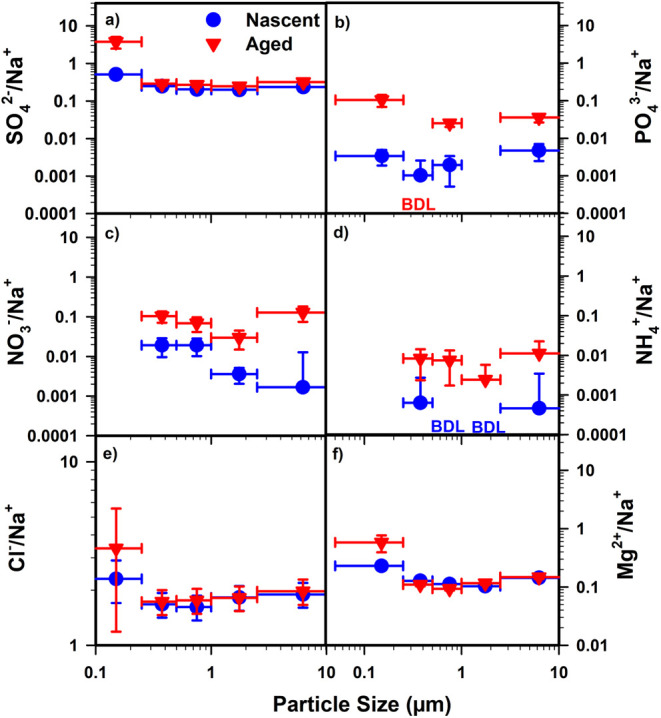 Figure 1
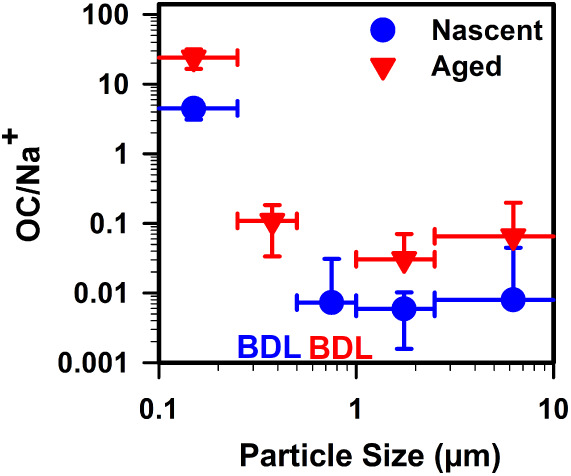 Figure 2
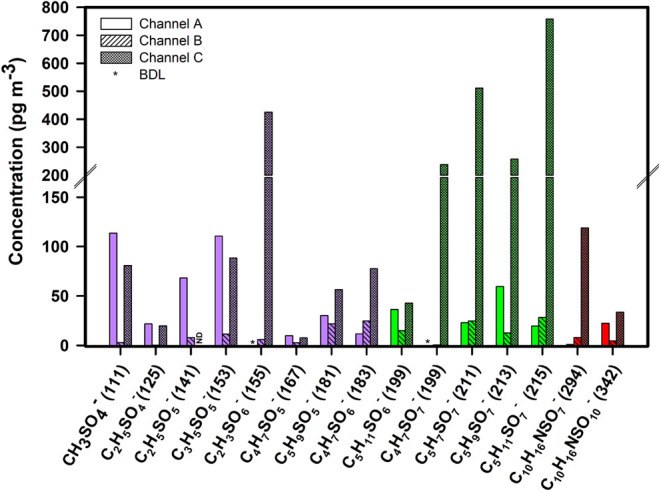 Figure 3
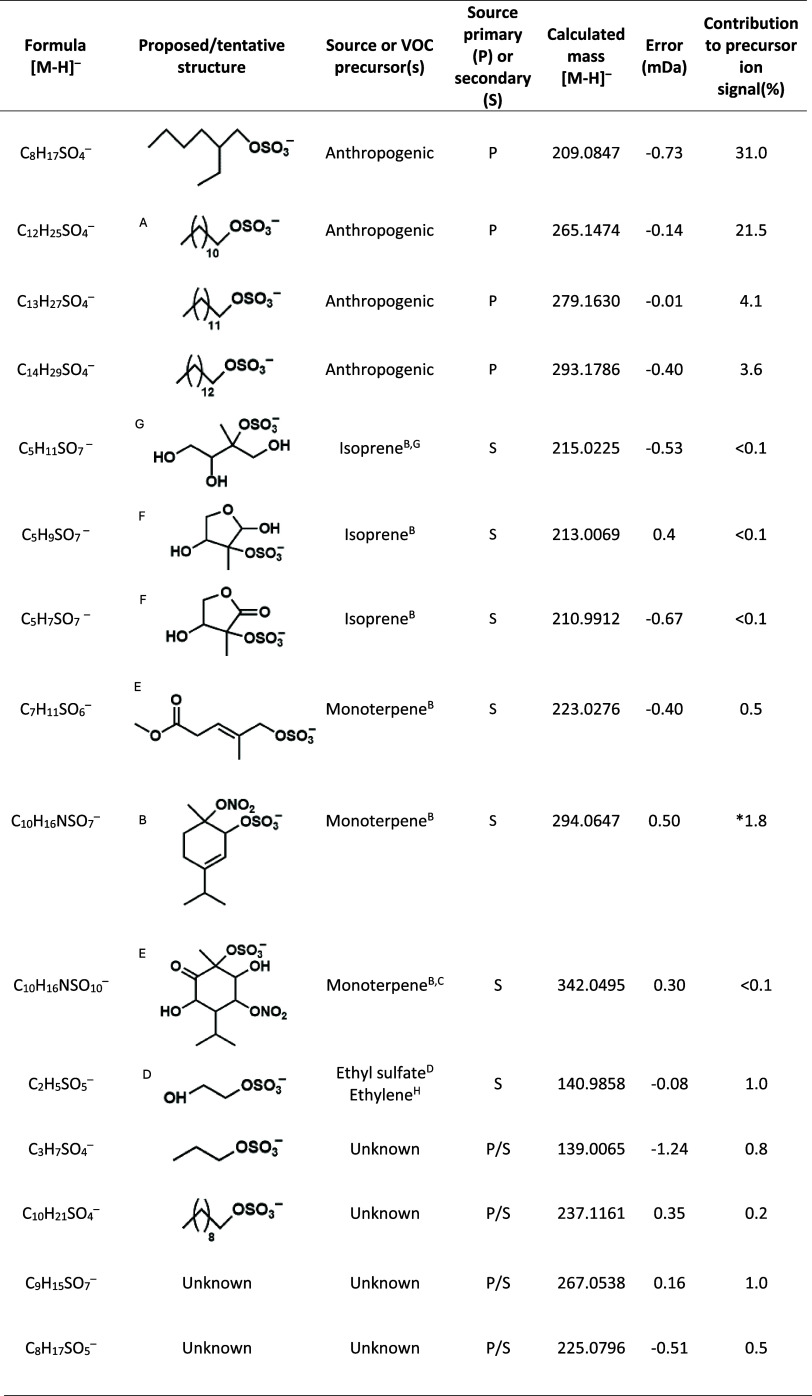 Figure 4
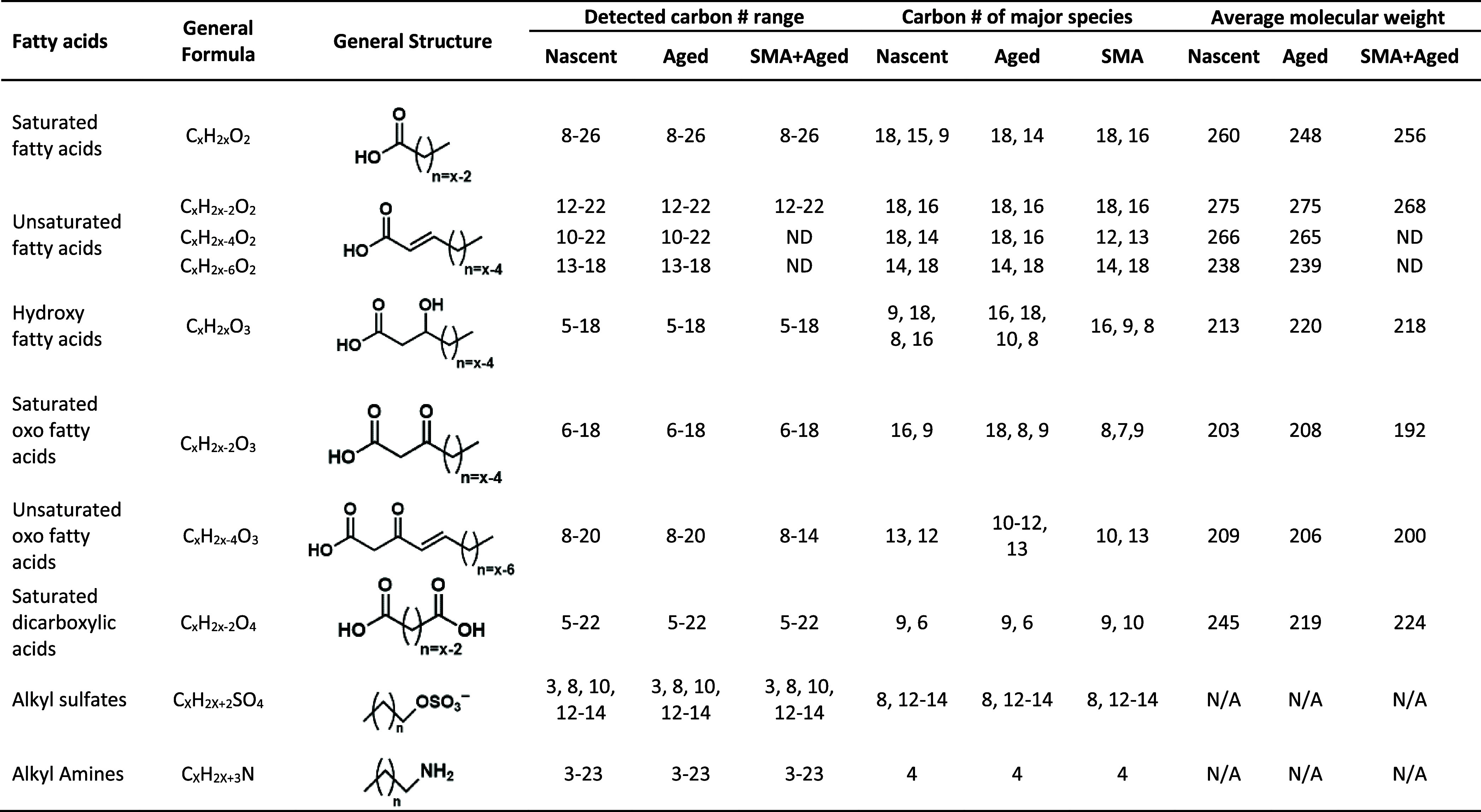 Figure 5
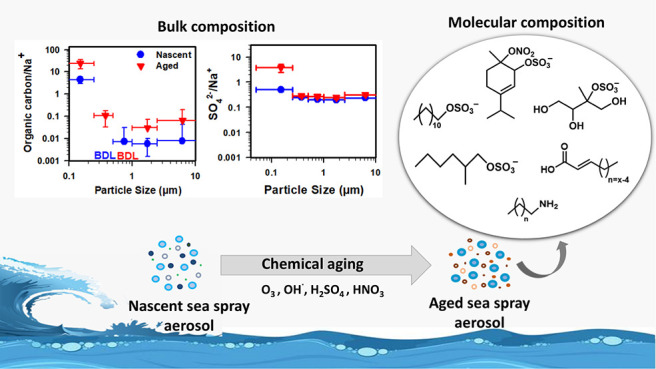 Figure 6
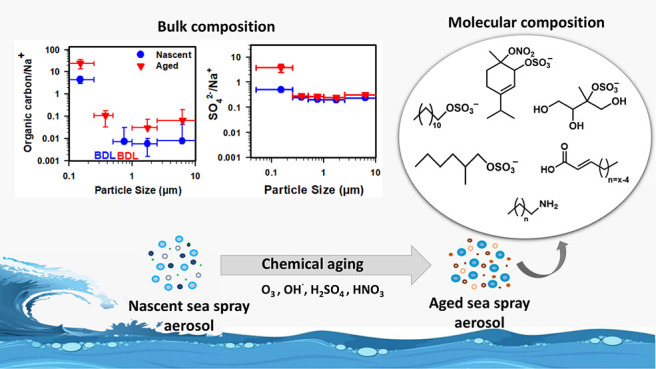 Figure 7
Peer Reviews
No public reviews on file for this paper yet. If you reviewed it on a platform where reviews are public (OpenReview, ICLR, NeurIPS, ICML), you can paste yours below so the community can read it here.
Videos
No videos yet. Explain this paper in a talk, walkthrough, or lecture? Add one.
Taxonomy
TopicsAtmospheric chemistry and aerosols · Atmospheric aerosols and clouds · Air Quality and Health Impacts