Microsecond-Scale Molecular Dynamics Simulation of Phase Transition of a Bilayer Ice: Kinetic Constraints in Confined Water
Weiduo Zhu, Yiyao Li, Haidi Wang, Zhao Chen, Xiaofeng Liu, Zhongjun Li, Wenhui Zhao, Xiao Cheng Zeng

TL;DR
This paper uses simulations to study how water turns into different types of ice when confined between two surfaces, revealing new insights into the slow and pressure-dependent freezing process.
Contribution
The discovery of a new bilayer penta-hexa ice phase and its unique kinetic behavior in confined water.
Findings
A new bilayer penta-hexa ice (BL-PHI) phase was identified, consisting of interlocked pentagonal and hexagonal rings.
BL-PHI forms slowly at intermediate to high lateral pressures (400 to 900 MPa) and has a much higher diffusion activation energy than other bilayer ice phases.
The transition temperatures of all three bilayer ice phases are pressure-dependent.
Abstract
In this study, we investigate the phase behavior of water confined between two parallel smooth walls by using both classical molecular dynamics (MD) simulations and machine-learned potential (MLP) MD simulations. Particular attention is focused toward the water-to-ice phase transition below the freezing point. Three distinct two-dimensional (2D) bilayer (BL) crystalline ice phases are observed, namely, bilayer hexagonal ice (BL-ice I), bilayer very high-density ice (BL-VHDI), and a newly found bilayer penta-hexa ice (BL-PHI). The latter consists of interlocked pentagonal and hexagonal rings. The transition from liquid to BL-PHI is weakly first-order, and typically, the BL-PHI emerges at intermediate to high lateral pressures (400 to 900 MPa) after microsecond-scale simulations, highlighting its relatively slow formation process. Compared to BL-ice I and BL-VHDI, BL-PHI exhibits much…
Genes, proteins, chemicals, diseases, species, mutations and cell lines named across the full text — each resolved to its canonical identifier and authoritative record.
Click any figure to enlarge with its caption.
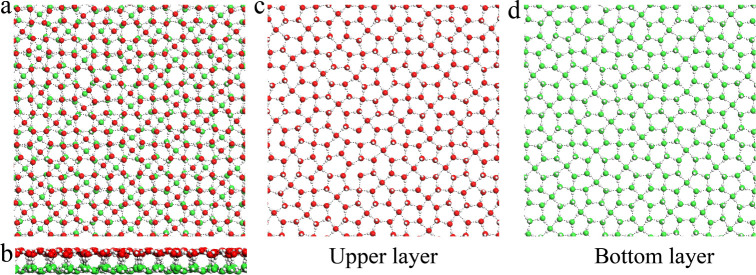 Figure 1
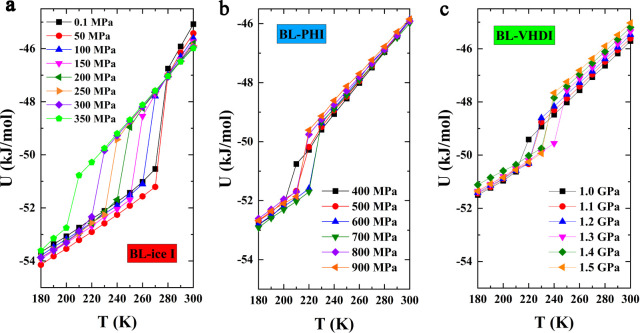 Figure 2
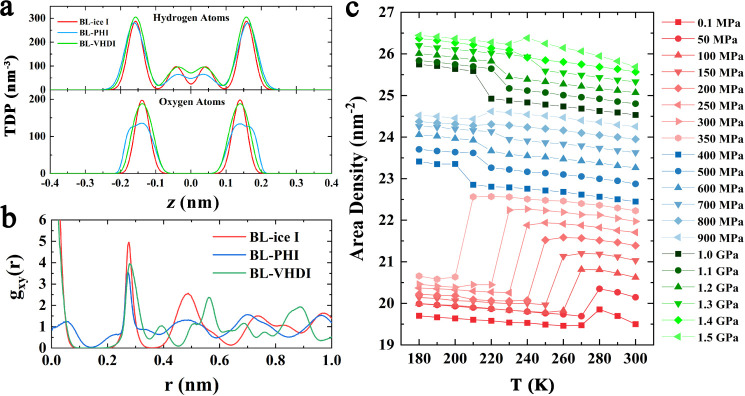 Figure 3
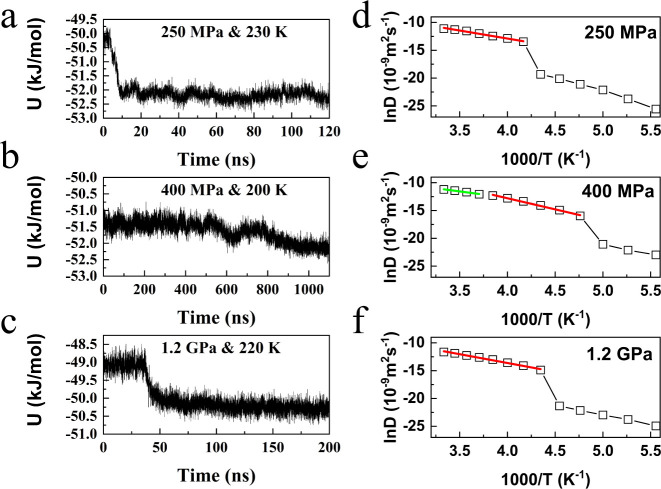 Figure 4
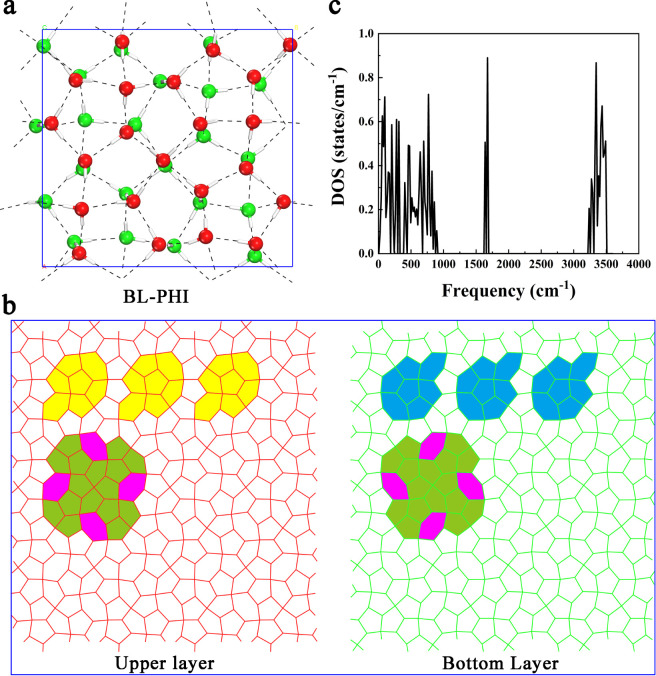 Figure 5
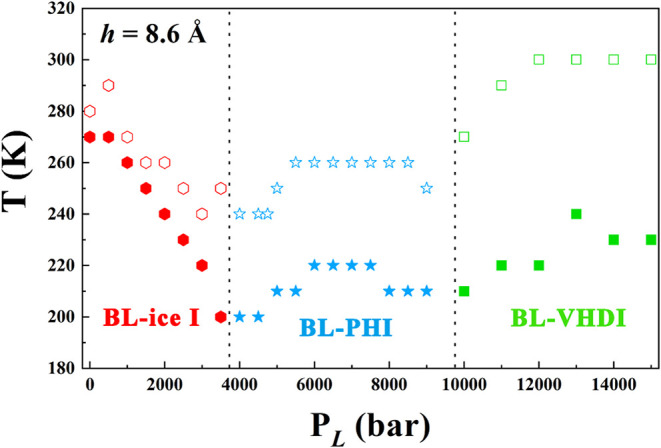 Figure 6
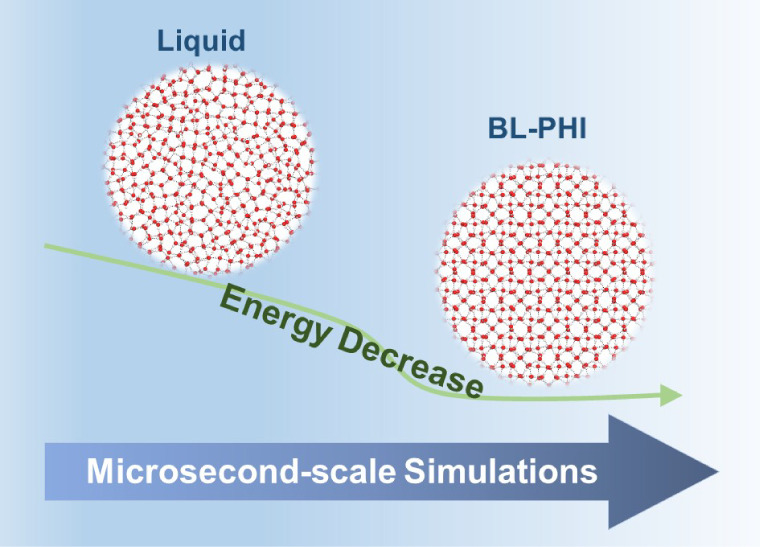 Figure 7
 Figure 8
Peer Reviews
No public reviews on file for this paper yet. If you reviewed it on a platform where reviews are public (OpenReview, ICLR, NeurIPS, ICML), you can paste yours below so the community can read it here.
Videos
No videos yet. Explain this paper in a talk, walkthrough, or lecture? Add one.
Taxonomy
TopicsMaterial Dynamics and Properties · nanoparticles nucleation surface interactions · Theoretical and Computational Physics