A cellular system to study responses to a collision between the transcription complex and a protein‐bound nick in the DNA template
Petra Herring, Morten Roedgaard, Camilla Myrup Holst, Helene Christensen, Birgitta R. Knudsen, Lotte Bjergbaek, Anni Hangaard Andersen

TL;DR
This paper introduces a system to study how cells respond when RNA polymerase collides with a DNA nick mimicking a topoisomerase I complex, revealing how polymerase is ubiquitinated and degraded.
Contribution
The novel Flp-nick system allows precise in vivo study of RNA polymerase II responses to a DNA nick mimicking topoisomerase I cleavage complexes.
Findings
RNA polymerase II accumulates at the nick site when proteasome inhibition occurs with MG132.
Polymerase ubiquitination and degradation are induced by the Top1-mimicking nick complex.
The system enables detailed analysis of RNA polymerase II stalling and degradation after collision with DNA damage.
Abstract
We present a transcription‐coupled Flp‐nick system enabling a stable protein‐bound nick mimicking a topoisomerase I–DNA cleavage complex. The nick is introduced at a single site within a controllable LacZ gene inserted into the Saccharomyces cerevisiae genome. This system allows unique single‐site studies of a frequently occurring damage within a transcription unit in vivo. As proof of principle, we demonstrate RNA polymerase II accumulation at the damage site when MG132 inhibits the proteasome. Similarly, accumulation occurs when polymerase ubiquitination is abolished by deletion of the ubiquitinase ELC1 gene. This indicates that a topoisomerase I–DNA mimicking cleavage complex per se induces RNA polymerase II ubiquitination and degradation. These findings advance understanding of cellular responses to topoisomerase I‐targeting drugs used in cancer chemotherapy. We present the…
Genes, proteins, chemicals, diseases, species, mutations and cell lines named across the full text — each resolved to its canonical identifier and authoritative record.
Click any figure to enlarge with its caption.
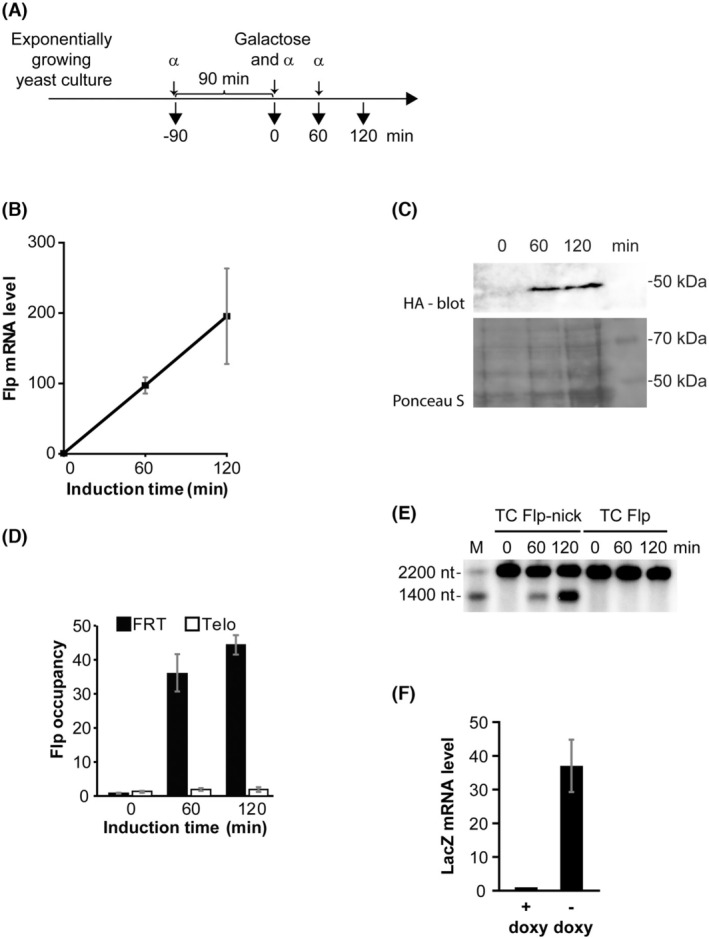 Figure 1
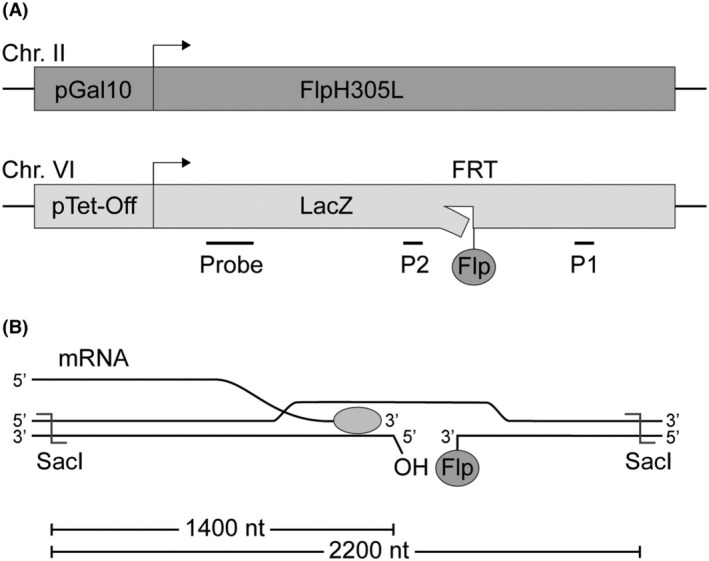 Figure 2
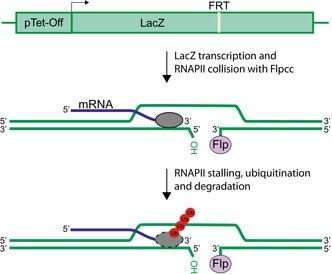 Figure 3
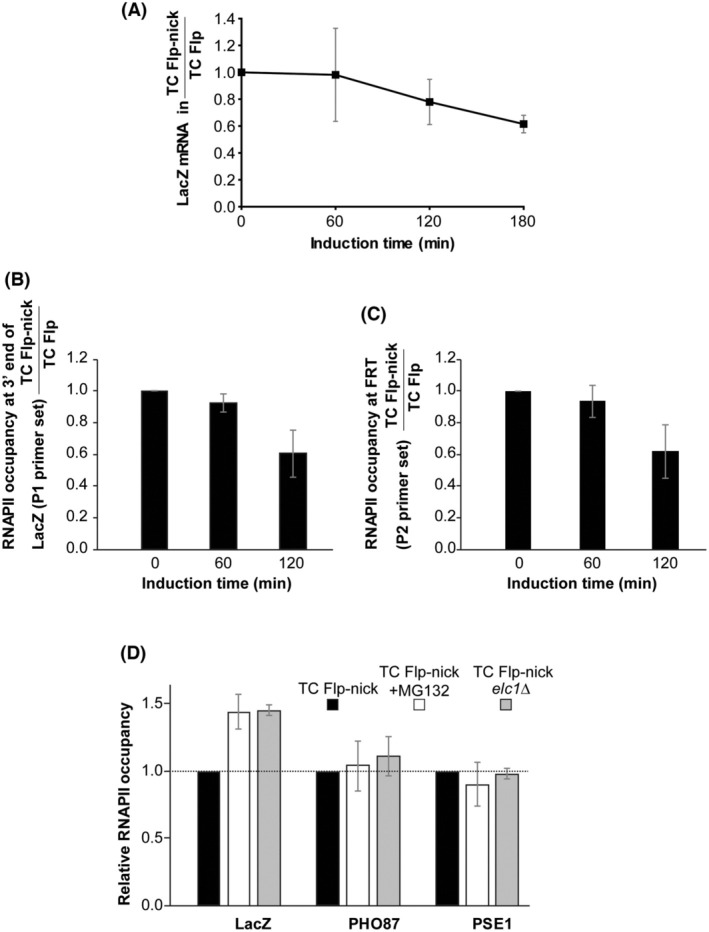 Figure 4
Peer Reviews
No public reviews on file for this paper yet. If you reviewed it on a platform where reviews are public (OpenReview, ICLR, NeurIPS, ICML), you can paste yours below so the community can read it here.
Videos
No videos yet. Explain this paper in a talk, walkthrough, or lecture? Add one.
Taxonomy
TopicsCancer therapeutics and mechanisms · DNA Repair Mechanisms · DNA and Nucleic Acid Chemistry