Sensing capabilities of the sawtooth penta-SiC2 nanoribbon for CO2 and CO molecules based on variations in molecular density: insights from a DFT investigation
Tran Yen Mi, Huynh My Linh, Trung-Phuc Vo, Huynh Anh Huy

TL;DR
This study uses computer simulations to show how a special nanoribbon material can detect and distinguish CO2 and CO gas molecules based on their concentration.
Contribution
The study reveals how molecular density affects the selective adsorption of CO2 and CO on a p-SiC2 nanoribbon through DFT simulations.
Findings
CO2 is harder to capture than CO, requiring specific positioning and distance for adsorption.
At low concentrations, p-SiC2-SS selectively adsorbs CO2 with strong chemisorption.
Adsorption energy decreases with higher molecular concentration for both CO2 and CO.
Abstract
Using Density Functional Theory (DFT) simulations, we explore the gas-sensing capabilities of the sawtooth penta-SiC2 nanoribbon (p-SiC2-SS) for CO2 and CO molecules under varying concentrations. Our findings reveal that CO2 is significantly more difficult to capture than CO. Free CO2 adsorption occurs only when its initial distance from the adsorbent is less than 1.80 Å, and the molecule should be positioned parallel to the adsorbent. Under these conditions, the material’s electric field bends CO2 to an angle of around 135°, inducing polarity and enabling adsorption. At low concentrations (one molecule per approximately 54 × 10−6 cm3), p-SiC2-SS selectively adsorbs CO2via strong chemisorption, with an adsorption energy of approximately −1.60 eV. When the molecular concentration triples, p-SiC2-SS sequentially adsorbs both CO2 and CO, with the adsorption energies decreasing to…
Genes, proteins, chemicals, diseases, species, mutations and cell lines named across the full text — each resolved to its canonical identifier and authoritative record.
Click any figure to enlarge with its caption.
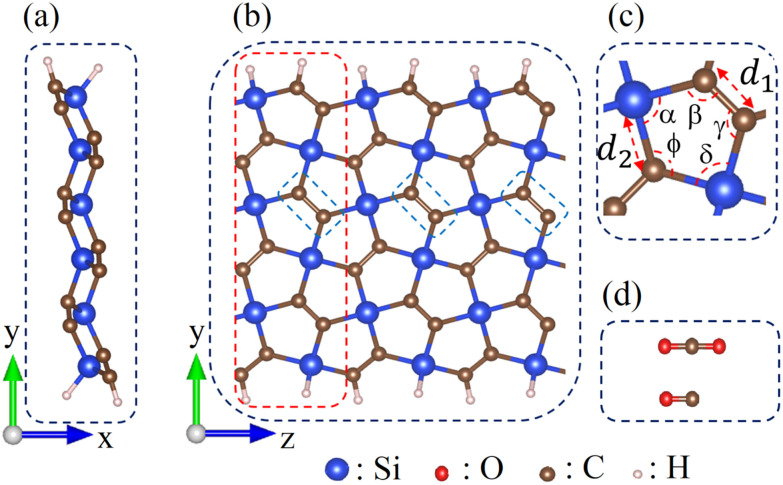 Figure 1
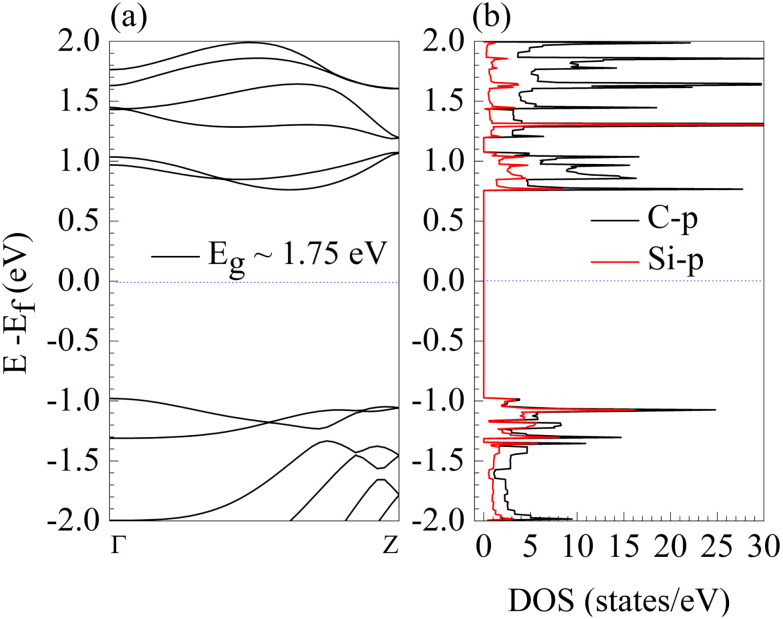 Figure 2
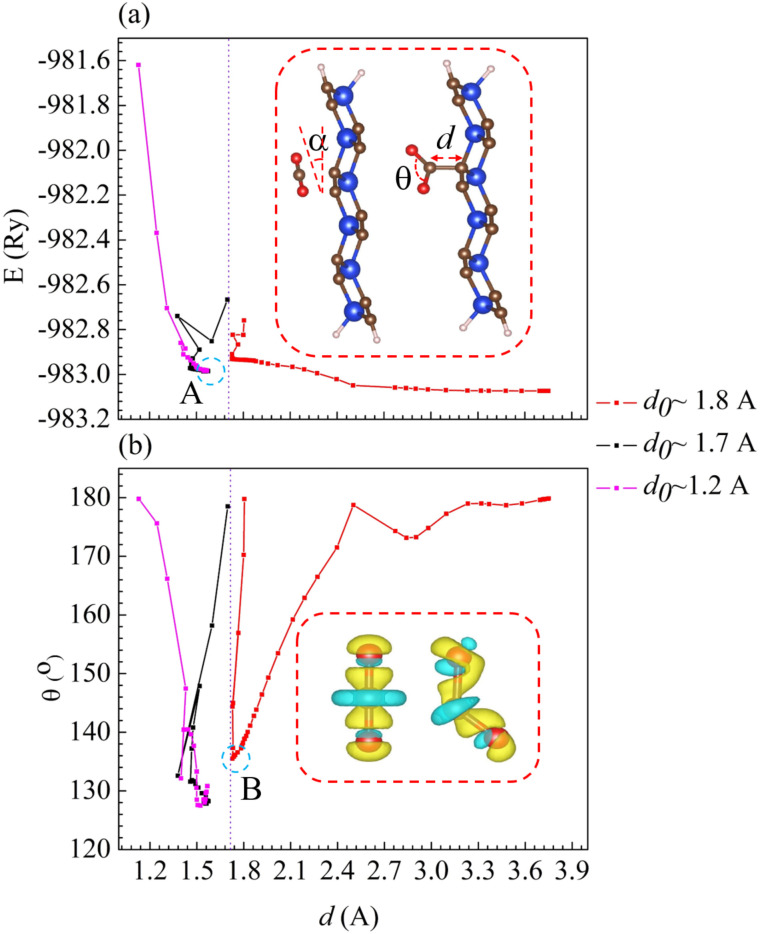 Figure 3
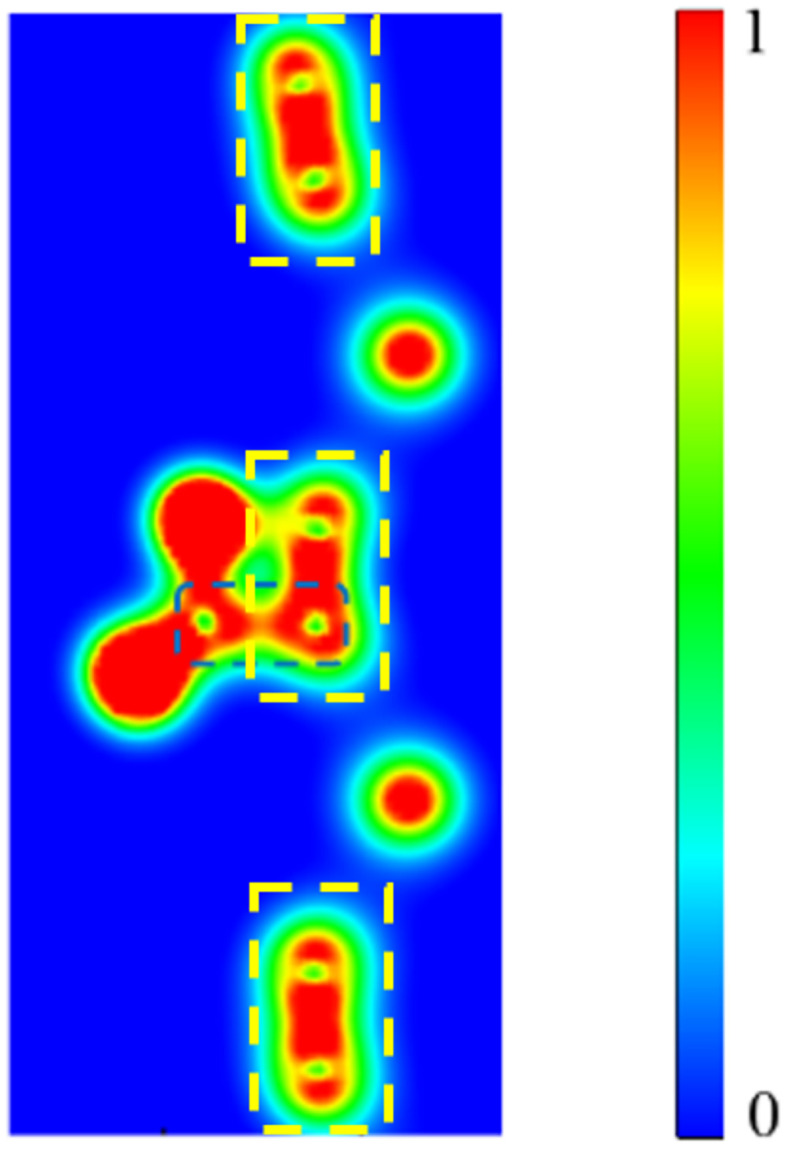 Figure 4
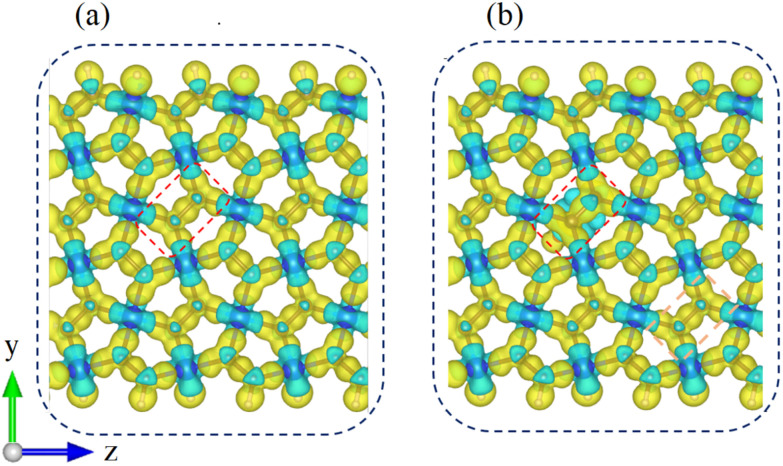 Figure 5
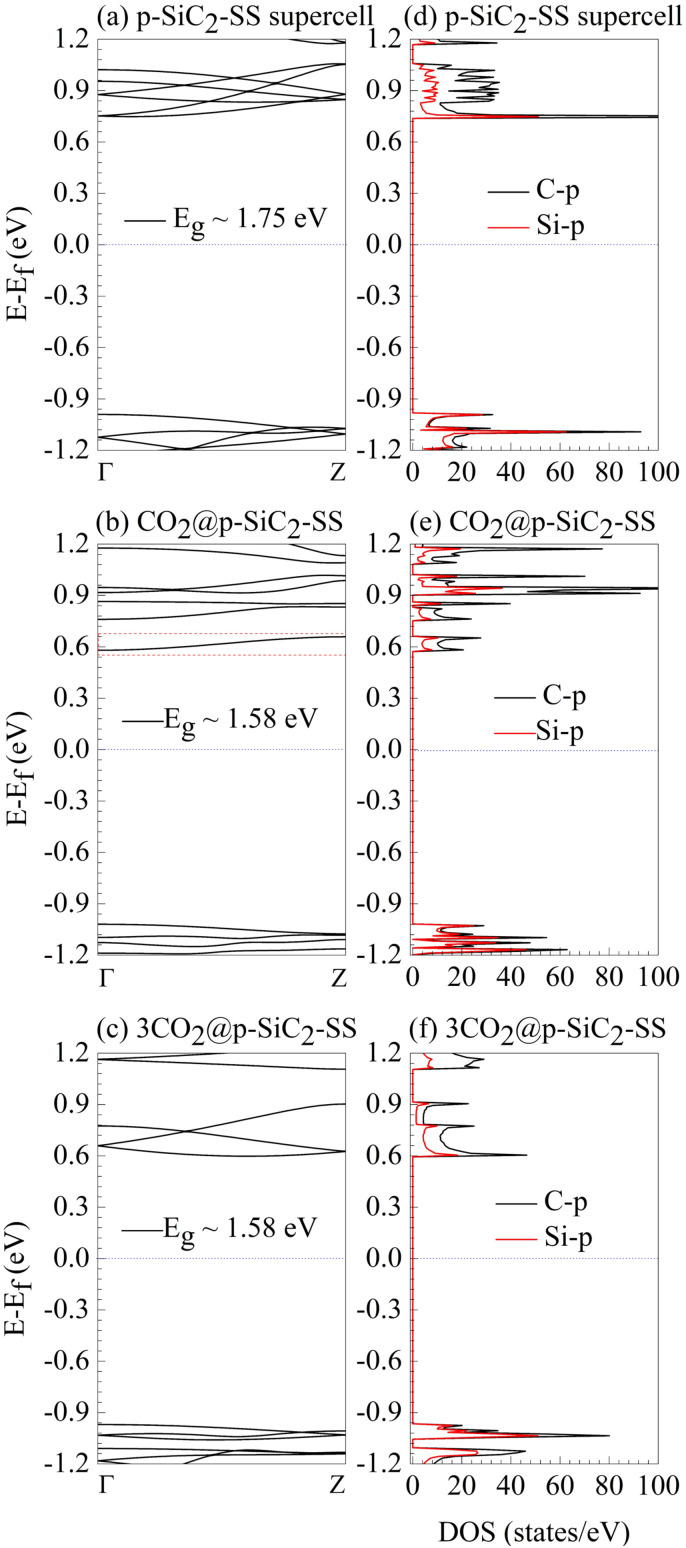 Figure 6
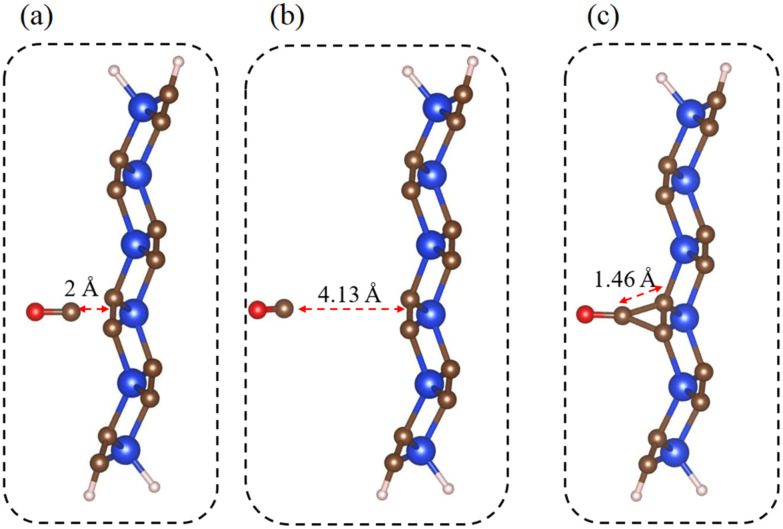 Figure 7
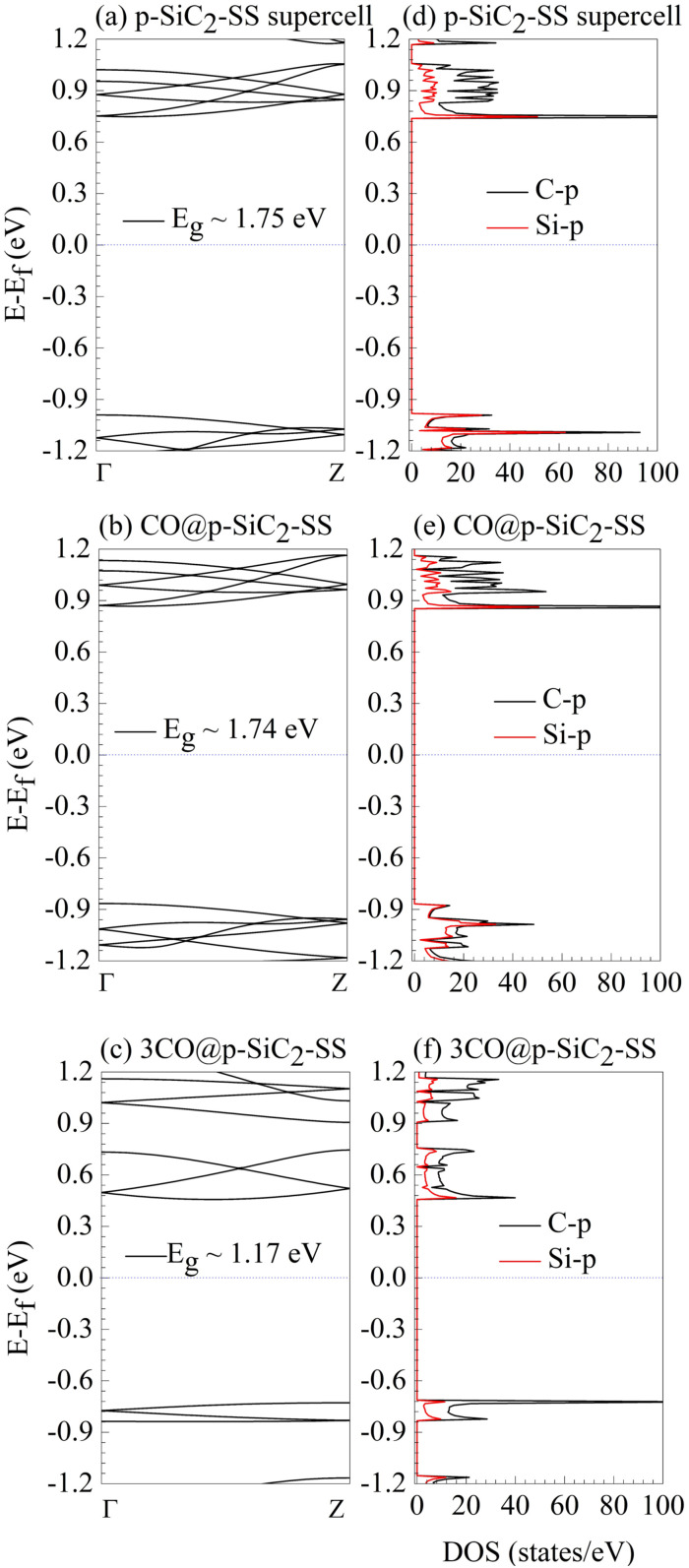 Figure 8
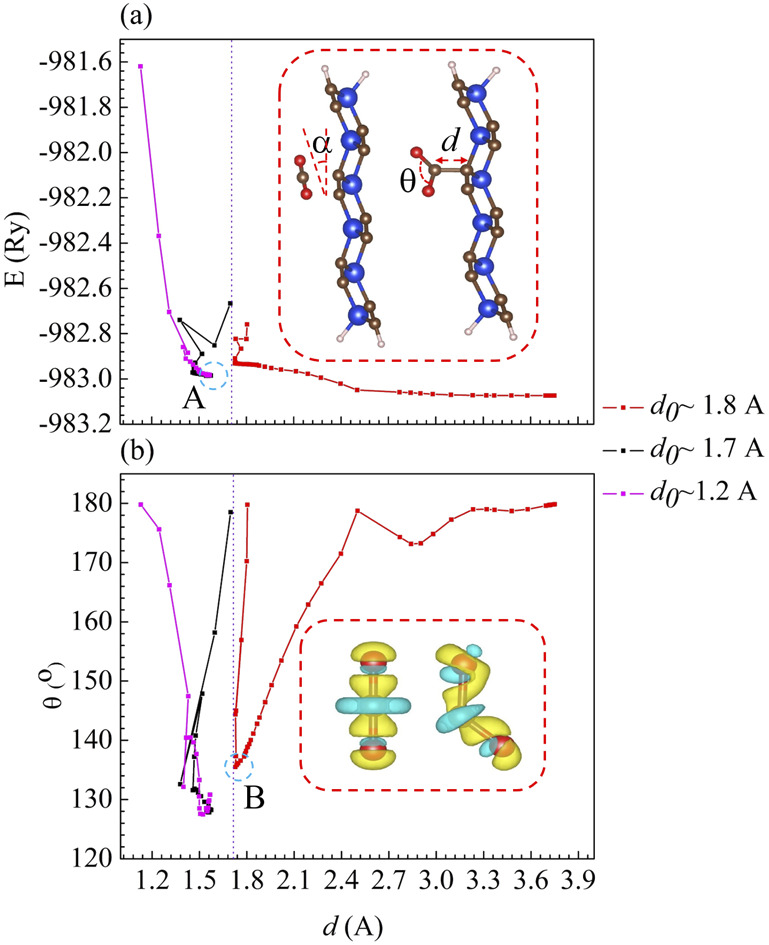 Figure 9
Peer Reviews
No public reviews on file for this paper yet. If you reviewed it on a platform where reviews are public (OpenReview, ICLR, NeurIPS, ICML), you can paste yours below so the community can read it here.
Videos
No videos yet. Explain this paper in a talk, walkthrough, or lecture? Add one.
Taxonomy
TopicsGraphene research and applications · Boron and Carbon Nanomaterials Research · Carbon Nanotubes in Composites