Highlighting the Potential of Synergistic Cu–Pt Single-Atom Alloy Sub-nanoclusters for Enhanced H2 Adsorption: A DFT Investigation
João Paulo Cerqueira Felix, Wanderson Souza Araújo, João Marcos Tomaz Palheta, Jônatas Favotto Dalmedico, Fabiano Pereira de Oliveira, Alexandre C. Dias, Diego Guedes-Sobrinho, Celso R. C. Rêgo, Renato L. T. Parreira, Maurício J. Piotrowski

TL;DR
This study explores how combining copper and platinum in tiny clusters enhances hydrogen adsorption, offering insights for better catalysts and hydrogen technologies.
Contribution
The novel contribution is the discovery of synergistic effects in Cu–Pt sub-nanoclusters that enable strong H2 adsorption through bond breaking and charge transfer.
Findings
Cu–Pt sub-nanoclusters show stronger H2 interactions with bond breaking and charge transfer.
Pure Cu sub-nanoclusters exhibit weak H2 adsorption with minimal structural changes.
Stable Cu sub-nanocluster sizes (4, 6, 8, 10, 12) were identified through stability analysis.
Abstract
Single-atom alloy sub-nanoclusters offer promising potential for understanding intricate interfacial phenomena at the atomic level, enabling the rational design of efficient catalysts and nanomaterials for H2 energy storage, purification, and conversion. Herein, we employed density functional theory calculations improved by van der Waals corrections to investigate H2 adsorption on pure copper (Cu n ) and copper–platinum (Cu n–1Pt) sub-nanoclusters. We characterized Cu n sub-nanoclusters ranging from n = 2 to n = 14, identifying the most stable sizes (4, 6, 8, 10, and 12) through a set of stability analysis. Subsequently, we substituted a single Cu atom with Pt to form single-atom alloy Cu n–1Pt sub-nanoclusters, which showed enhanced stabilization and reactivity compared to pure Cu sub-nanoclusters. While Cu-only sub-nanoclusters exhibited weak side-on interactions with H2, resulting…
Genes, proteins, chemicals, diseases, species, mutations and cell lines named across the full text — each resolved to its canonical identifier and authoritative record.
Click any figure to enlarge with its caption.
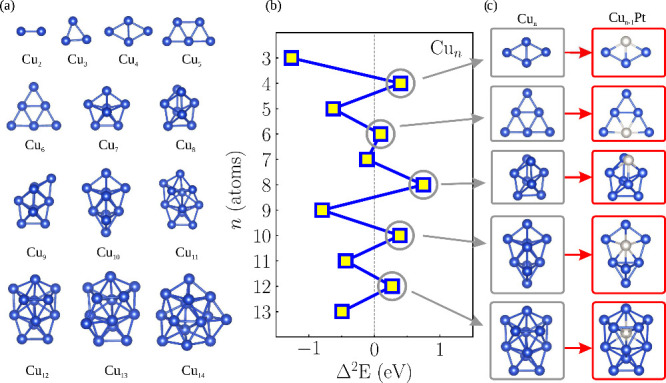 Figure 1
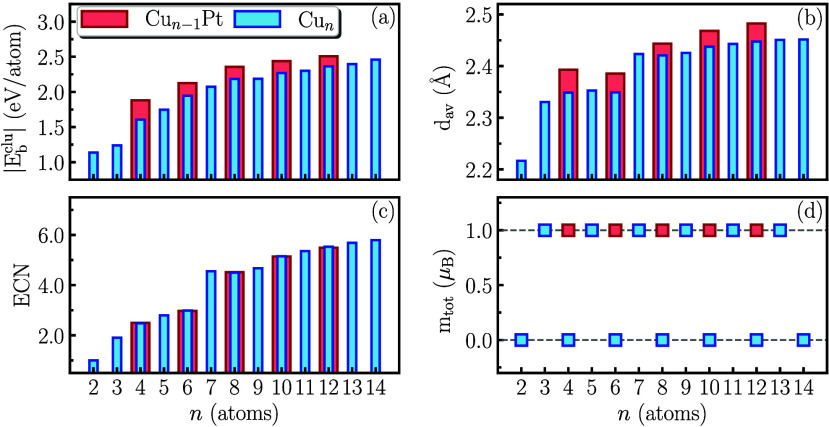 Figure 2
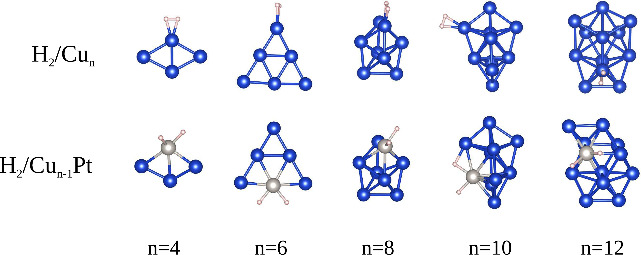 Figure 3
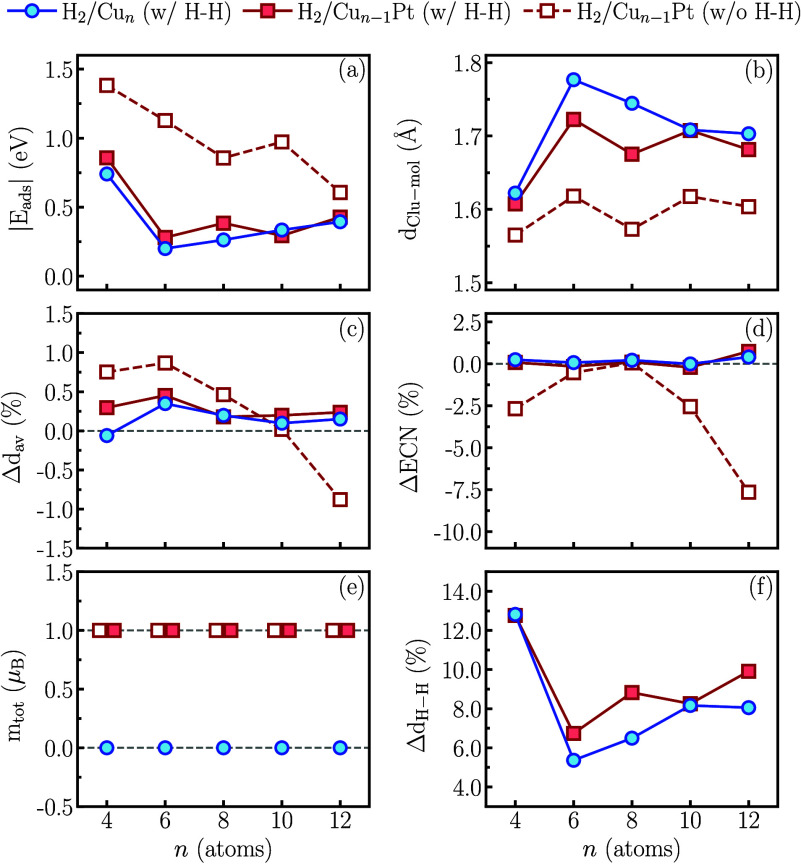 Figure 4
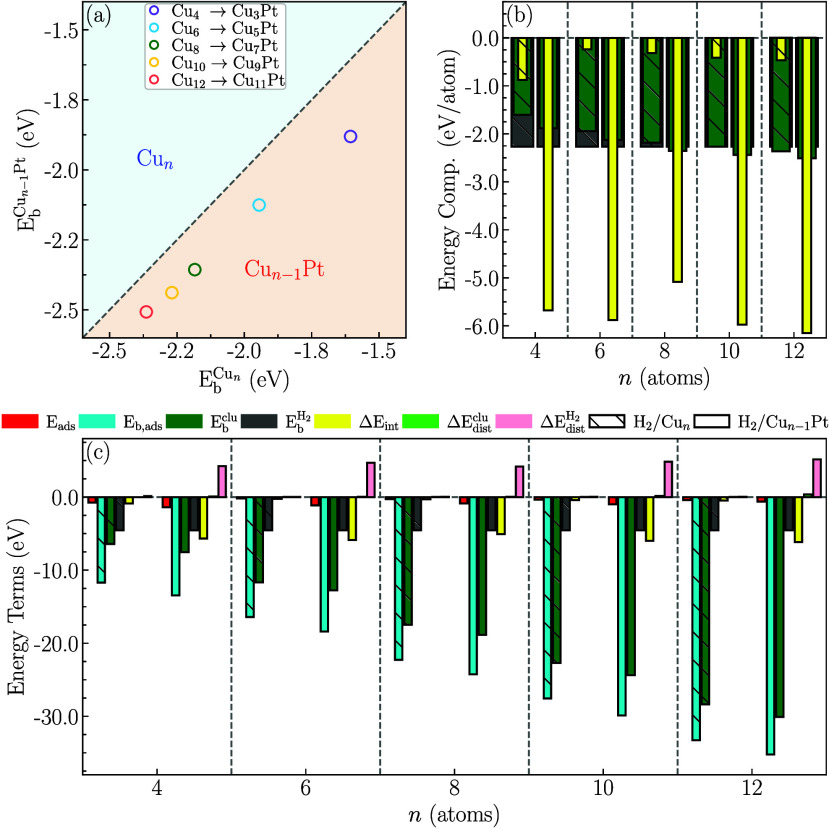 Figure 5
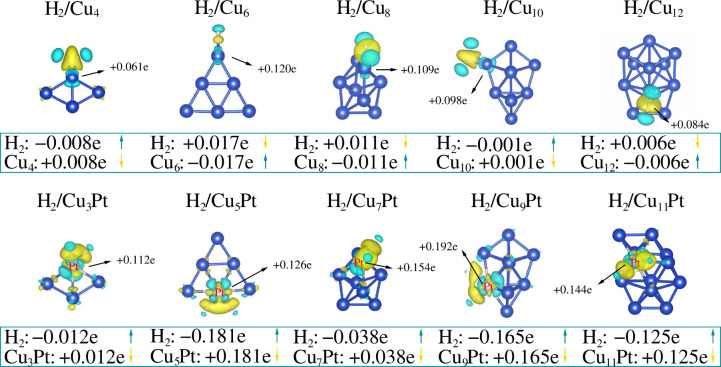 Figure 6
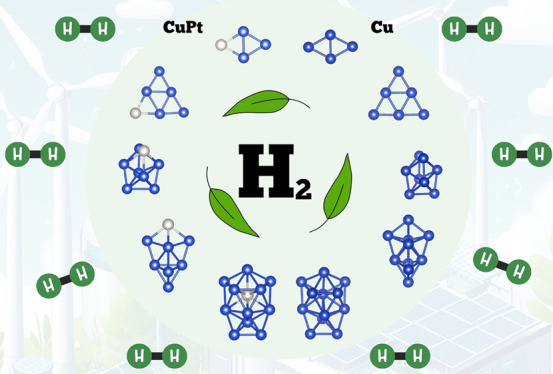 Figure 7
 Figure 8
 Figure 9
 Figure 10
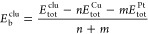 Figure 11
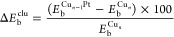 Figure 12
 Figure 13
 Figure 14
 Figure 15
 Figure 16
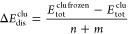 Figure 17
 Figure 18
 Figure 19
 Figure 20
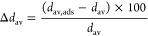 Figure 21
 Figure 22
 Figure 23
 Figure 24
 Figure 25
 Figure 26
 Figure 27
 Figure 28
 Figure 29
 Figure 30
 Figure 31
 Figure 32
 Figure 33
Peer Reviews
No public reviews on file for this paper yet. If you reviewed it on a platform where reviews are public (OpenReview, ICLR, NeurIPS, ICML), you can paste yours below so the community can read it here.
Videos
No videos yet. Explain this paper in a talk, walkthrough, or lecture? Add one.
Taxonomy
TopicsNanomaterials for catalytic reactions · Catalytic Processes in Materials Science · Nanocluster Synthesis and Applications