Why Nanoscience Needs Standardized ProtocolsAnd How to Get There
Marek Grzelczak

TL;DR
The paper argues for standardized protocols in nanoscience to improve data reproducibility and reusability.
Contribution
The paper introduces a set of simple rules to facilitate data management and improve reusability in nanoscience.
Findings
Standardized protocols can prevent fragmentation and improve reproducibility in nanoscience.
Adopting these practices early in a project can save time and energy in the long run.
The proposed rules help ensure data reusability and streamline the writing process.
Abstract
Nanoscience is a relatively young research field that has been built on the shoulders of consolidated areas ranging from solid-state physics to biology. Its interdisciplinary nature imposes the flow of heterogeneous data from various domains of predefined conventions that ultimately prevents workflow standardization, raising the possibility of further fragmentation and compromising the reproducibility. This is the time to establish good practices for experimental nanoscientists. This work proposes a set of simple rules that can facilitate data management and improve their reusability. Implementing the proposed protocol can have high initial cognitive costs but can also save energy and time in the long term. By adopting these practices, researchers can ensure the reusability of their data early in a project and accelerate the writing process.
Genes, proteins, chemicals, diseases, species, mutations and cell lines named across the full text — each resolved to its canonical identifier and authoritative record.
Click any figure to enlarge with its caption.
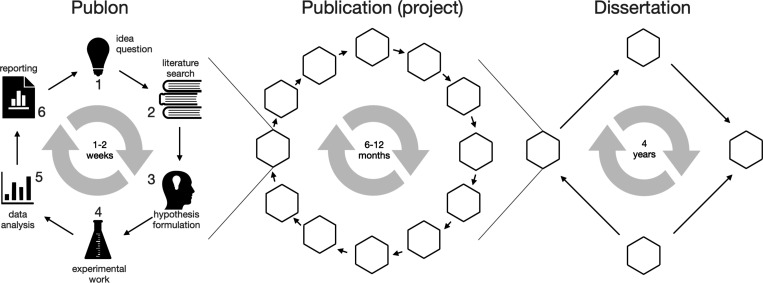 Figure 1
 Figure 2
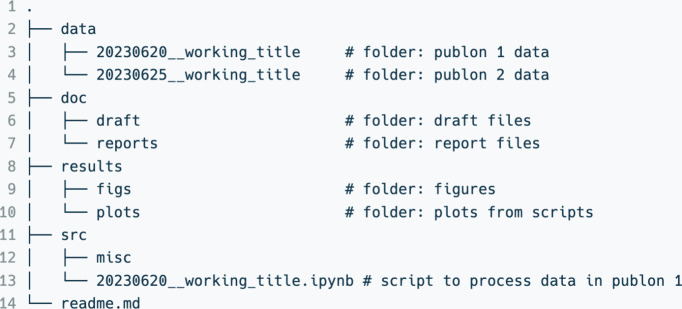 Figure 3
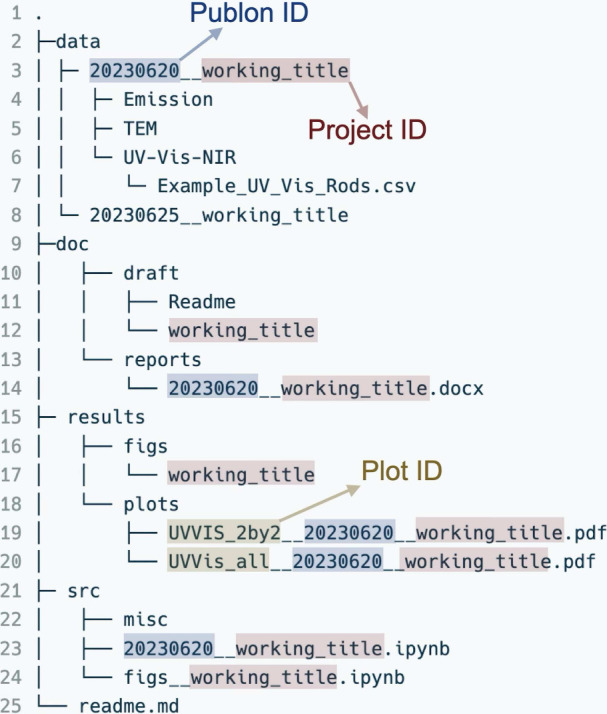 Figure 4
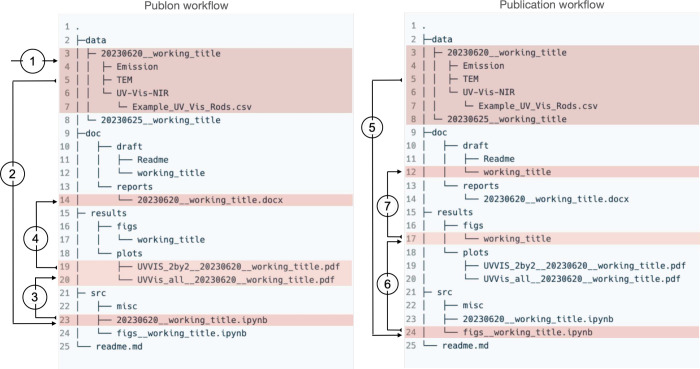 Figure 5
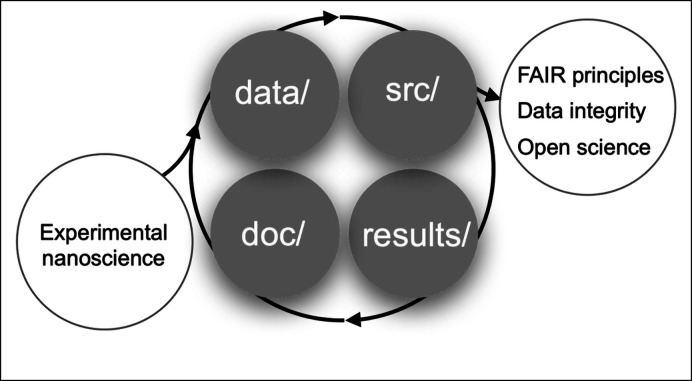 Figure 6
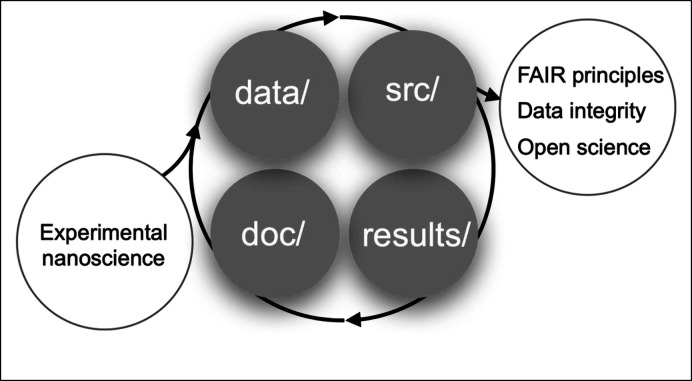 Figure 7
Peer Reviews
No public reviews on file for this paper yet. If you reviewed it on a platform where reviews are public (OpenReview, ICLR, NeurIPS, ICML), you can paste yours below so the community can read it here.
Videos
No videos yet. Explain this paper in a talk, walkthrough, or lecture? Add one.
Taxonomy
TopicsScientific Computing and Data Management