Great Bolgar’s historical genetics: a genomic study of individuals from burials close to the Greek Chamber in the 14th century
T.V. Andreeva, A.D. Soshkina, S.S. Kunizheva, A.D. Manakhov, D.V. Pezhemsky, E.I. Rogaev

TL;DR
This study uses ancient DNA to reveal the genetic diversity of 14th-century Bolgar, showing contributions from Finno-Ugric, Armenian, and other regional populations.
Contribution
The first genetic analysis of medieval Bolgar individuals reveals their diverse origins, including indigenous and migrant populations.
Findings
One female individual showed genetic links to modern Finno-Ugric peoples of the Volga-Ural region.
Two individuals displayed genetic affinities with Armenian populations, suggesting migration from the Caucasus or Anatolia.
The study confirms genetic heterogeneity in medieval Bolgar's population structure.
Abstract
Bolgar was one of the most significant mediaeval cities in Eastern Europe. Before the Mongol conquest, it served as a major administrative centre of Volga Bulgaria, and after 1236, it temporarily functioned as the capital of the Golden Horde. Historical, archaeological, and paleoanthropological evidence indicates a mixed population of this city during the 13th–15th centuries; however, the contributions of exact ethnic groups into its genetic structure remain unclear. To date, there are no genetic data for this medieval group. For the first time, using massive parallel sequencing methods, we determined whole-genome sequences for three individuals from Bolgar who were buried in the early 14th century close to the so-called “Greek Chamber”. The average coverage of the studied genomes ranged from x0.5 to x1.5. We identified the genetic sex of the people (two men and one woman), and…
Genes, proteins, chemicals, diseases, species, mutations and cell lines named across the full text — each resolved to its canonical identifier and authoritative record.
Click any figure to enlarge with its caption.
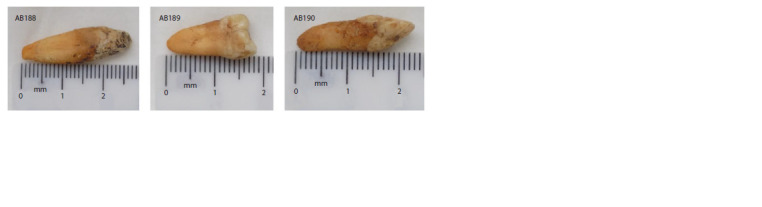 Figure 1
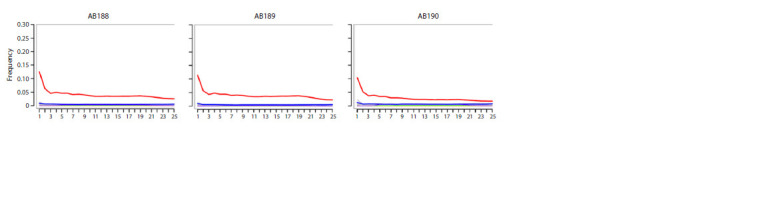 Figure 2
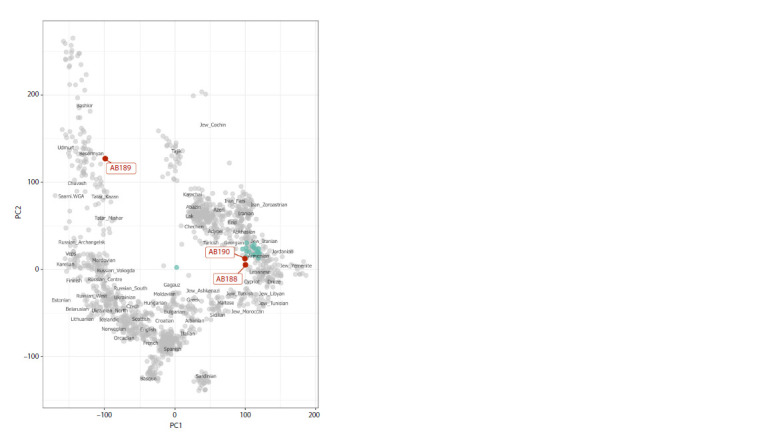 Figure 3
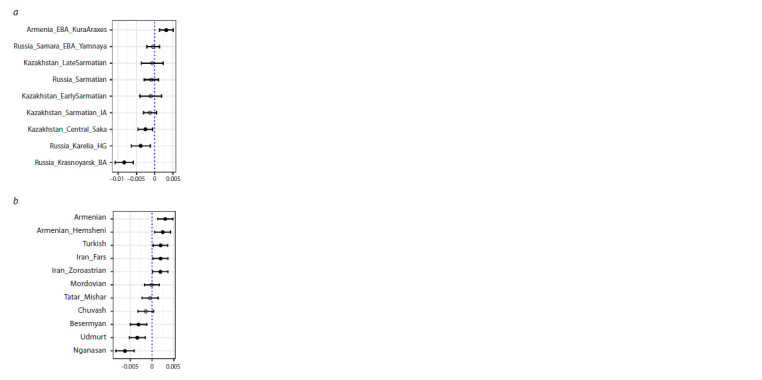 Figure 4
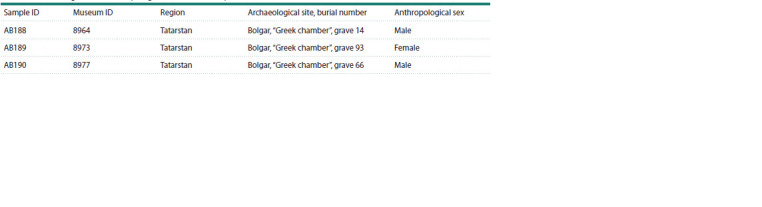 Figure 5
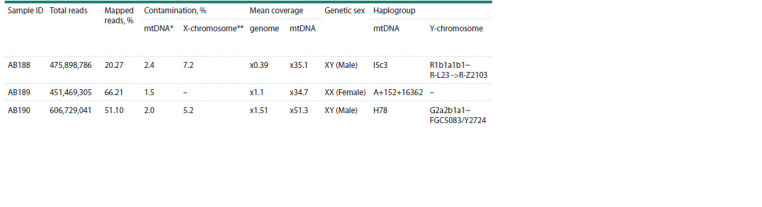 Figure 6
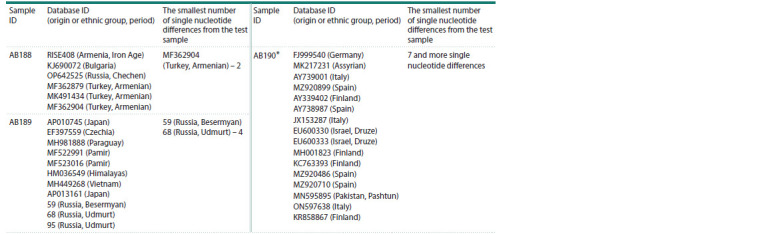 Figure 7
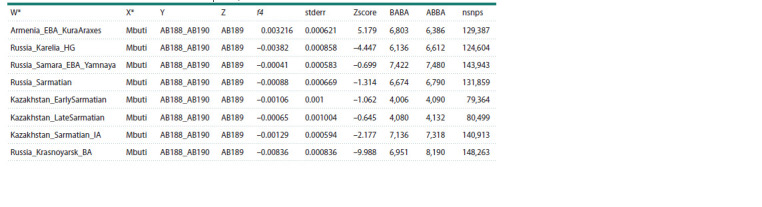 Figure 8
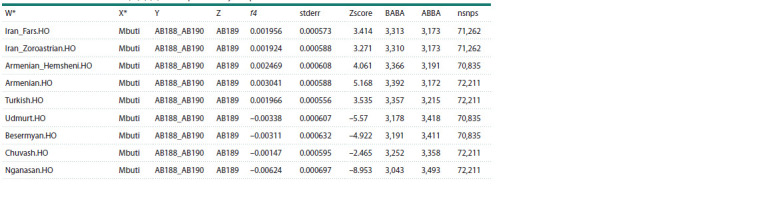 Figure 9
Peer Reviews
No public reviews on file for this paper yet. If you reviewed it on a platform where reviews are public (OpenReview, ICLR, NeurIPS, ICML), you can paste yours below so the community can read it here.
Videos
No videos yet. Explain this paper in a talk, walkthrough, or lecture? Add one.
Taxonomy
TopicsForensic and Genetic Research · Genetic diversity and population structure · Yersinia bacterium, plague, ectoparasites research