Effects of different boiling and stir-fried with bran processes on chemical composition of Pueraria lobata
Mao-Cheng Tang, Xin-Ying Song, Wei Huang, Xiang-Yang Lu, Chong Wang, Hu-Hu Liu

TL;DR
This study explores how different boiling and stir-frying methods affect the chemical composition and heavy metal content of Pueraria lobata.
Contribution
The study introduces optimized processing techniques that significantly reduce heavy metals and increase isoflavone content in Pueraria lobata.
Findings
A boiling process with water-to-white wine ratio 10:1 reduced heavy metals by 96.5% and increased isoflavones by 7.5%.
Stir-frying with 30% bran at medium heat for 1 min minimized overall heavy metal content in P. lobata.
Different stir-frying methods effectively reduced lead, cadmium, chromium, copper, and arsenic levels.
Abstract
Pueraria lobata has a long edible history owing to its special physiological activities. However, research on the processing methods for P. lobata is limited. In this study, a more suitable boiling process was established by optimizing the heating method, solvent selection, and different processing techniques. In addition, the stir-fried with bran method was used to investigate the changes in heavy metal contents in P. lobata. Compared with the traditional process, the heavy metal content was reduced 96.5% and the isoflavone content was increased 7.5% in the decoction obtained by continuous heating with a ratio of water-to-white wine of 10:1. Meanwhile, we explored the effect of different stir-fried with bran processes on the reduction of lead, cadmium, chromium, copper, and arsenic in P. lobata. The results showed that the use of medium heat for 20 s and 30% bran roasting for 1 min…
Genes, proteins, chemicals, diseases, species, mutations and cell lines named across the full text — each resolved to its canonical identifier and authoritative record.
Click any figure to enlarge with its caption.
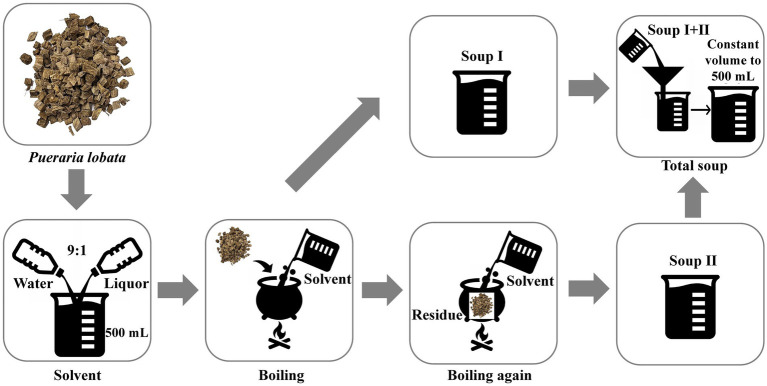 Figure 1
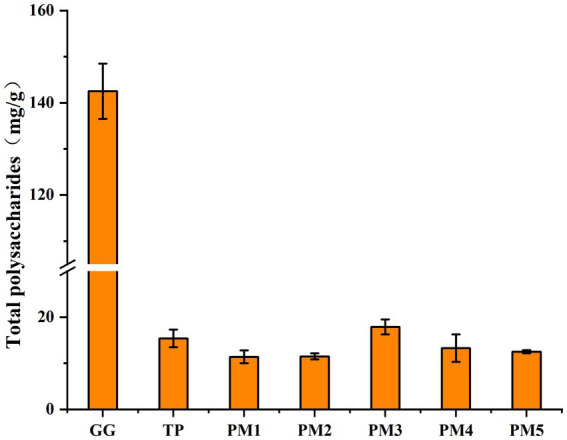 Figure 2
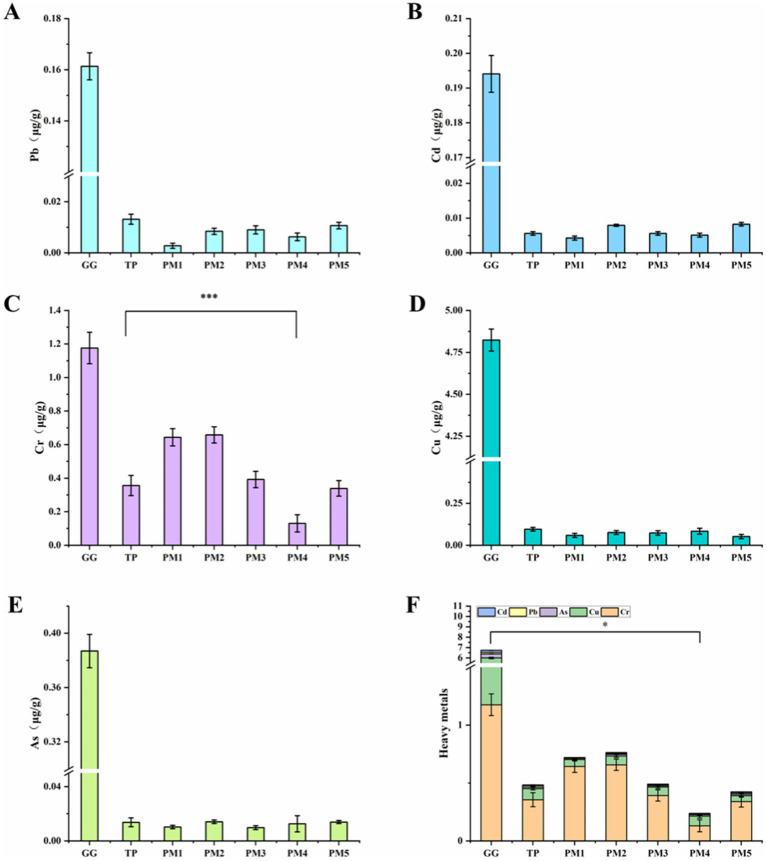 Figure 3
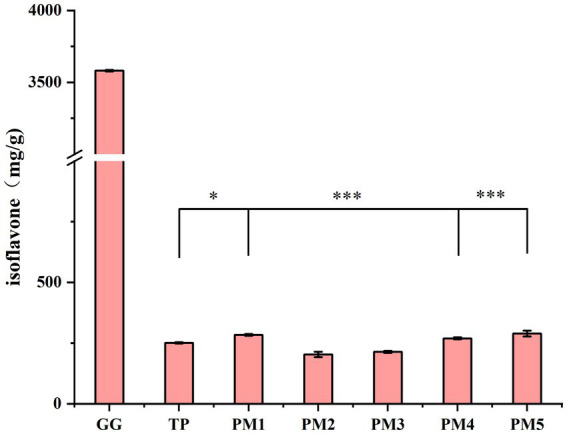 Figure 4
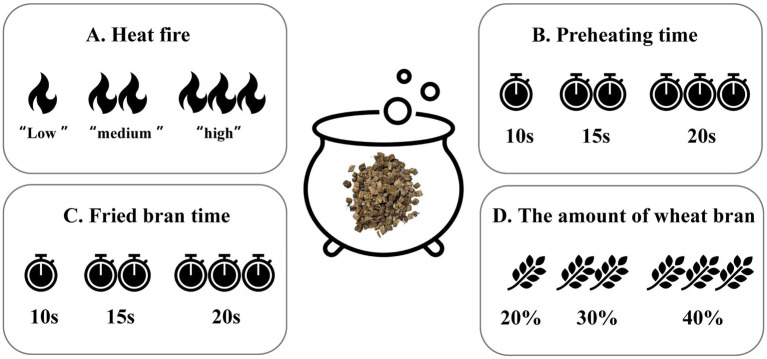 Figure 5
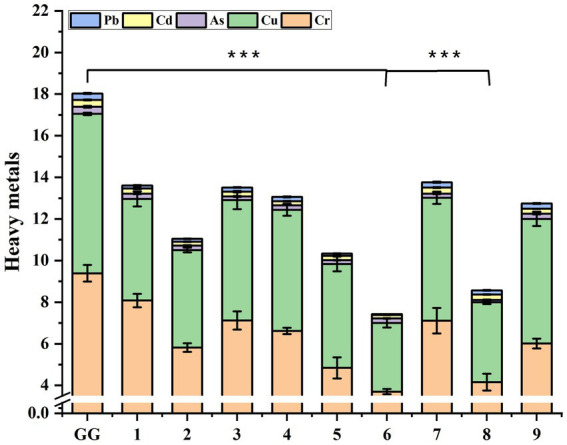 Figure 6
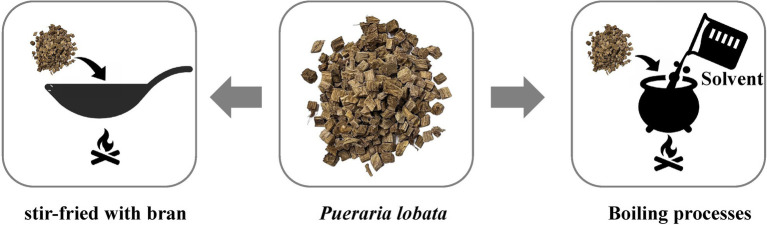 Figure 7
Peer Reviews
No public reviews on file for this paper yet. If you reviewed it on a platform where reviews are public (OpenReview, ICLR, NeurIPS, ICML), you can paste yours below so the community can read it here.
Videos
No videos yet. Explain this paper in a talk, walkthrough, or lecture? Add one.
Taxonomy
TopicsPhytoestrogen effects and research · Food Quality and Safety Studies · Food composition and properties