Association of fetal growth trajectory with mitochondrial DNA copy number in the cord blood of newborns: evidence from a birth cohort
Kai Chen, Junwei Li, Luli Xu, Xiaoxuan Fan, Zhongqiang Cao, Lulu Song, Youjie Wang, Chao Xiong, Aifen Zhou

TL;DR
This study found that male newborns with a consistently low fetal growth pattern had lower mitochondrial DNA copy number in cord blood, suggesting potential early-life metabolic risks.
Contribution
The study reveals a novel link between fetal growth trajectory and mitochondrial DNA copy number in male infants with normal birth weight.
Findings
Three fetal growth patterns were identified: consistently low, moderate, and high-falling.
Male infants with a consistently low growth pattern had 22.55% lower mtDNA copy number compared to those with moderate growth.
No significant association was found between growth patterns and mtDNA copy number in female infants.
Abstract
Mitochondrial DNA copy number (mtDNAcn), an indicator of mitochondrial damage and dysfunction, is widely used in research related to growth and metabolic health. While fetal intrauterine growth has been reported to impact further metabolic health, there is limited evidence regarding the relationship between fetal growth patterns and newborn mtDNAcn, especially in infants with normal birth weights, where varying fetal growth patterns can occur despite having the same birth weight. Therefore, this study aimed to examine the association between fetal growth trajectory and neonatal mtDNAcn among normal birth weight infants. A total of 556 mother–infant pairs from a birth cohort in Wuhan, China, were included in the study. Ultrasound measurements (biparietal diameter, head circumference, abdominal circumference, and femoral length) were taken at 16, 24, 30, and 37 weeks of pregnancy and…
Genes, proteins, chemicals, diseases, species, mutations and cell lines named across the full text — each resolved to its canonical identifier and authoritative record.
Click any figure to enlarge with its caption.
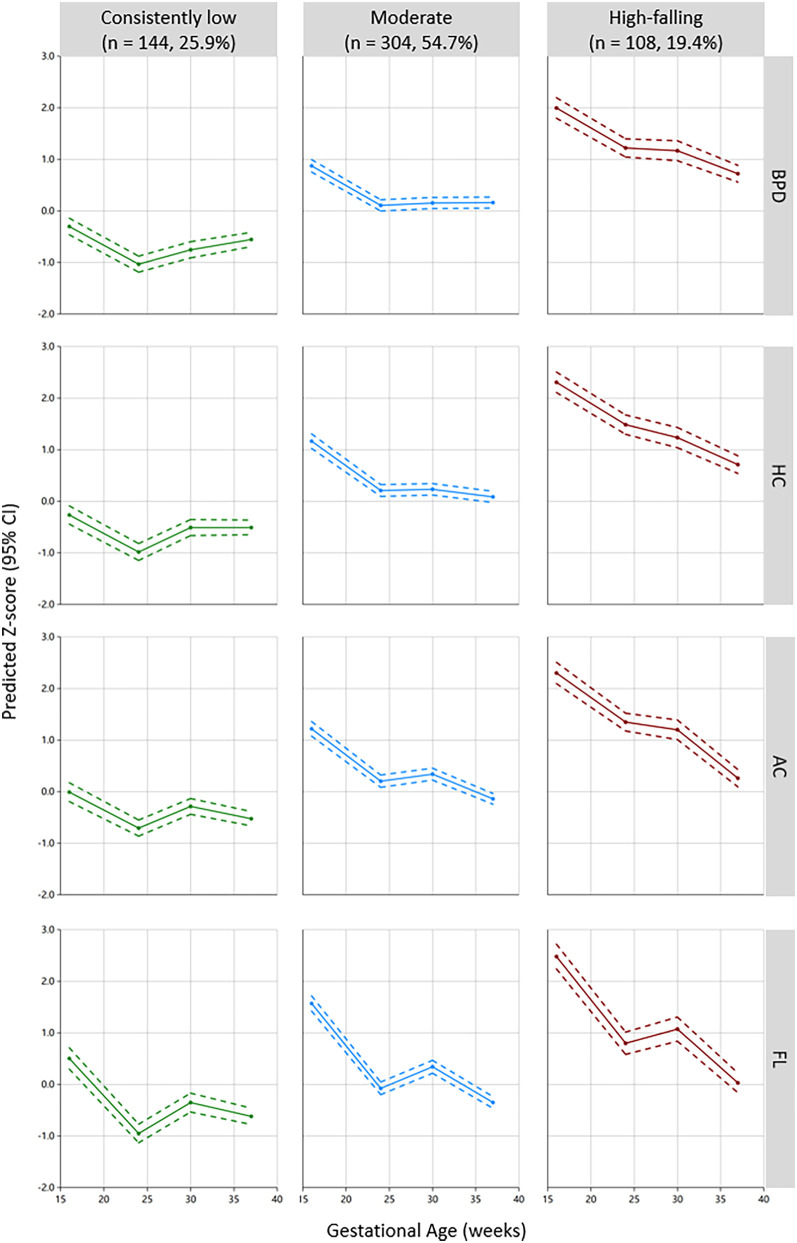 Figure 1
Peer Reviews
No public reviews on file for this paper yet. If you reviewed it on a platform where reviews are public (OpenReview, ICLR, NeurIPS, ICML), you can paste yours below so the community can read it here.
Videos
No videos yet. Explain this paper in a talk, walkthrough, or lecture? Add one.
Taxonomy
TopicsBirth, Development, and Health · Metabolism and Genetic Disorders · Pregnancy and preeclampsia studies