Distance-dependent spatial analysis of micropattern-generated shockwave for cell-type specific intracellular delivery
Aniket Mishra, Shunya Okamoto, Takayuki Shibata, Tuhin Subhra Santra, Sangjin Ryu, Moeto Nagai

TL;DR
This study explores how micropattern size and cell adhesion affect shockwave-based intracellular delivery, improving efficiency while minimizing cell damage.
Contribution
The paper introduces a method using pigmented SU-8 microdisks to analyze distance-dependent shockwave effects for cell-type specific delivery.
Findings
Larger microdisks generate more extensive shockwaves but cause more cell damage.
Smaller microdisks maintain high delivery efficiency with minimal disruption.
Cell adhesion strength significantly influences treatment outcomes and cell resilience.
Abstract
Intracellular delivery of therapeutic materials remains challenging, with conventional micropattern-assisted optoporation methods making it difficult to analyze the spatial effects of individual laser pulses. Here, we show that pigmented SU-8 microdisks enable precise analysis of distance-dependent shockwave effects on cell membrane permeabilization, achieving delivery yields up to 60% in optimized conditions. Using 20 μm and 50 μm microdisks irradiated by nanosecond laser pulses, we discovered that larger patterns generate more extensive shockwaves leading to increased cell damage over broader ranges, while smaller patterns maintain high delivery efficiency with minimal cellular disruption. Furthermore, cellular adhesion strength critically influences treatment outcomes: strongly adherent SAOS-2 cells showed remarkable resilience while weakly adherent HEK-293 cells experienced…
Genes, proteins, chemicals, diseases, species, mutations and cell lines named across the full text — each resolved to its canonical identifier and authoritative record.
Click any figure to enlarge with its caption.
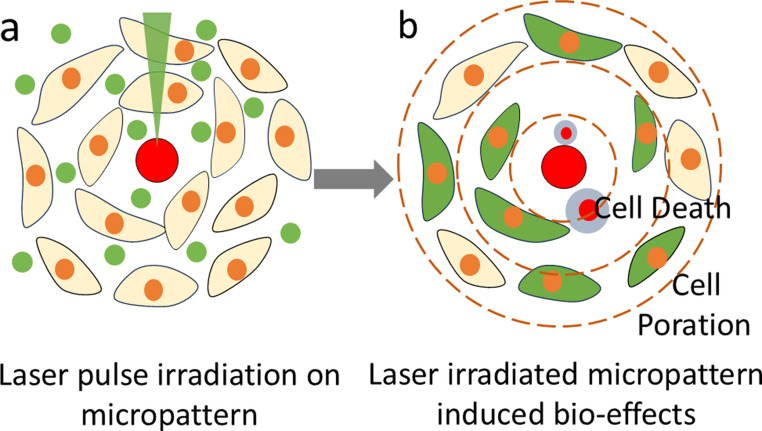 Figure 1
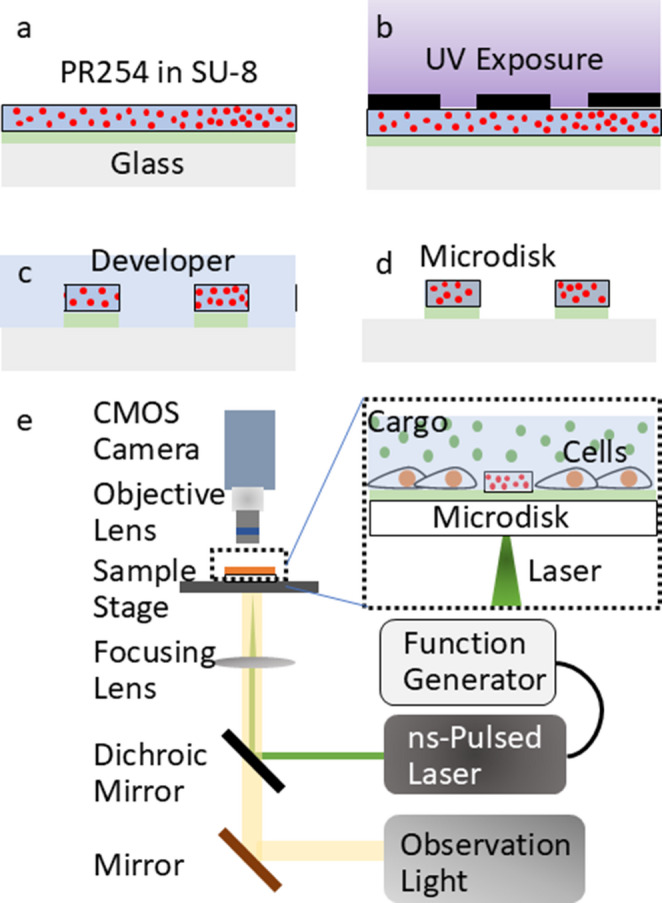 Figure 2
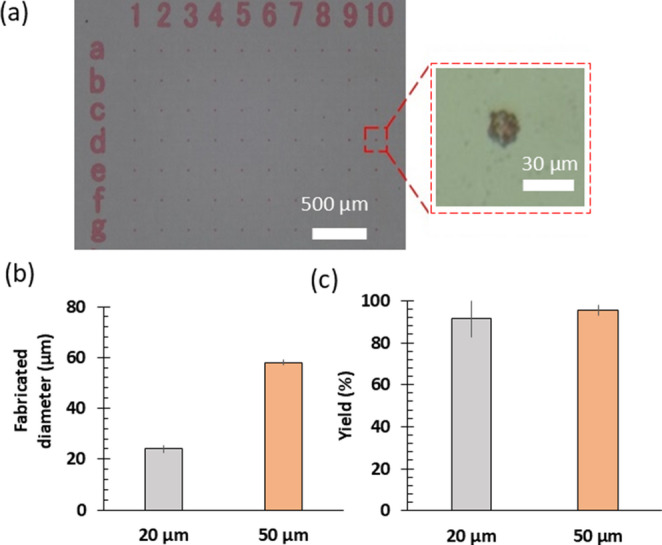 Figure 3
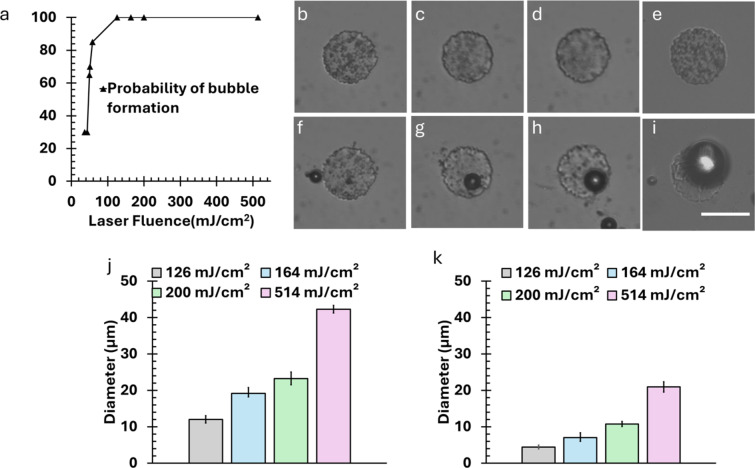 Figure 4
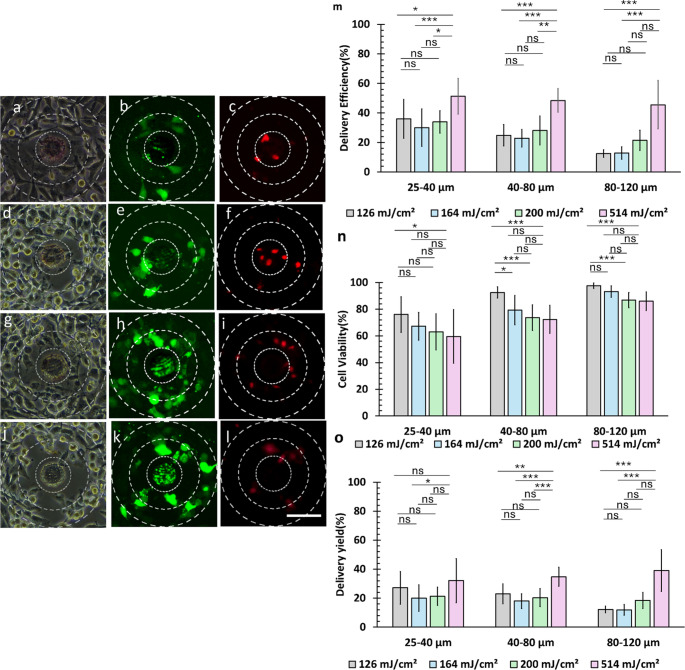 Figure 5
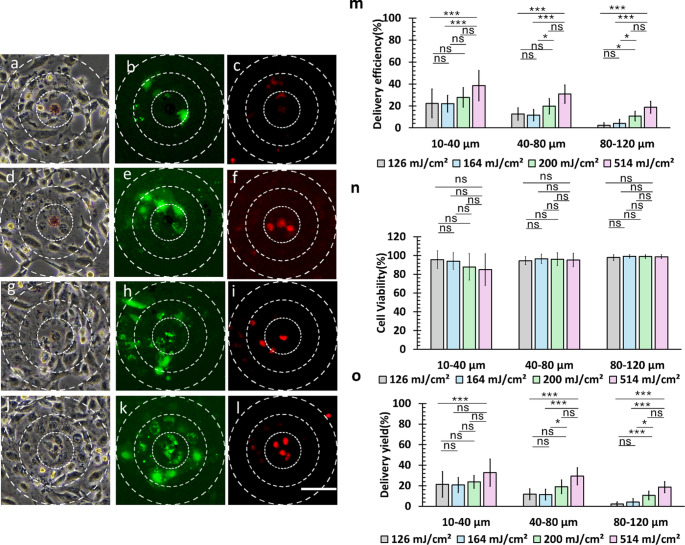 Figure 6
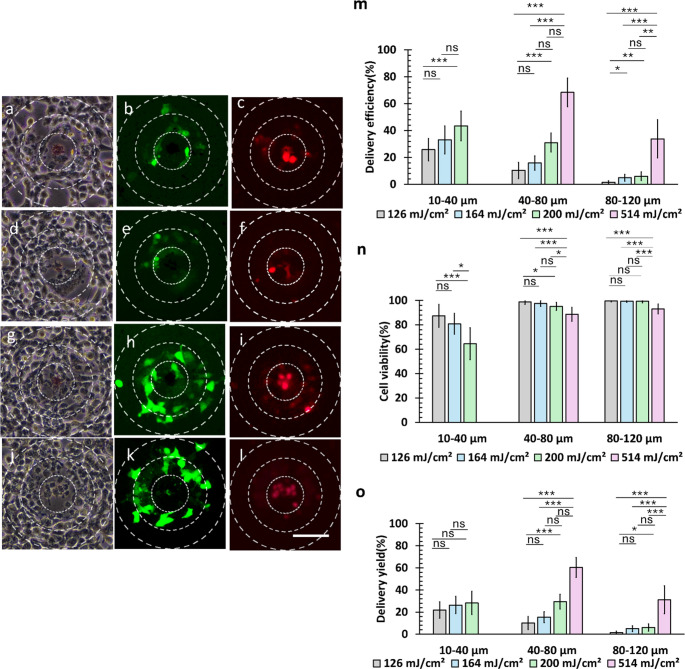 Figure 7
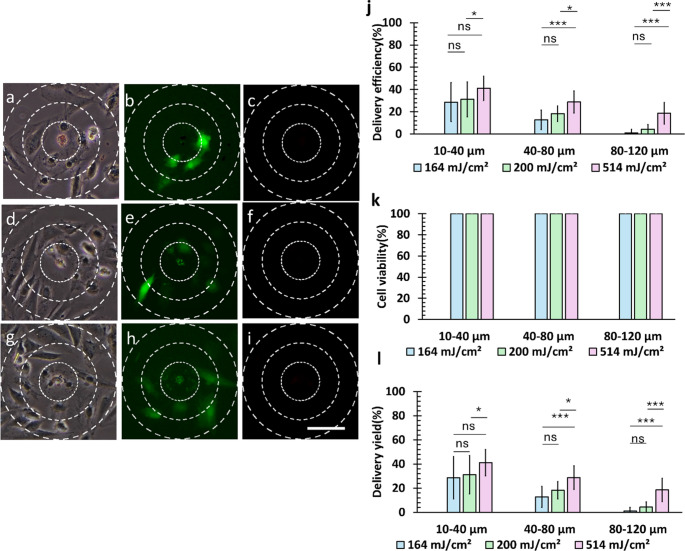 Figure 8
Peer Reviews
No public reviews on file for this paper yet. If you reviewed it on a platform where reviews are public (OpenReview, ICLR, NeurIPS, ICML), you can paste yours below so the community can read it here.
Videos
No videos yet. Explain this paper in a talk, walkthrough, or lecture? Add one.
Taxonomy
TopicsMicrobial Inactivation Methods · Microfluidic and Bio-sensing Technologies · Neuroscience and Neural Engineering