A noteworthy issue: microbiome data variation depending on sampling methods in skin microecology studies in acne vulgaris patients
De-Tian Xu, Qi Chen, Jia-Yi Yang, Guo-Rong Yan, Ling-Lin Zhang, Xiao-Jing Liu, Pei-Ru Wang, Jia Liu, Xiu-Li Wang

TL;DR
This study shows that different sampling methods affect microbiome data in acne patients, emphasizing the need for standardized approaches in skin microecology research.
Contribution
The study demonstrates that sampling methods significantly influence microbiome data in acne vulgaris patients.
Findings
Staphylococcus and Malassezia species showed significant variation depending on the sampling method used.
Proteobacteria and Bacteroidota phyla were also affected by the sampling technique, with distinct abundance patterns.
The study highlights the importance of standardizing sampling methods to improve the accuracy of microbiome research in acne.
Abstract
Skin microecology significantly affects health, with the microbiome being a complex community of microorganisms. Different niche preferences of microorganisms raise concerns about the adequacy of common sampling methods like swabbing and cyanoacrylate biopsy. In this study, we aim to contribute to a more suitable sampling strategy in acne microbiome studies. This study involved ten mild to moderate acne patients. Three sampling methods were used: swab sampling (S1), modified standardized skin surface biopsy (S2), and individual comedo extraction (S3). DNA was extracted and sequenced to analyze the microbiome data. There were significant differences in the bacterial and fungal microbiome data obtained by the three different sampling methods. Staphylococcus spp. (significantly higher in S3, P<0.05) and Malassezia spp. (higher in S3, P<0.05) were most affected by sampling methods.…
Genes, proteins, chemicals, diseases, species, mutations and cell lines named across the full text — each resolved to its canonical identifier and authoritative record.
Click any figure to enlarge with its caption.
 Figure 1
 Figure 2
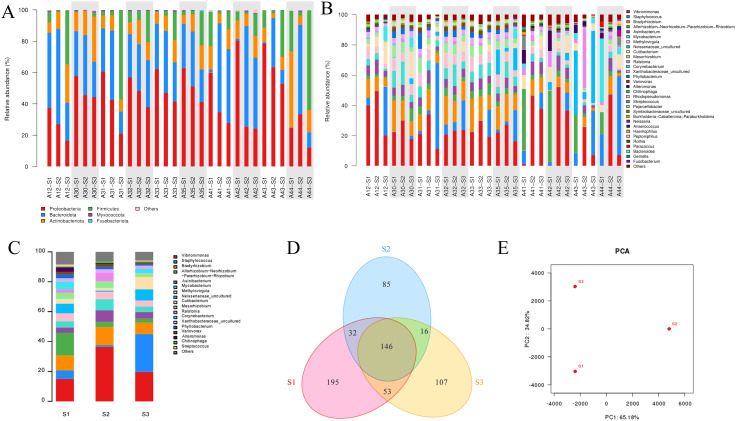 Figure 3
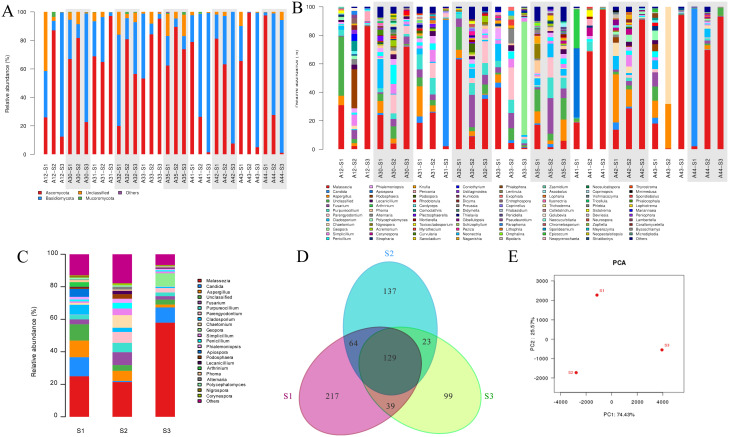 Figure 4
Peer Reviews
No public reviews on file for this paper yet. If you reviewed it on a platform where reviews are public (OpenReview, ICLR, NeurIPS, ICML), you can paste yours below so the community can read it here.
Videos
No videos yet. Explain this paper in a talk, walkthrough, or lecture? Add one.
Taxonomy
TopicsAcne and Rosacea Treatments and Effects · Dermatology and Skin Diseases · Contact Dermatitis and Allergies