Comprehensive mathematical modeling of age-dependent oocyte quality and quantity for predicting live birth rate
Toshio Sujino, Tatsuyuki Ogawa, Akira Komiya, Makiko Tajima, Yuko Takayanagi, Yurie Nako, Hayata Nakajo, Kenichiro Hiraoka, Isao Tamura, Hidetoshi Yamashita, Kiyotaka Kawai

TL;DR
This study creates a mathematical model to predict live birth rates based on age-related changes in oocyte quality and quantity, aiding reproductive decision-making.
Contribution
A novel mathematical model integrating oocyte quality and quantity to predict live birth rates with high accuracy.
Findings
Adjusted R-squared values for curve fitting exceeded 0.9, indicating high model accuracy.
Oocyte quality declines to half its peak by age 40 across datasets.
The predictive model achieved an AUC of 0.84 and 76.4% accuracy in estimating live birth rates.
Abstract
Age-related decline in fertility is widely recognized. However, a quantitative evaluation of changes in oocyte quality and quantity remains insufficient. Therefore, developing a mathematical model to quantitatively predict live birth rates affected by these changes is essential for supporting decision-making in assisted reproductive technology. In this retrospective cohort study, we developed a mathematical model to predict live birth rates based on oocyte quality and quantity using IVF treatment data from our clinic over an 8-year period. In the first stage, medically meaningful model functions were selected, and curve fitting was performed using weighted nonlinear least-squares regression to quantify age-related changes in oocyte quality and quantity. For oocyte quality, a comparative analysis was conducted on our clinical data and other large-scale datasets, modeling the live birth…
Genes, proteins, chemicals, diseases, species, mutations and cell lines named across the full text — each resolved to its canonical identifier and authoritative record.
Click any figure to enlarge with its caption.
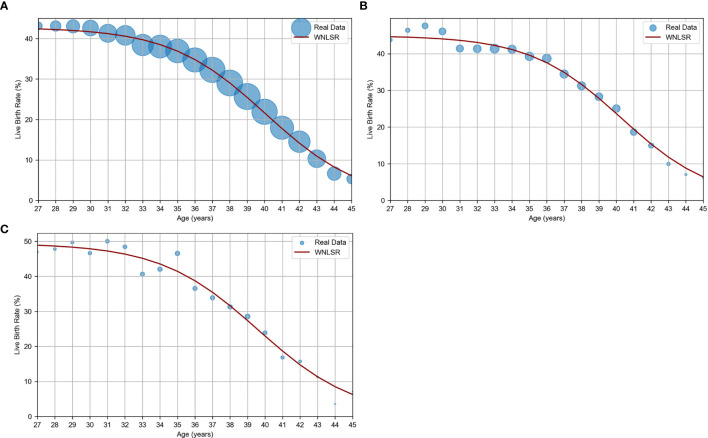 Figure 1
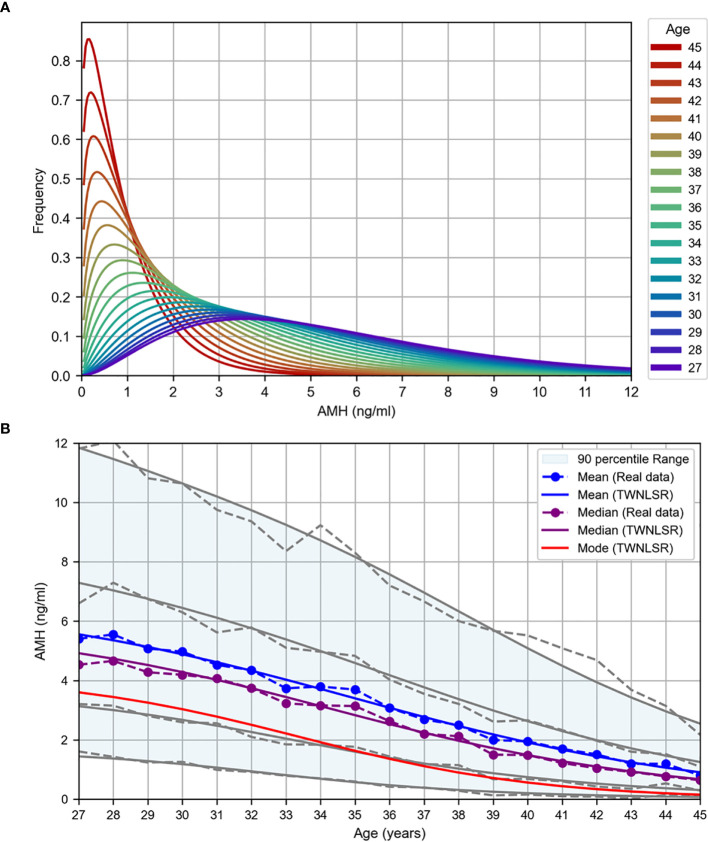 Figure 2
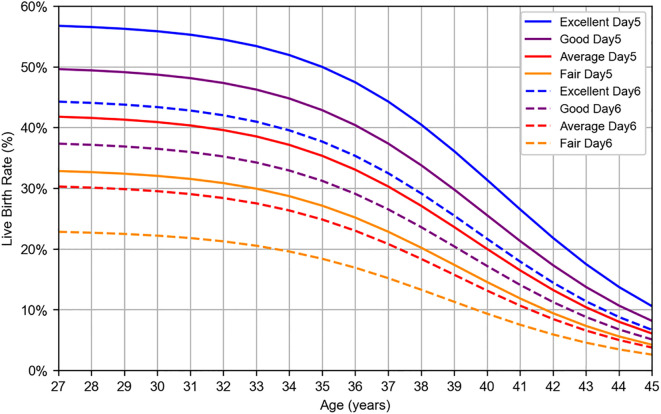 Figure 3
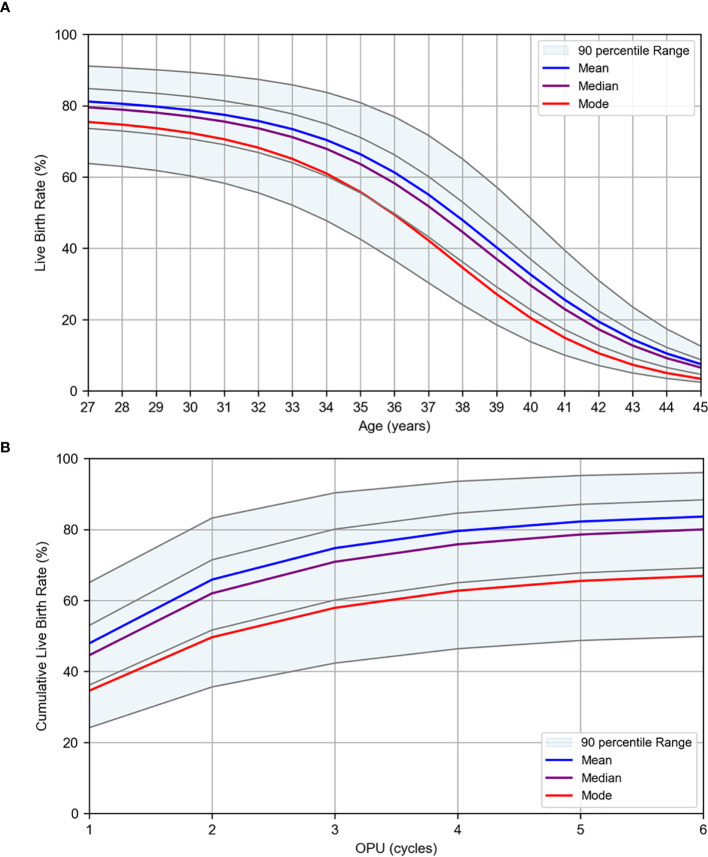 Figure 4
Peer Reviews
No public reviews on file for this paper yet. If you reviewed it on a platform where reviews are public (OpenReview, ICLR, NeurIPS, ICML), you can paste yours below so the community can read it here.
Videos
No videos yet. Explain this paper in a talk, walkthrough, or lecture? Add one.
Taxonomy
TopicsAssisted Reproductive Technology and Twin Pregnancy · Ovarian function and disorders · Reproductive Biology and Fertility