Comparison of the prevalence of antimicrobial-resistant Escherichia coli, verotoxin-producing E. coli and enteropathogenic E. coli in griffon vultures (Gyps fulvus), cinereous vultures (Aegypius monachus) and red kites (Milvus milvus) fed in the wild and in a rescue centre
Alejandra Cerezo-Caro, Alicia Mas, Fernando González-González, Andrea Rodríguez-Carrión, Saskia C. Flament-Simon, Jesús E. Blanco, Abel Martínez-Rodrigo, Clara Hurtado-Morillas, Gustavo Domínguez-Bernal, José A. Orden

TL;DR
This study found high levels of antibiotic-resistant E. coli in vultures and red kites, with some carrying zoonotic strains, suggesting a public health risk.
Contribution
First study to investigate antimicrobial resistance and zoonotic E. coli in cinereous vultures and red kites.
Findings
High antimicrobial resistance (25–>50%) was observed in E. coli isolates from vultures and red kites.
Two VTEC and five EPEC isolates were detected, indicating potential zoonotic risk.
No significant difference in resistance levels between initial and follow-up samplings.
Abstract
Antimicrobial resistance in Escherichia coli from avian scavengers remains poorly characterized, with limited data available for griffon vultures (Gyps fulvus) and no studies on cinereous vultures (Aegypius monachus) or red kites (Milvus milvus). In addition, the presence of verotoxin-producing E. coli (VTEC) and enteropathogenic E. coli (EPEC), both zoonotic pathogens, in these animal species has not been studied before. A total of 282 E. coli isolates were recovered from faecal samples of 28 griffon vultures, 22 cinereous vultures and 13 red kites. Isolates were tested for resistance to 14 antimicrobial agents and screened for vt1, vt2, and eae genes. Sampling was performed upon arrival at a wildlife rescue centre and after several weeks of housing that centre. High levels of antimicrobial resistance (25–50%) were detected for amoxicillin-clavulanic acid, ceftriaxone, tetracycline,…
Genes, proteins, chemicals, diseases, species, mutations and cell lines named across the full text — each resolved to its canonical identifier and authoritative record.
Click any figure to enlarge with its caption.
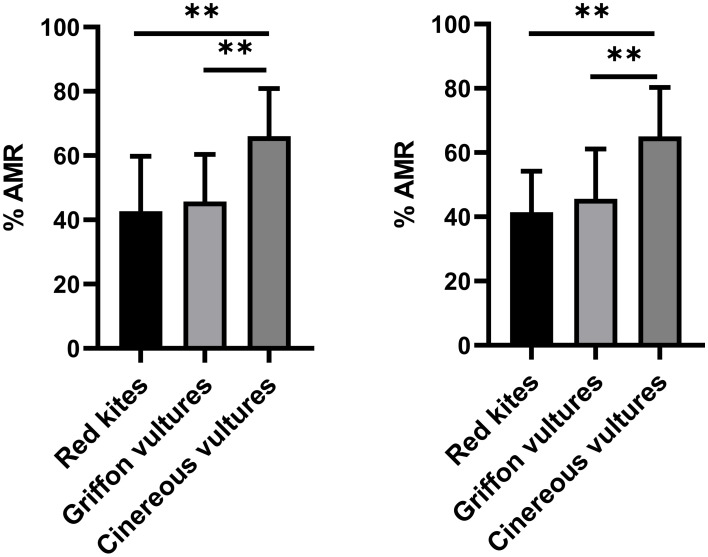 Figure 1
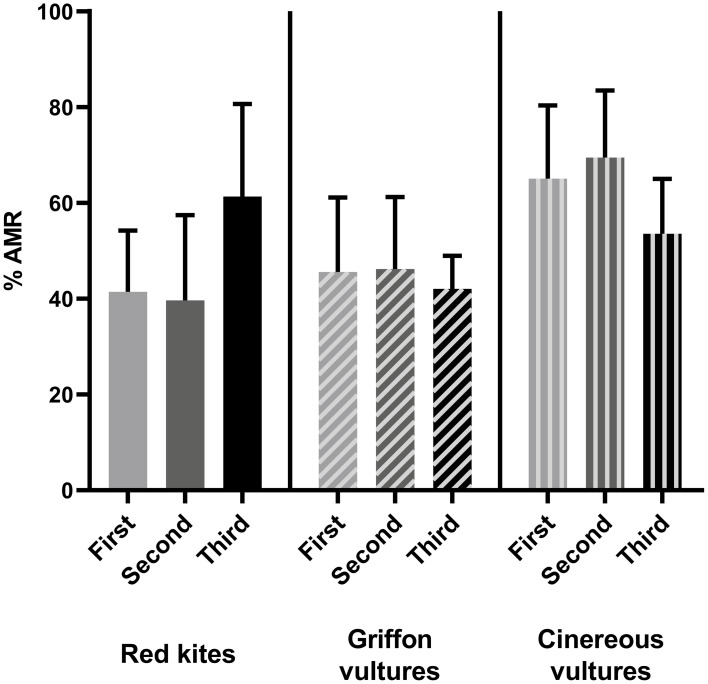 Figure 2
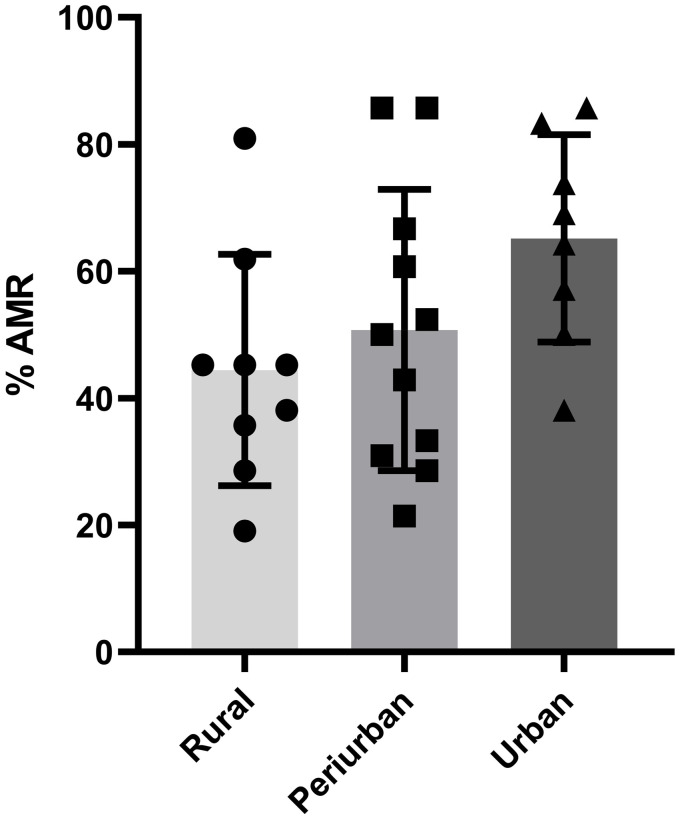 Figure 3
Peer Reviews
No public reviews on file for this paper yet. If you reviewed it on a platform where reviews are public (OpenReview, ICLR, NeurIPS, ICML), you can paste yours below so the community can read it here.
Videos
No videos yet. Explain this paper in a talk, walkthrough, or lecture? Add one.
Taxonomy
TopicsEscherichia coli research studies · Yersinia bacterium, plague, ectoparasites research · Microbial infections and disease research