Endoscopic Ultrasound‐guided Drainage With Lumen‐apposing Metal Stent versus Plastic Stent for the Treatment of Pancreatic Pseudocyst: A Systematic Review and Meta‐analysis
André Orsini Ardengh, Thiago Arantes de Carvalho Visconti, Marcelo Klotz Dall'Agnol, Ygor Rocha Fernandes, Matheus de Oliveira Veras, Evellin Souza Valentim dos Santos, Marcos Eduardo Lera do Santos, Sergio Eiji Matuguma, José Celso Ardengh, Wanderley Marques Bernardo

TL;DR
This study compares two drainage methods for pancreatic pseudocysts and finds that metal stents offer better success rates and faster procedures than plastic stents.
Contribution
The study provides a meta-analysis comparing lumen-apposing metal stents and plastic stents for endoscopic ultrasound-guided drainage of pancreatic pseudocysts.
Findings
Lumen-apposing metal stents (LAMS) showed higher clinical success rates than plastic stents.
LAMS reduced procedure time compared to plastic stents.
No significant differences were found in adverse events, recurrence, or technical success between the two methods.
Abstract
Pancreatic pseudocyst (PP), following acute or chronic pancreatitis, may become symptomatic or persist beyond 6–8 weeks, requiring drainage. Endoscopic ultrasonography‐guided drainage (EUS‐D) is the preferred method, using double pigtail plastic stents (DPPS) or self‐expandable metallic stents (SEMS), such as lumen‐apposing metal stents (LAMS). This meta‐analysis compares DPPS and LAMS in EUS‐D for PP, focusing on technical success, clinical success, adverse events (AEs), recurrence, and procedure time. A search strategy was conducted in MEDLINE, Embase, Lilacs, and Cochrane databases according to PRISMA guidelines. Random‐effect models were used for statistical analysis based on intention‐to‐treat. Heterogeneity was assessed using the I2 test. The risk of bias was assessed using the Risk of Bias in Non‐randomized Studies—of Exposures tool. The quality of evidence was assessed using…
Genes, proteins, chemicals, diseases, species, mutations and cell lines named across the full text — each resolved to its canonical identifier and authoritative record.
Click any figure to enlarge with its caption.
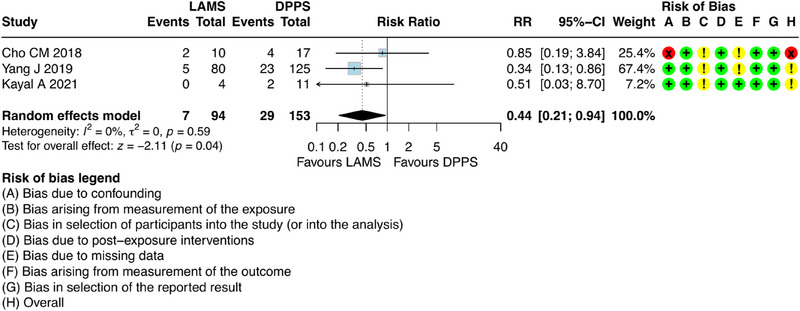 Figure 1
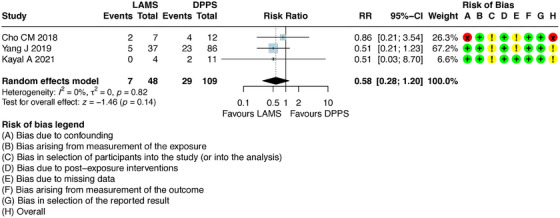 Figure 2
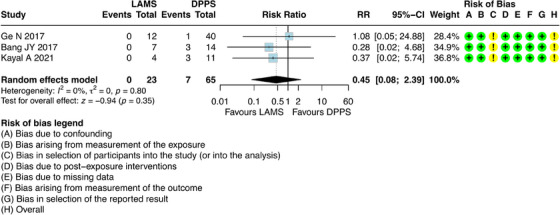 Figure 3
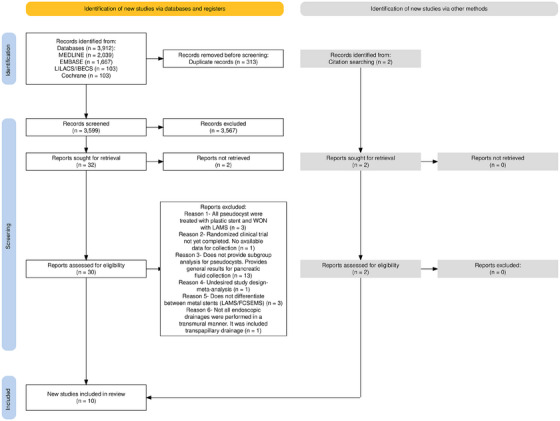 Figure 4
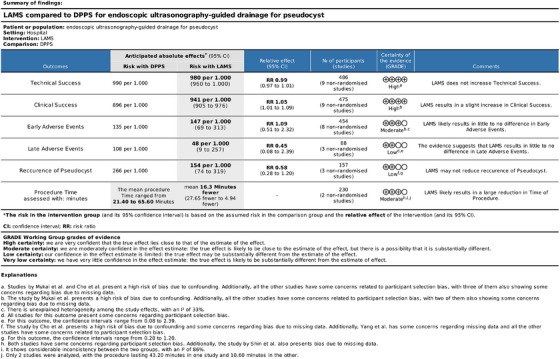 Figure 5
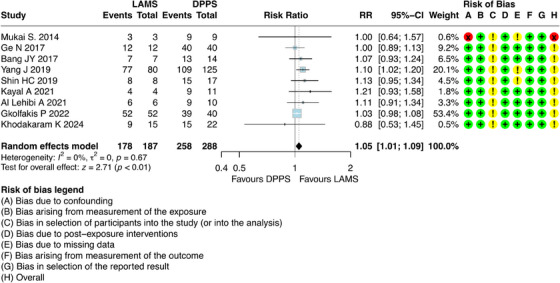 Figure 6
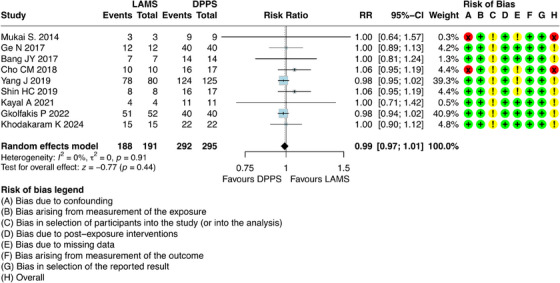 Figure 7
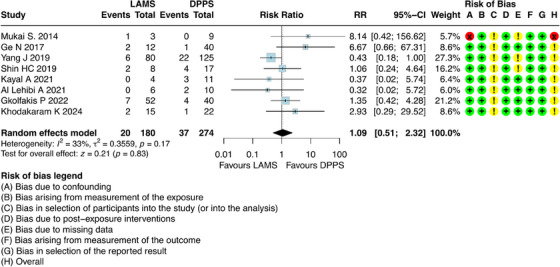 Figure 8
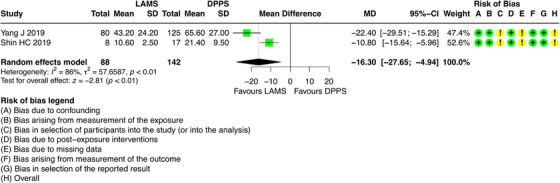 Figure 9
Peer Reviews
No public reviews on file for this paper yet. If you reviewed it on a platform where reviews are public (OpenReview, ICLR, NeurIPS, ICML), you can paste yours below so the community can read it here.
Videos
No videos yet. Explain this paper in a talk, walkthrough, or lecture? Add one.
Taxonomy
TopicsPancreatitis Pathology and Treatment · Pancreatic and Hepatic Oncology Research · Gallbladder and Bile Duct Disorders