Cellular and molecular mechanisms of alpha lipoic acid’s protective effects against diclofenac-induced hepatorenal toxicity
Hanan A. Ogaly, Neven Hassan, Reham M. Abd Elsalam, Shymaa El Badawy, Muhammad A. Alsherbiny, Bardes Hassan, Fatimah A.M. Al-Zahrania, Gehan Othman, Chun Guang Li, Sherif H. Elmosalamy

TL;DR
This study shows that alpha lipoic acid protects against liver and kidney damage caused by diclofenac through antioxidant, anti-inflammatory, and Nrf2-related mechanisms.
Contribution
The study identifies the Nrf2 signaling pathway as a key mechanism in ALA's hepatorenal protection against diclofenac toxicity.
Findings
Alpha lipoic acid reduced oxidative stress and inflammation in liver and kidney tissues.
ALA improved liver and kidney histology and reduced caspase-3 expression, indicating anti-apoptotic effects.
Nrf2 pathway genes were upregulated by ALA, suggesting a molecular mechanism for its protective effects.
Abstract
The cellular and molecular pathways of α-lipoic acid’s (ALA’s) protective effect were assessed against diclofenac (DIC) hepatorenal injury in vivo and against a pro-inflammatory stimulus in vitro. The injury was induced in 28 adult male Wistar rats weighing 130–160 g by a single intraperitoneal injection of DIC (50 mg per kg body weight (b.w.)) on the fifth day. Seven positive control rats had received no hepatorenally protective compounds. Oral 100 mg/kg b.w. doses of silymarin (SLY) were given to seven animals, 50 mg/kg b.w. doses of ALA to seven more and 100 mg/kg b.w. doses of it to another seven for five days before DIC insult. Seven negative control rats received only distilled water instead of protective compound and in the injection. The anti-inflammatory effect of ALA was also assayed in murine RAW264.7 macrophage cells. In the cells, ALA was antioxidant and anti-inflammatory…
Genes, proteins, chemicals, diseases, species, mutations and cell lines named across the full text — each resolved to its canonical identifier and authoritative record.
Click any figure to enlarge with its caption.
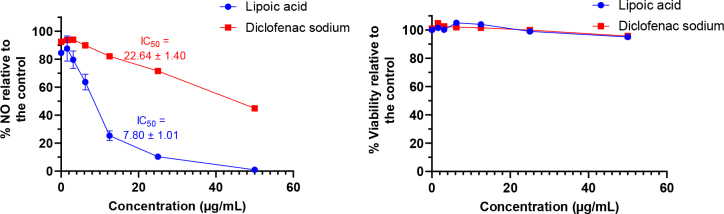 Figure 1
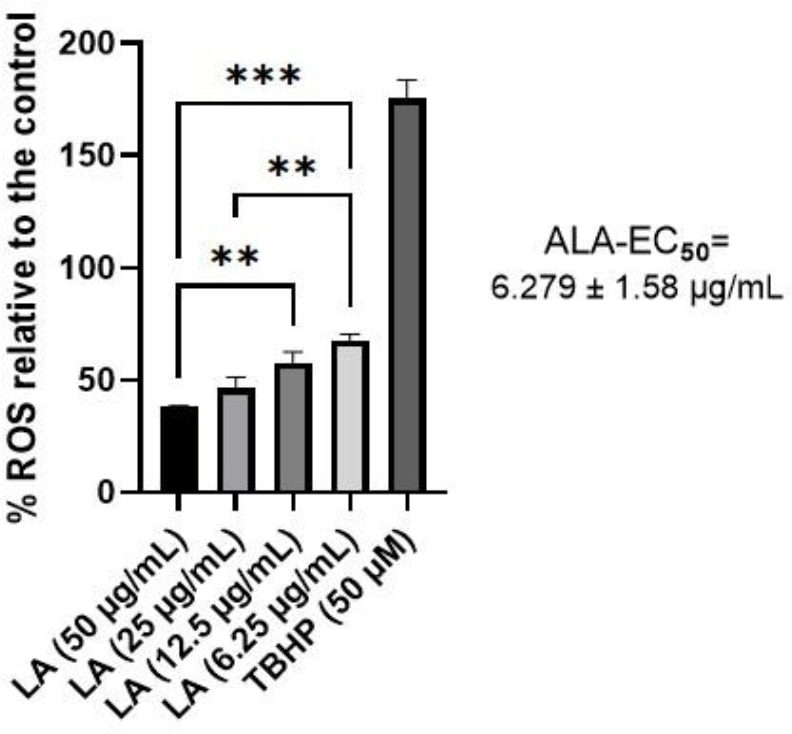 Figure 2
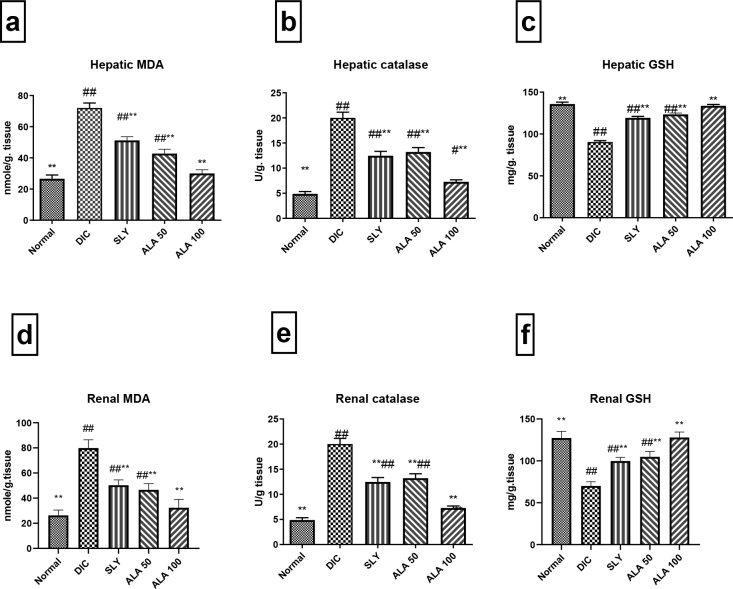 Figure 3
 Figure 4
 Figure 5
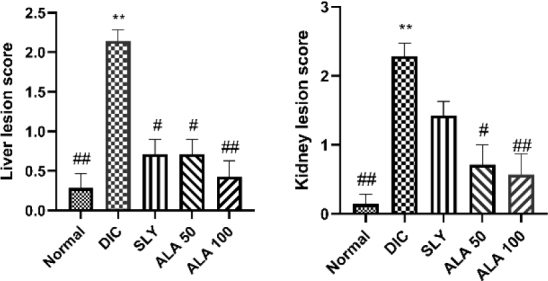 Figure 6
 Figure 7
 Figure 8
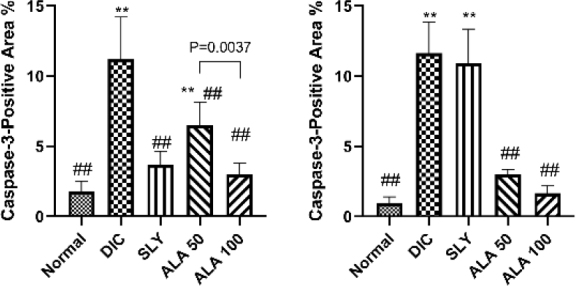 Figure 9
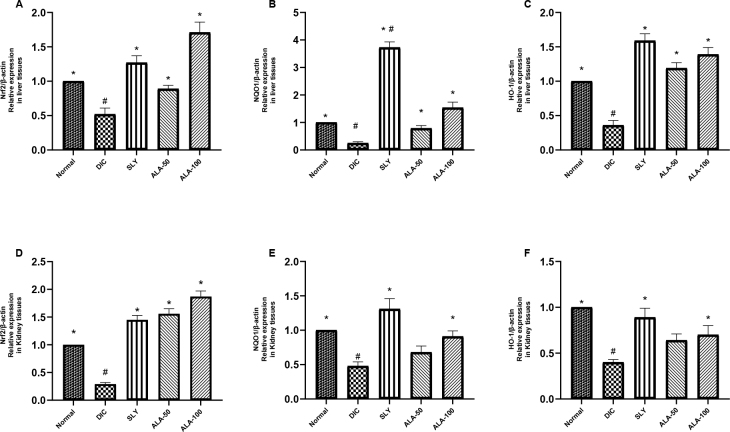 Figure 10
Peer Reviews
No public reviews on file for this paper yet. If you reviewed it on a platform where reviews are public (OpenReview, ICLR, NeurIPS, ICML), you can paste yours below so the community can read it here.
Videos
No videos yet. Explain this paper in a talk, walkthrough, or lecture? Add one.
Taxonomy
TopicsBiochemical Acid Research Studies · Drug-Induced Hepatotoxicity and Protection · Pharmacological Effects of Natural Compounds