Evaluation of small grain cover crops as a sustainable nematode management strategy for Meloidogyne incognita and Rotylenchulus reniformis in the Southeastern U.S
Sloane McPeak, Kara Gordon, Bisho Lawaju, Kathy Lawrence

TL;DR
This study evaluates small grain cover crops as a sustainable way to manage nematodes in cotton production in the Southeastern U.S., finding that different crops affect nematode populations and forage quality differently.
Contribution
The study introduces a novel evaluation of small grain cover crops for nematode management and forage quality in cotton systems.
Findings
Oats showed the highest biomass and grain yield, while barley supported the highest population density of Meloidogyne incognita.
Oats had the best forage quality metrics including total digestible nutrients and relative feed value.
Cover crop selection should consider specific management goals as nematode populations varied but remained low in field trials.
Abstract
This experiment investigates five small grain winter cover crops including multiple genotypes of barley (Hordeum vulgare L), oats (Avena sativa L.), rye (Secale cereale L.), triticale (x Triticosecale Wittmack), and wheat (Triticum aestivum L.) as a sustainable nematode management strategy for Meloidogyne incognita (root-knot nematode) and Rotylenchulus reniformis (reniform nematode) in cotton production in a Southeastern U.S. Greenhouse (2019), and field experiments (2019–2021) evaluated these crops for nematode host status, forage quality, and grain yield. Greenhouse experiments showed that all small grains had higher average M. incognita egg counts than a standard corn (Zea mays L.) variety. Overall, barley and wheat were suitable hosts (Rf>2), triticale and oat were moderate hosts (Rf=1-2), while three cultivars (Forerunner’ and ‘OG170039’ triticale, “ORO 4372’ oat) were poor hosts…
Genes, proteins, chemicals, diseases, species, mutations and cell lines named across the full text — each resolved to its canonical identifier and authoritative record.
Click any figure to enlarge with its caption.
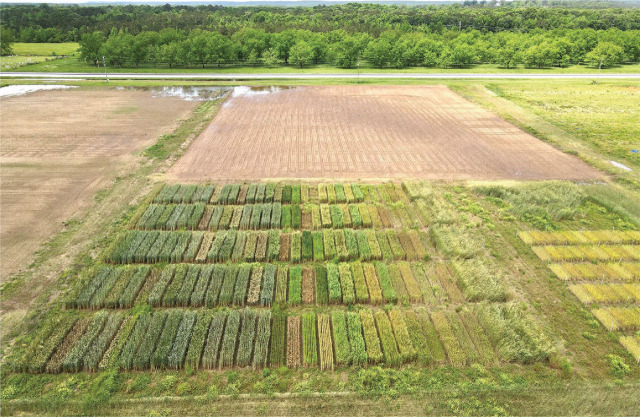 Figure 1
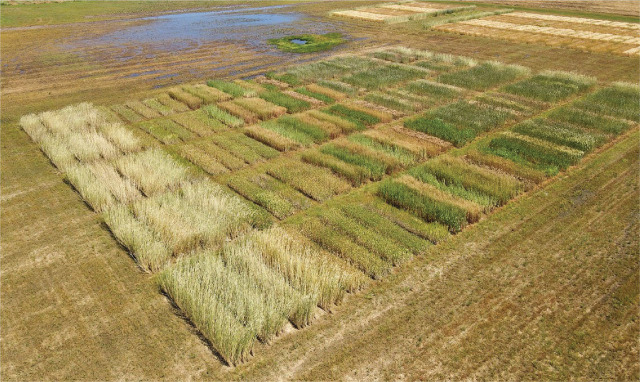 Figure 2
Peer Reviews
No public reviews on file for this paper yet. If you reviewed it on a platform where reviews are public (OpenReview, ICLR, NeurIPS, ICML), you can paste yours below so the community can read it here.
Videos
No videos yet. Explain this paper in a talk, walkthrough, or lecture? Add one.
Taxonomy
TopicsNematode management and characterization studies · Legume Nitrogen Fixing Symbiosis · Cassava research and cyanide