A 62-Year-Old Male Patient With Spinal Lesions Following Fingolimod Discontinuation in the Setting of Disseminated Shingles
Michelle Y Ko, Eric Williamson

TL;DR
An older man with MS had severe flare-ups after stopping fingolimod due to shingles, suggesting a possible rebound effect.
Contribution
This case highlights a potential rebound effect of discontinuing fingolimod in MS patients.
Findings
The patient experienced two severe MS exacerbations within six weeks of stopping fingolimod.
Disseminated zoster infection led to discontinuation of long-term fingolimod treatment.
The case raises suspicion of early fingolimod-associated rebound despite possible confounding infections.
Abstract
The association between the discontinuation of therapies and “rebound” multiple sclerosis (MS) activity has been frequently reported, yet is incompletely understood. We report an older male with previously well-controlled MS who was taken off his decade-long fingolimod treatment due to disseminated zoster infection, who subsequently experienced two severe MS exacerbations within six weeks. Though clinicians should consider possible confounding influences from infections such as varicella-zoster virus (VZV) and COVID-19, this case raised the most concern for suspicion of early fingolimod-associated rebound.
Genes, proteins, chemicals, diseases, species, mutations and cell lines named across the full text — each resolved to its canonical identifier and authoritative record.
Click any figure to enlarge with its caption.
 Figure 1
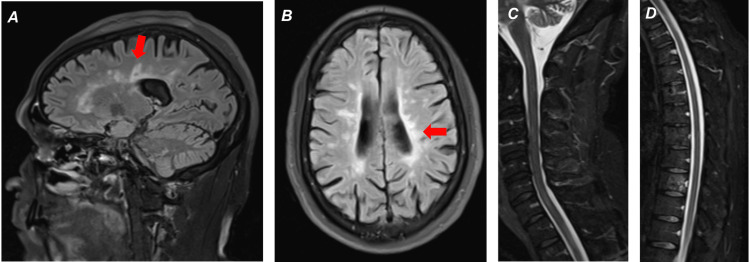 Figure 2
 Figure 3
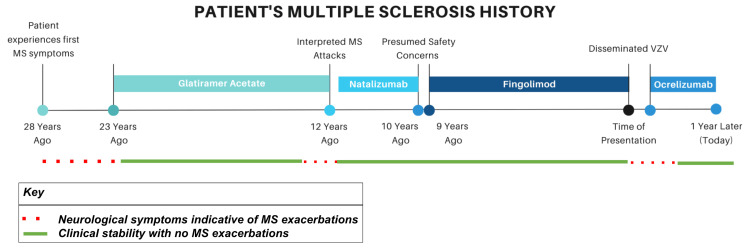 Figure 4
Peer Reviews
No public reviews on file for this paper yet. If you reviewed it on a platform where reviews are public (OpenReview, ICLR, NeurIPS, ICML), you can paste yours below so the community can read it here.
Videos
No videos yet. Explain this paper in a talk, walkthrough, or lecture? Add one.
Taxonomy
TopicsSphingolipid Metabolism and Signaling · Multiple Sclerosis Research Studies · Research on Leishmaniasis Studies