frizzled 5 mutant zebrafish are genetically sensitised to developing microphthalmia and coloboma
Clinton Monfries, Stephen Carter, Paris Ataliotis, Aya Bseisu, Mahum Shaikh, Maria Hernández-Bejarano, Mohammed Fourteia, Mara Ioana Maftei, Rodrigo M. Young, Stephen W. Wilson, Gaia Gestri, Florencia Cavodeassi

TL;DR
This study shows that zebrafish lacking FZD5 develop normal eyes but are more likely to have eye defects when other genes are also disrupted, similar to some human conditions.
Contribution
The study identifies aamp as a new gene involved in eye development and shows that FZD5 mutants are genetically sensitized to eye malformations.
Findings
Zebrafish fzd5 mutants develop normal eyes without additional genetic disruption.
Fzd5 mutants become sensitized to eye defects when other ocular genes are disrupted.
The gene aamp was identified as a novel contributor to eye morphogenesis.
Abstract
Microphthalmia and coloboma are structural malformations of the eyes that arise from defective morphogenesis and are among the most severe defects associated with paediatric blindness. Frizzled class receptor 5 (FZD5) is a Wnt receptor expressed in the developing eye, and individuals with variants in FZD5 exhibit microphthalmia/coloboma, supporting a role for this receptor in human eye formation. Here, we show that zebrafish fzd5 mutants homozygous for complete loss-of-function or predicted dominant-negative alleles display no obvious eye defects during embryogenesis. Rather, they develop eye defects comparable to those described in humans only upon simultaneous abrogation of additional genes associated with ocular malformations. Thus, eye development can occur normally in the absence of Fzd5 in zebrafish, but mutants are sensitised to developing eye malformations. By exploiting the…
Genes, proteins, chemicals, diseases, species, mutations and cell lines named across the full text — each resolved to its canonical identifier and authoritative record.
Click any figure to enlarge with its caption.
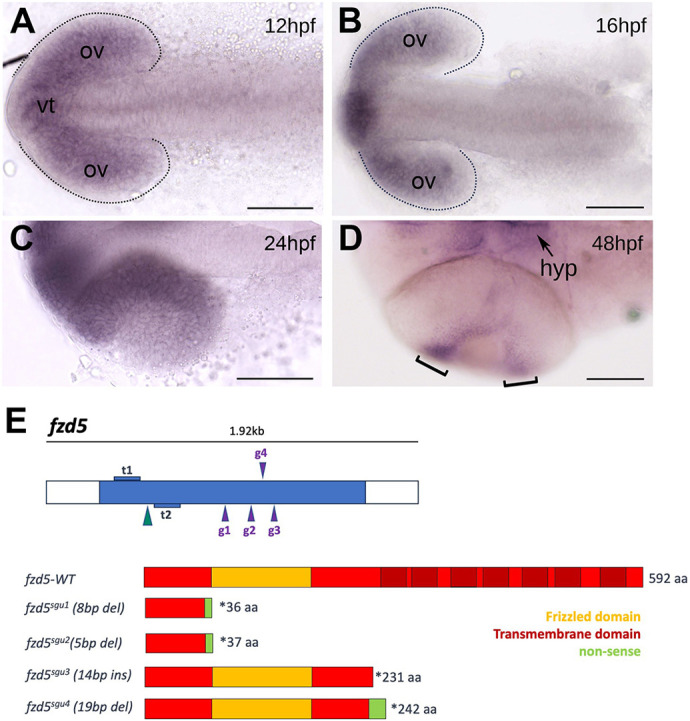 Figure 1
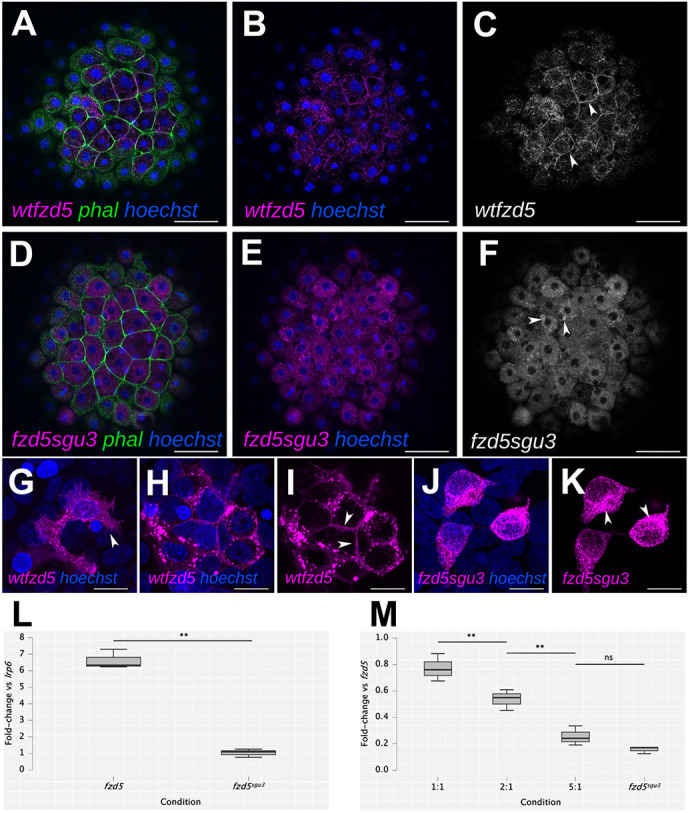 Figure 2
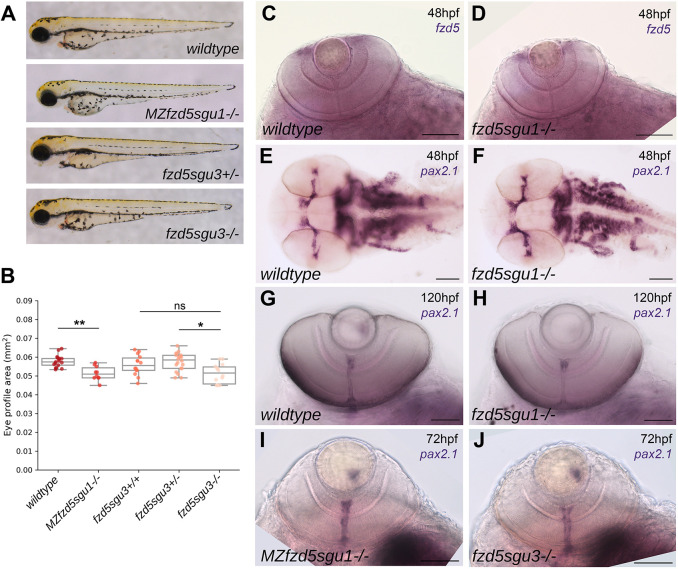 Figure 3
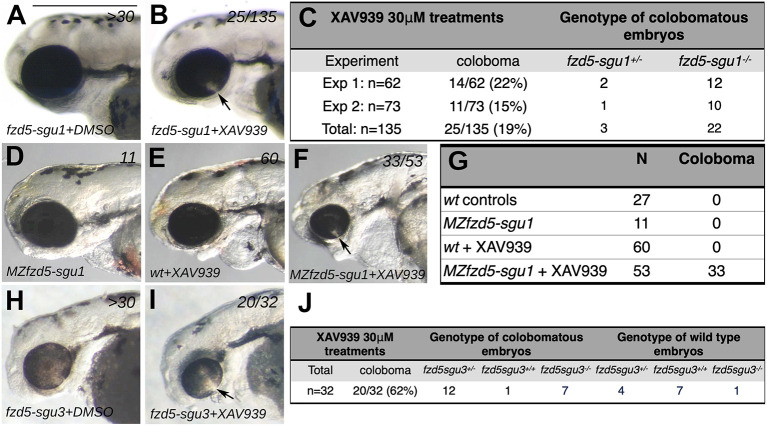 Figure 4
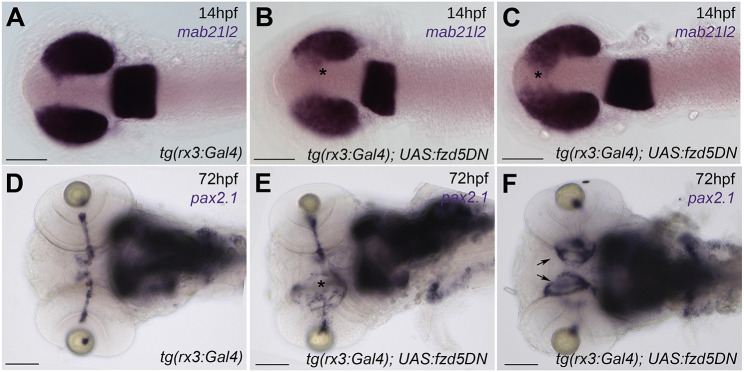 Figure 5
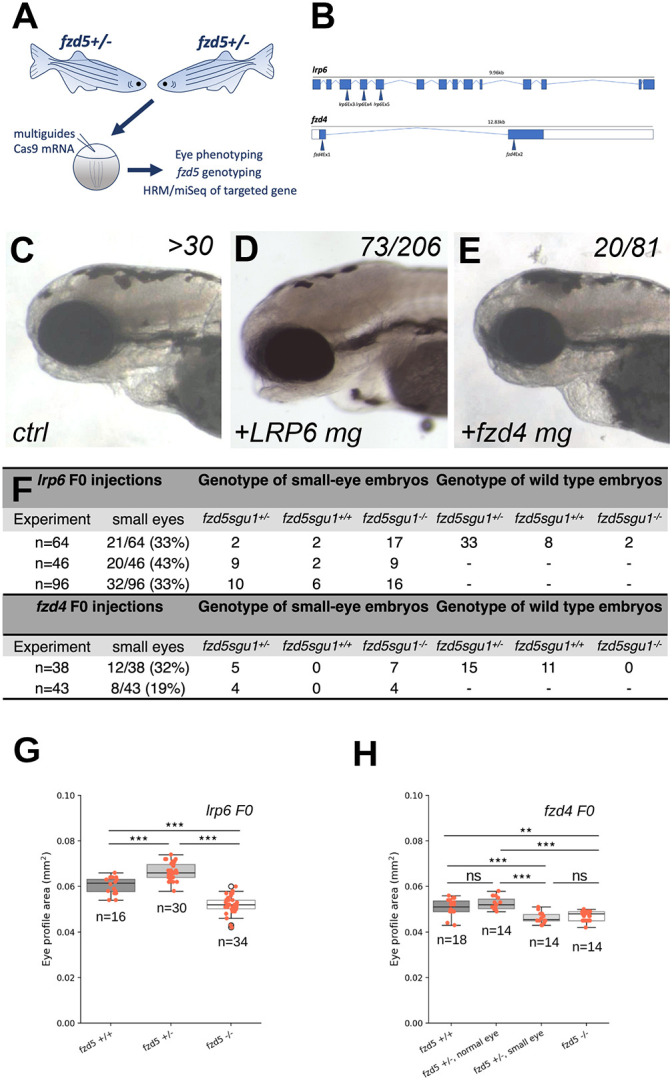 Figure 6
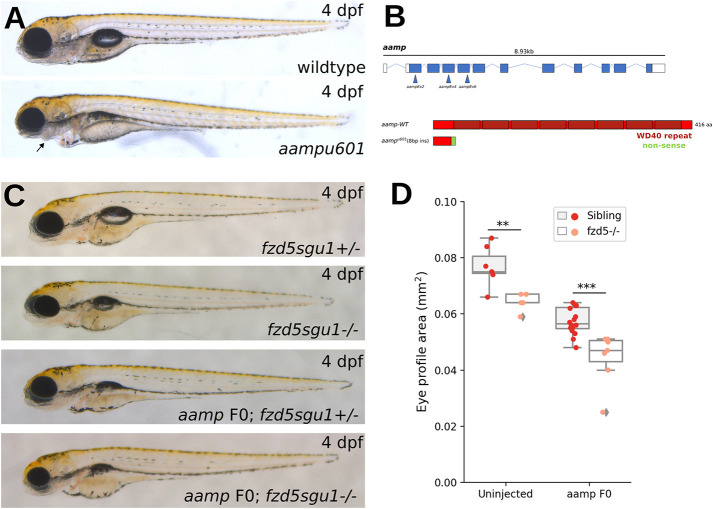 Figure 7
Peer Reviews
No public reviews on file for this paper yet. If you reviewed it on a platform where reviews are public (OpenReview, ICLR, NeurIPS, ICML), you can paste yours below so the community can read it here.
Videos
No videos yet. Explain this paper in a talk, walkthrough, or lecture? Add one.
Taxonomy
TopicsOcular Disorders and Treatments · Connexins and lens biology · Retinal Development and Disorders