Muscle forces and the demands of turning while walking
Steven G. Lautzenheiser, Patricia Ann Kramer

TL;DR
This study compares muscle forces during turning and straight walking, finding differences in timing and magnitude for hip and ankle stabilizing muscles.
Contribution
The study identifies novel muscle force patterns during turning movements compared to straight walking using a musculoskeletal model and statistical parameter mapping.
Findings
Muscle forces stabilizing the hip and ankle differ in timing during turning compared to straight walking.
The magnitude of muscle forces changes across different turning conditions.
Statistical parameter mapping reveals significant differences in force patterns between turning and straight walking.
Abstract
Turning is a ubiquitous feature of human locomotion and like straight path walking, requires muscular force both to propel the individual forward and to stabilize the trunk over the stance limb. The purpose of this study is to identify muscle force patterns while making a turn and compare them to those of straight path walking. Kinematic and kinetic data were collected from 10 adults who walked unshod at their self-selected normal velocity in four conditions: straight line, 45° and 90° turns with a sidestep, and a 45° crossover event. A musculoskeletal model was used to calculate muscle forces in the pelvis and lower limb. Statistical parameter mapping (SPM) was used to determine whether the muscle force patterns of the three turning conditions were different from walking in a straight path. We find that, overall, the muscles that stabilize the hip and ankle during walking demonstrate…
Genes, proteins, chemicals, diseases, species, mutations and cell lines named across the full text — each resolved to its canonical identifier and authoritative record.
Click any figure to enlarge with its caption.
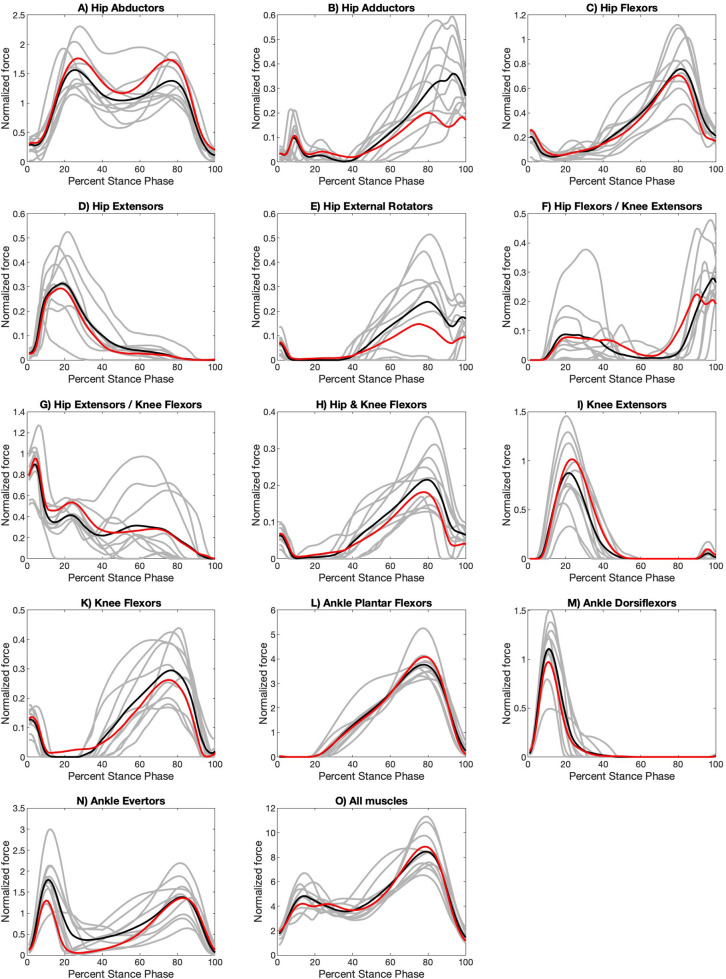 Figure 1
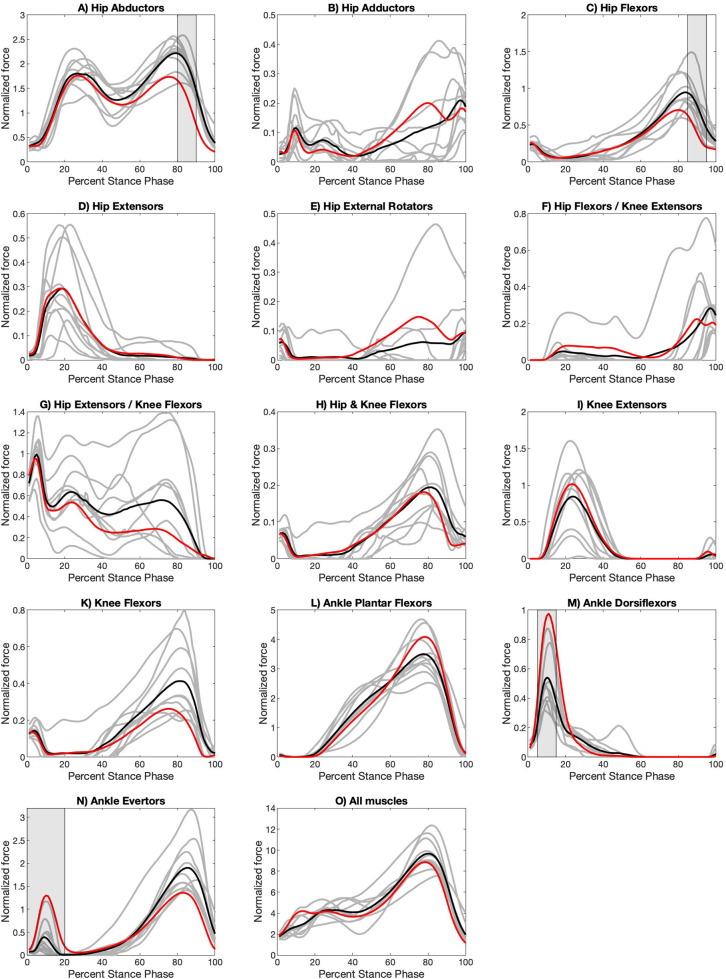 Figure 2
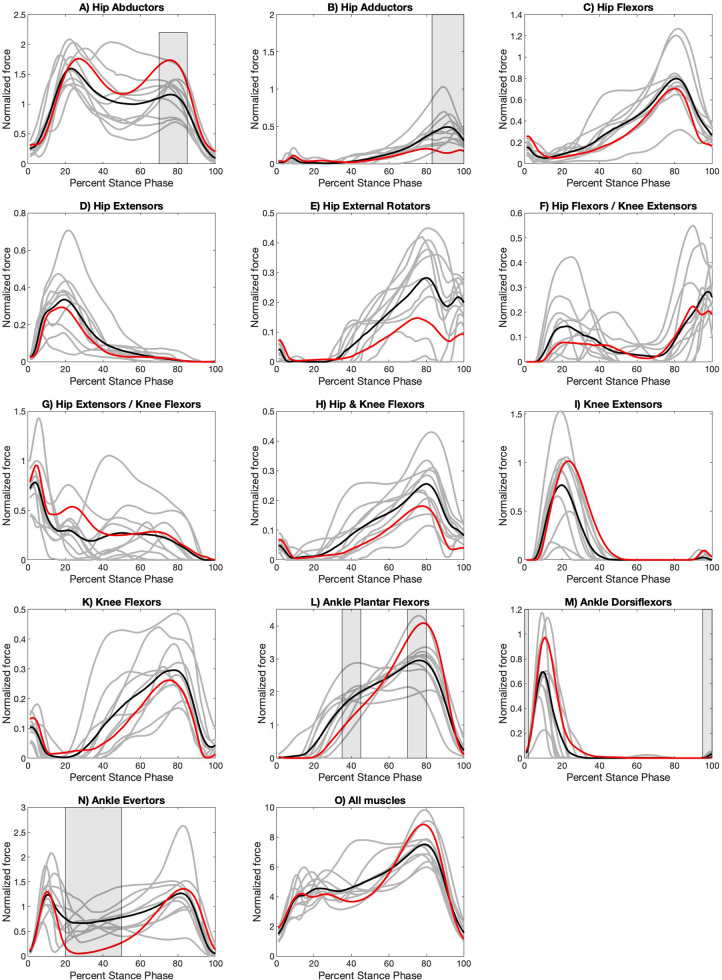 Figure 3
Peer Reviews
No public reviews on file for this paper yet. If you reviewed it on a platform where reviews are public (OpenReview, ICLR, NeurIPS, ICML), you can paste yours below so the community can read it here.
Videos
No videos yet. Explain this paper in a talk, walkthrough, or lecture? Add one.
Taxonomy
TopicsLower Extremity Biomechanics and Pathologies · Sports injuries and prevention · Cerebral Palsy and Movement Disorders