Evidence for persistent multilocus genotypes of Biomphalaria pfeifferi in a natural population in Kenya, with implications for transmission of Schistosoma mansoni
Noel A. Oduor, Daniel W. Kariuki, Gerald M. Mkoji, Polycup O. Oraro, Martina R. Laidemitt, Michelle L. Steinauer, Eric S. Loker, Eric L. Agola

TL;DR
This study found persistent genetic lineages of a snail species in Kenya that are important for spreading a parasitic disease, suggesting these lineages may influence disease transmission.
Contribution
The study identifies persistent multilocus genotypes of B. pfeifferi and their association with trematode infections in a natural setting.
Findings
Four multilocus genotypes persisted across the entire 10-month sampling period.
Persistent MLGs were more likely to have trematode infections than non-persistent ones.
Genetic differentiation varied significantly between different sampling times.
Abstract
Biomphalaria pfeifferi, a predominantly self-fertilizing freshwater snail, is the world’s most important intermediate host for Schistosoma mansoni, one of the causative agents of schistosomiasis, a neglected tropical disease affecting millions of people in sub-Saharan Africa. We sought to determine whether we could identify distinct and persistent lineages of B. pfeifferi within a natural stream habitat in western Kenya, indicative of their asexual descent. We also sought to determine whether infections by S. mansoni or other trematodes were associated with particular lineages. Utilizing 14 microsatellite markers in a multiplex polymerase chain reaction (PCR) format, we genotyped 502 B. pfeifferi collected in six bimonthly (every other month) sampling times from the same locality in a single habitat (Asao Stream, western Kenya). Snails were isolated and screened for infection with S.…
Genes, proteins, chemicals, diseases, species, mutations and cell lines named across the full text — each resolved to its canonical identifier and authoritative record.
Click any figure to enlarge with its caption.
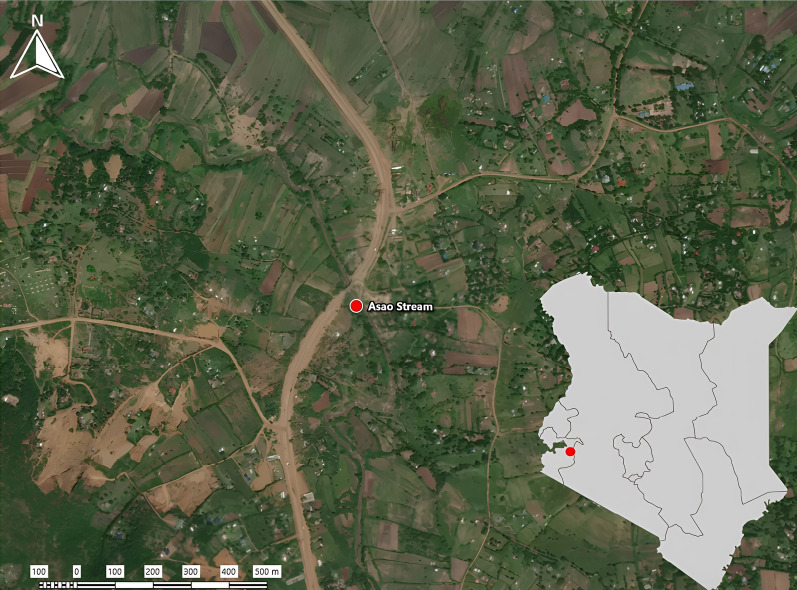 Figure 1
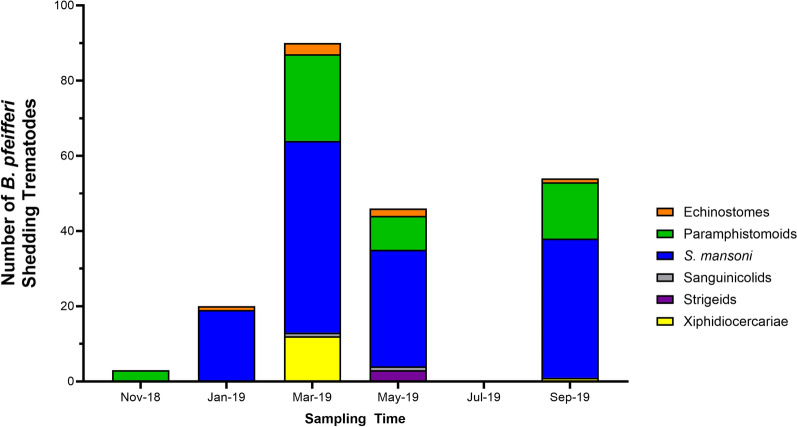 Figure 2
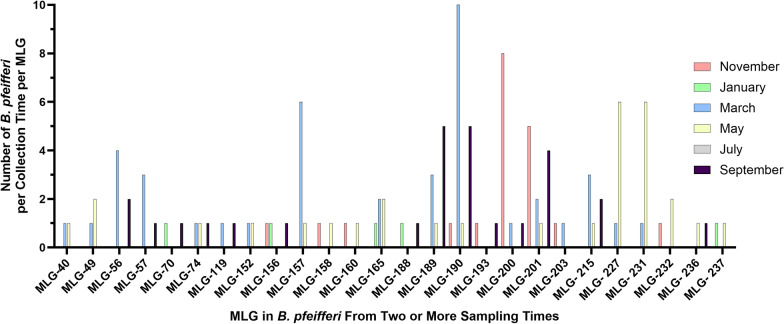 Figure 3
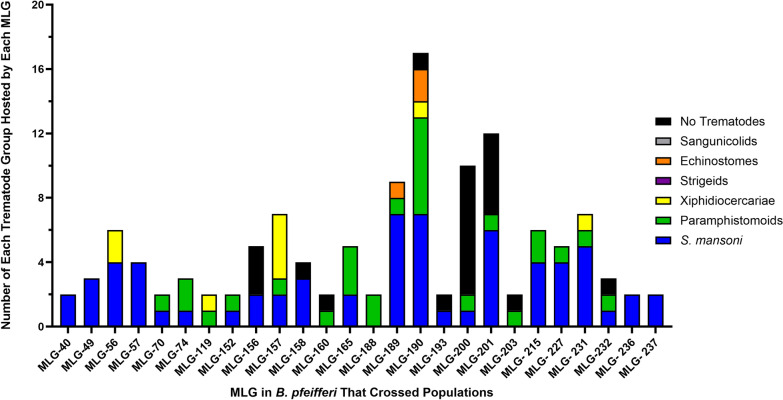 Figure 4
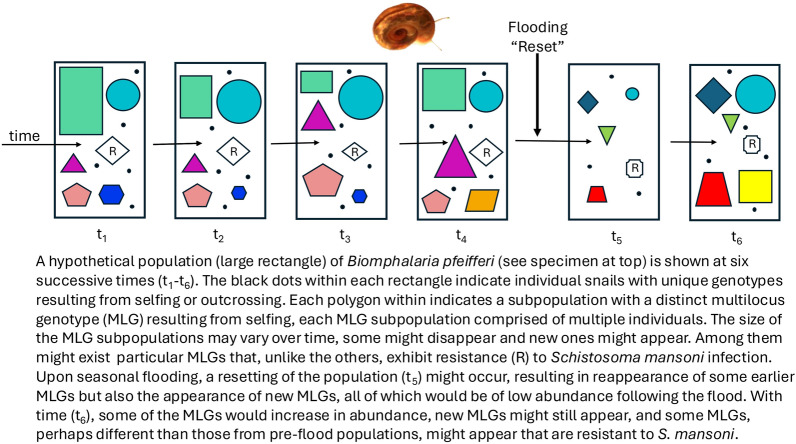 Figure 5
Peer Reviews
No public reviews on file for this paper yet. If you reviewed it on a platform where reviews are public (OpenReview, ICLR, NeurIPS, ICML), you can paste yours below so the community can read it here.
Videos
No videos yet. Explain this paper in a talk, walkthrough, or lecture? Add one.
Taxonomy
TopicsParasites and Host Interactions · Parasite Biology and Host Interactions · Helminth infection and control