Mesomycoplasma hyopneumoniae lipoprotein Mhp390 serves as a plasminogen receptor mediating extracellular matrix degradation and respiratory epithelial cells injury
Wei Liu, Liying Ye, Keli Yang, Xingyu Yan, Ting Gao, Fangyan Yuan, Rui Guo, Zewen Liu, Chang Li, Qiong Wu, Jiajia Zhu, Yongxiang Tian, Bo Tang, Qiqi Song, Danna Zhou

TL;DR
This study shows how a protein from Mesomycoplasma hyopneumoniae helps it break down the respiratory barrier, leading to infection and possible secondary diseases.
Contribution
The study identifies Mhp390 as a plasminogen receptor that enables M. hyopneumoniae to degrade the extracellular matrix and damage respiratory cells.
Findings
Mhp390 accumulates activated plasmin outside the bacterial membrane to breach the respiratory barrier.
Truncated mutation techniques identified key domains in Mhp390 responsible for plasminogen interaction.
The findings provide a new theoretical basis for developing vaccines and control strategies against M. hyopneumoniae.
Abstract
The destruction of the respiratory barrier caused by Mesomycoplasma (Mycoplasma) hyopneumoniae plays a pivotal role in facilitating secondary infections by other respiratory pathogens. However, the pathogenesis of M. hyopneumoniae breaching the respiratory barrier to establish infection remains largely elusive. In this study, the role of Mhp390 encoded by M. hyopneumoniae in invasion of the respiratory tract barrier, including extracellular matrix and tracheal epithelial cells, were investigated through the Transwell assay. Our finding indicated that M. hyopneumoniae may exploit the host fibrinolytic system via Mhp390 to accumulate activated plasmin outside its membrane, thereby breaching the respiratory tract barrier and facilitating the progression of infection. Furthermore, the key functional domains within Mhp390 involved in its interaction with host plasminogen were determined by…
Genes, proteins, chemicals, diseases, species, mutations and cell lines named across the full text — each resolved to its canonical identifier and authoritative record.
Click any figure to enlarge with its caption.
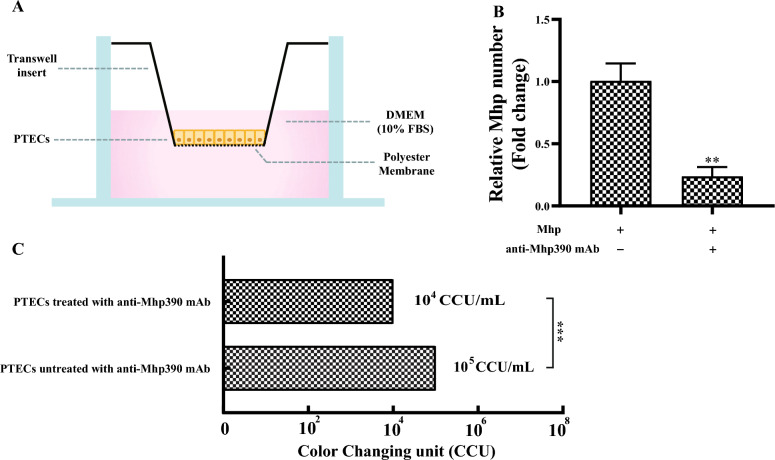 Figure 1
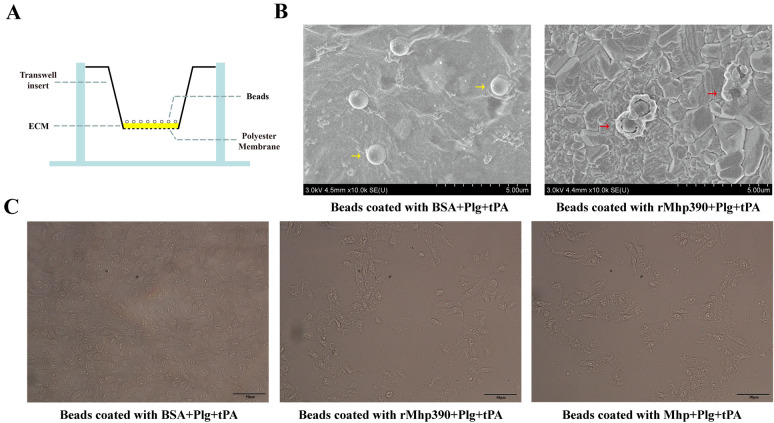 Figure 2
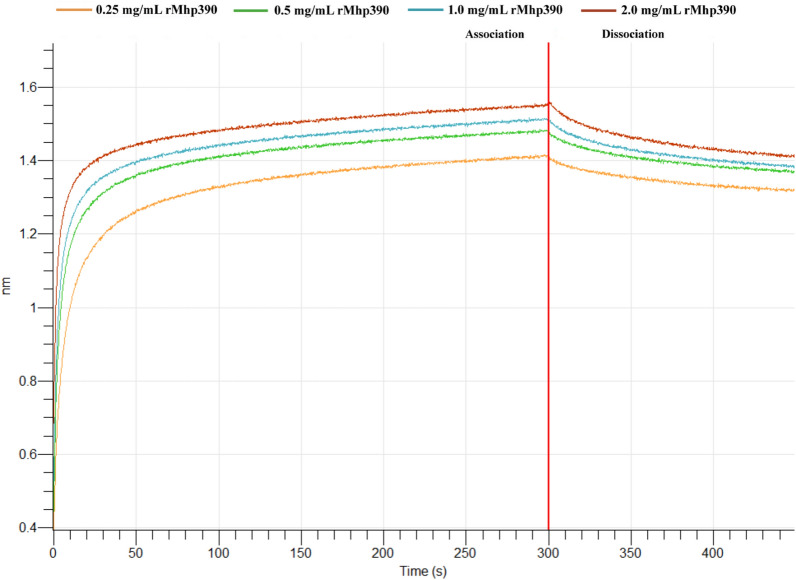 Figure 3
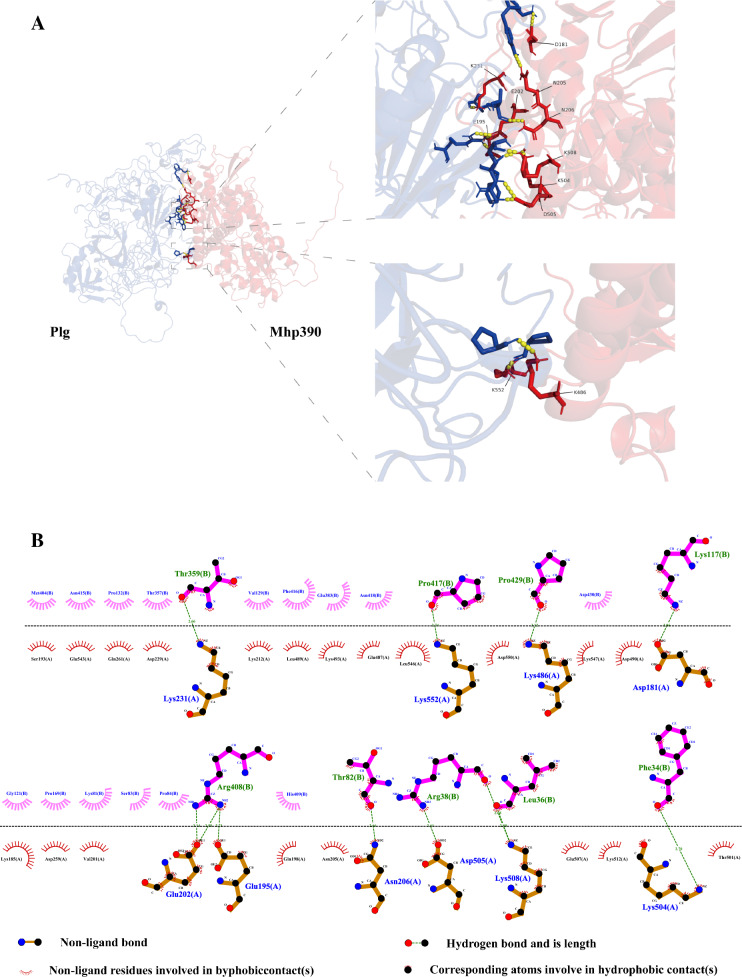 Figure 4
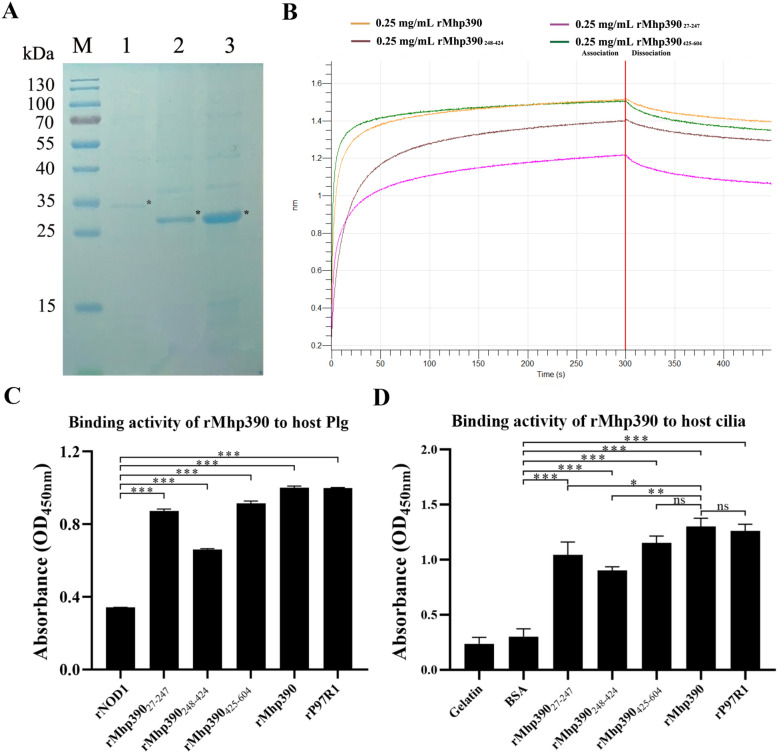 Figure 5
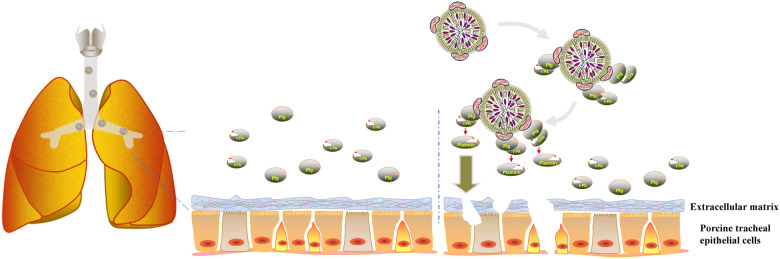 Figure 6
Peer Reviews
No public reviews on file for this paper yet. If you reviewed it on a platform where reviews are public (OpenReview, ICLR, NeurIPS, ICML), you can paste yours below so the community can read it here.
Videos
No videos yet. Explain this paper in a talk, walkthrough, or lecture? Add one.
Taxonomy
TopicsMicrobial infections and disease research · Pneumonia and Respiratory Infections · Bacterial Infections and Vaccines