Predicting intraoperative meningioma consistency using features from standard MRI sequences: a preoperative evaluation
Donata Biernat, Robin Antony Birkeland Bugge, Jon Ramm-Pettersen, Till Schellhorn, Pål Andre Rønning, Eirik Helseth, Kyrre Eeg Emblem, Karoline Skogen

TL;DR
This study uses MRI features to predict meningioma tumor consistency before surgery, helping surgeons plan more effectively.
Contribution
The study introduces a preoperative MRI-based method to classify meningioma consistency using qualitative and quantitative features.
Findings
Soft tumors show homogeneous contrast enhancement, high T2 signal, and absence of peritumoral edema.
Firmer tumors exhibit heterogeneous contrast enhancement, low T2 signal, and presence of peritumoral edema.
Tumor signal on T2 and ADC maps moderately correlates with tumor consistency.
Abstract
Symptomatic meningiomas may require surgical resection to save or improve neurological function. The extent of tumor resection depends on multiple factors, including the tumor's consistency, its location, and the patient's overall condition. This prospective study aims to explore new criteria in combination with previously proposed tumor features on MRI to establish a rapid approach to tumor consistency characterization pre-operatively. Forty-eight patients with meningiomas were prospectively included and underwent a dedicated MRI protocol prior to surgery. Qualitative and quantitative MRI characteristics of the tumor were correlated to a previously proposed surgical tumor consistency grading. Soft tumors were associated with homogeneous contrast enhancement, high T2 signal, absence of peritumoral edema (PTE), the presence of tumor cysts, and a uniformly dark appearance on fractional…
Genes, proteins, chemicals, diseases, species, mutations and cell lines named across the full text — each resolved to its canonical identifier and authoritative record.
Click any figure to enlarge with its caption.
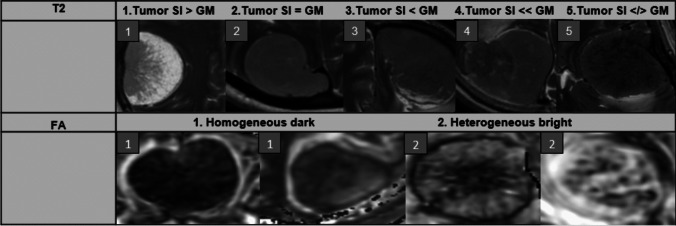 Figure 1
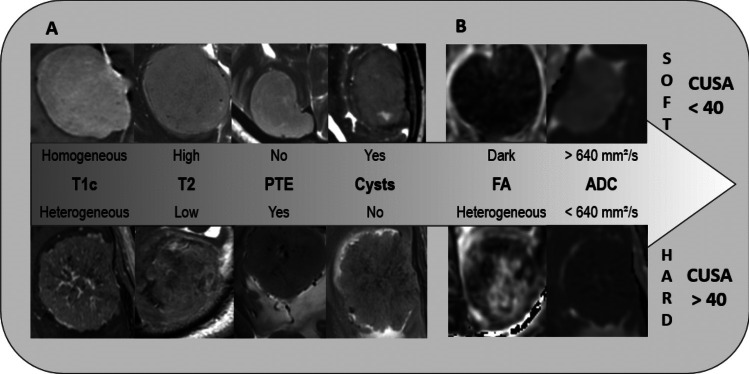 Figure 2
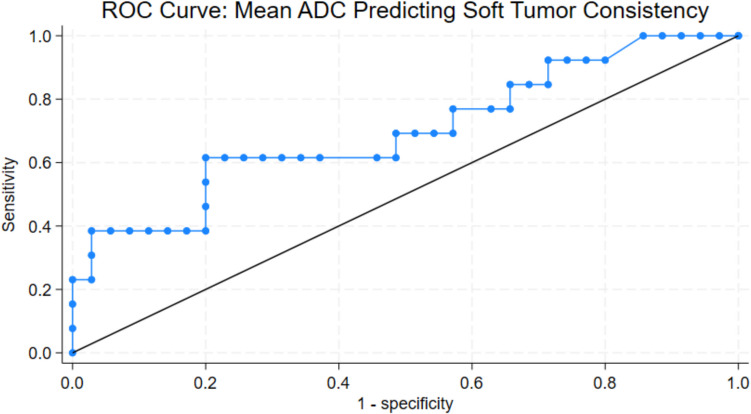 Figure 3
Peer Reviews
No public reviews on file for this paper yet. If you reviewed it on a platform where reviews are public (OpenReview, ICLR, NeurIPS, ICML), you can paste yours below so the community can read it here.
Videos
No videos yet. Explain this paper in a talk, walkthrough, or lecture? Add one.
Taxonomy
TopicsMeningioma and schwannoma management · Neurofibromatosis and Schwannoma Cases · Pituitary Gland Disorders and Treatments