Statin versus no statin after treatment with pipeline embolization device for intracranial aneurysms: a meta-analysis
Nathalia Soares Barbosa, Felipe Araujo Gouhie, Bezalel Hakkeem, Amanda Machado, João Paulo Mota Telles, Luís Gustavo Biondi Soares, Leandro de Assis Barbosa

TL;DR
This study finds that statin use after a pipeline embolization device may reduce bleeding risks, but not ischemic complications or aneurysm occlusion rates.
Contribution
The study is the first to meta-analyze the effects of statins after pipeline embolization device treatment for intracranial aneurysms.
Findings
Statin use was associated with reduced hemorrhagic complications after pipeline embolization.
No significant difference in complete aneurysm occlusion rates was found between statin and non-statin groups.
Ischemic complications were higher in the statin group, but the result was not statistically significant after matching.
Abstract
Some studies demonstrated the role of statin therapy in improving outcomes after coil embolization or surgical clipping of cerebral aneurysm. However, the benefit of statins after pipeline embolization device (PED) for intracranial aneurysms is not well established. To evaluate the effects of statins on hemorrhagic and ischemic complications as well as on complete occlusion of aneurysm in the treatment with PED. We searched the PubMed, Embase, and Cochrane Library databases for articles published from their inception to November 2024. Data were collected from observational studies comparing statin to no statin therapy following pipeline embolization. Four studies were included, comprising 2,822 patients and 3,063 aneurysms, 127 of which were ruptured and 4 of which received adjunctive coil embolization. Total hemorrhagic complication was reduced in the statin group (risk ratio [RR] =…
Genes, proteins, chemicals, diseases, species, mutations and cell lines named across the full text — each resolved to its canonical identifier and authoritative record.
Click any figure to enlarge with its caption.
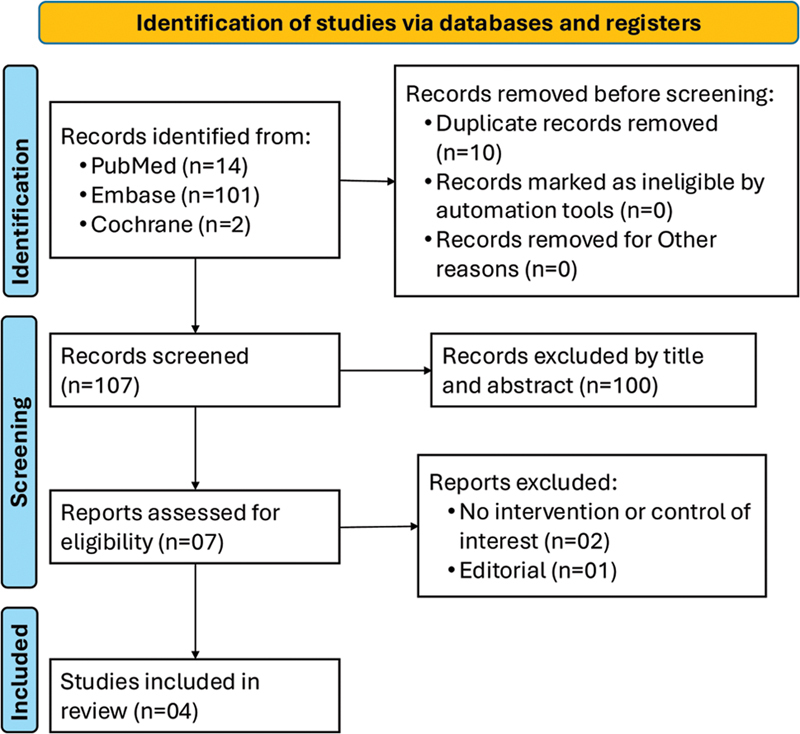 Figure 1
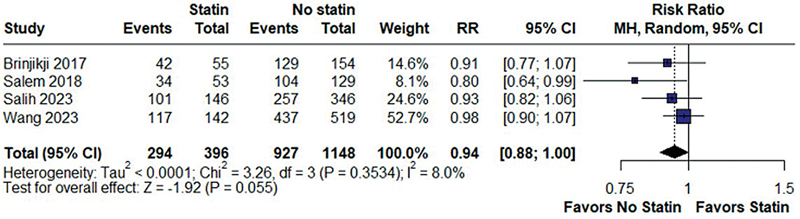 Figure 2
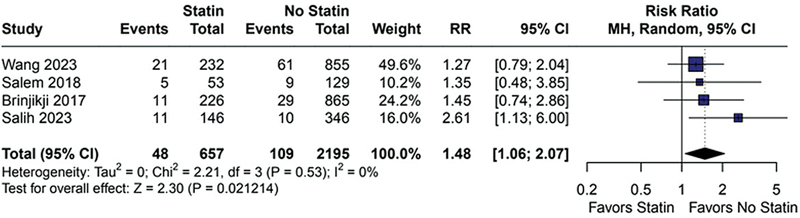 Figure 3
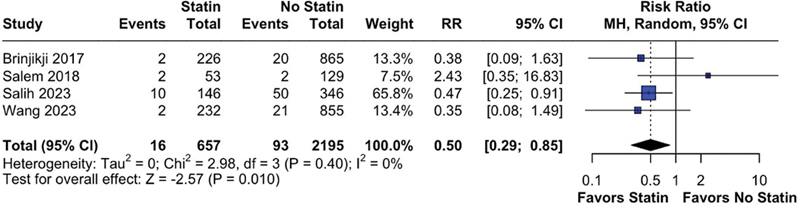 Figure 4
Peer Reviews
No public reviews on file for this paper yet. If you reviewed it on a platform where reviews are public (OpenReview, ICLR, NeurIPS, ICML), you can paste yours below so the community can read it here.
Videos
No videos yet. Explain this paper in a talk, walkthrough, or lecture? Add one.
Taxonomy
TopicsIntracranial Aneurysms: Treatment and Complications · Cerebrovascular and Carotid Artery Diseases · Moyamoya disease diagnosis and treatment