Pain characteristics and psychological factors that mediate the association between obesity and outcomes of interdisciplinary pain rehabilitation: a registry-based cohort study
Huan-Ji Dong, Agnes Genander, Elena Dragioti

TL;DR
Obese patients with chronic pain have worse pain and psychological outcomes before rehabilitation, and these factors influence their improvement during treatment.
Contribution
Identifies pain intensity, pain radiation, and depression as key mediators of rehabilitation outcomes in obese chronic pain patients.
Findings
Obese patients reported higher pain intensity, more pain locations, and longer pain duration than non-obese patients.
Pain intensity, pain radiation, and depressive symptoms mediated the improvement of pain and psychological outcomes in obese patients.
Both obese and non-obese patients showed significant improvements in pain and psychological functioning after rehabilitation.
Abstract
Obesity is a common comorbidity with chronic pain and is closely related to functional and psychological complications of pain, which are also the main outcomes of interdisciplinary pain rehabilitation programmes (IPRP). How obesity influences IPRP outcomes is poorly understood. This study aims to investigate the role of pain characteristics and psychological factors before IPRP as mediators of the association between obesity and IPRP outcomes (i.e. pain intensity and psychological functioning). Sociodemographic variables, pain characteristics and psychological factors were retrieved from the Swedish Quality Registry for Pain Rehabilitation (SQRP). Data at baseline (pre-IPRP) and 1-year follow-up (FU-IPRP) were used in mediation analysis. Of the 872 patients (mean age 45.8 ± 10.5 years, 80.3% female), 232 (26.6%) were obese (body mass index [BMI] ≥ 30 kg/m2). Patients with obesity…
Genes, proteins, chemicals, diseases, species, mutations and cell lines named across the full text — each resolved to its canonical identifier and authoritative record.
Click any figure to enlarge with its caption.
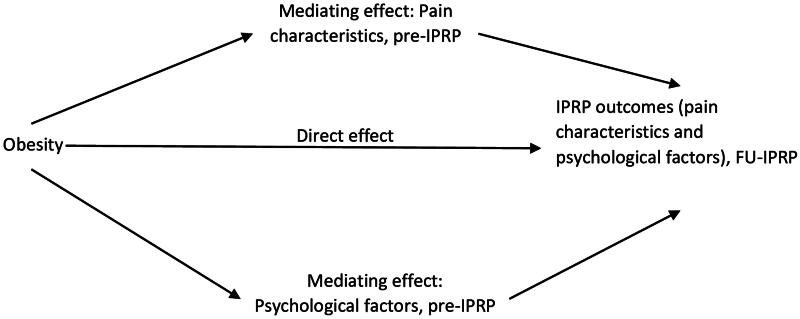 Figure 1
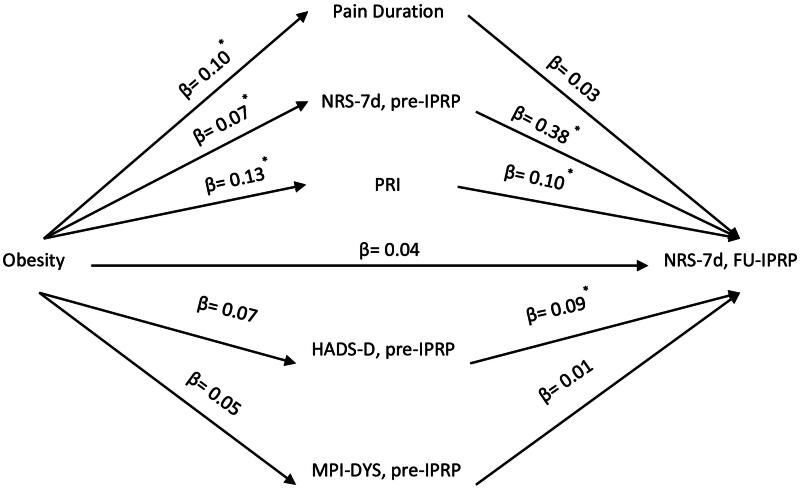 Figure 2
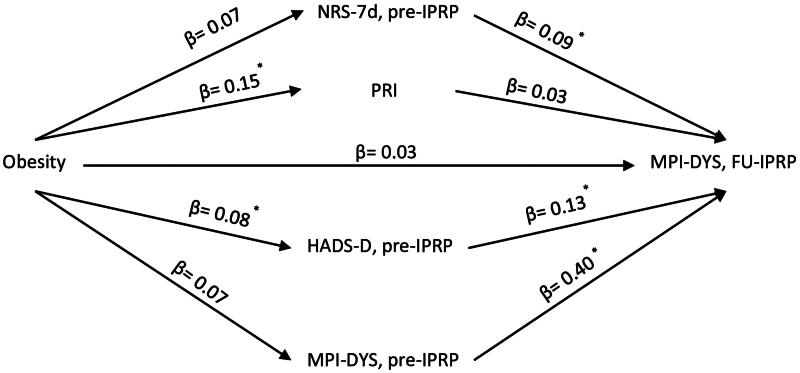 Figure 3
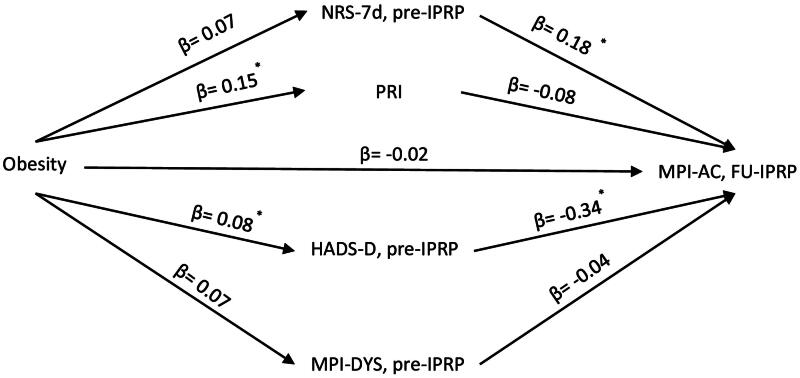 Figure 4
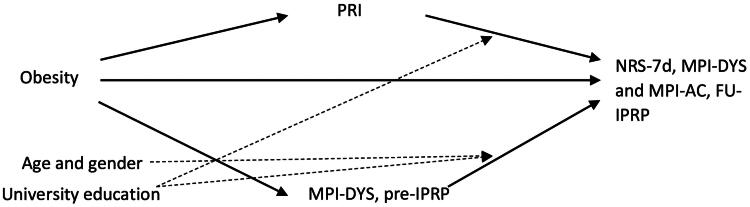 Figure 5
Peer Reviews
No public reviews on file for this paper yet. If you reviewed it on a platform where reviews are public (OpenReview, ICLR, NeurIPS, ICML), you can paste yours below so the community can read it here.
Videos
No videos yet. Explain this paper in a talk, walkthrough, or lecture? Add one.
Taxonomy
TopicsMusculoskeletal pain and rehabilitation · Pain Mechanisms and Treatments · Fibromyalgia and Chronic Fatigue Syndrome Research