DNA as a polyionic ionophore for barium sensor
M. M. Zareh, A. F. El-Farargy, A. Abd-ElSattar, Eman Rabie Abd-El-Rady, Badr Abd-El-wahaab

TL;DR
A new barium sensor using DNA as a natural ion carrier shows high selectivity and sensitivity for detecting barium in various real-world samples.
Contribution
The novel use of DNA as an eco-friendly ionophore in a barium sensor improves selectivity and sensitivity.
Findings
The sensor achieved a slope of 33.15 mV/decade for Ba²⁺ detection.
It showed a rapid response time of 9 seconds and good selectivity over other cations.
The sensor successfully detected Ba²⁺ in spiked samples with recovery rates of 96.07–98.9%.
Abstract
The development of a highly selective and sensitive Ba2+ sensor is crucial because of its industrial, environmental, and biological relevance. This study introduces a novel coated wire barium-selective electrode incorporating DNA as an ecofriendly natural ionophore in a plastic membrane, utilizing dioctyl phthalate as a plasticizer. The use of DNA as an ionophore provides enhanced selectivity and sensitivity, showcasing a slope of 33.15 mV/decade across a broad concentration range (1 × 10⁻5 to 1 × 10⁻2 M). The sensor exhibited a rapid response time of 9 s, a wide pH tolerance (2.6–6.9), and good selectivity for Ba2+ over other cations. Characterization of the membrane using FT-IR, SEM, and EDX confirmed its structural and morphological features. Practical applicability was demonstrated by detecting Ba2+ in spiked samples (milk, juice, tap water and urine) with recovery rates of…
Genes, proteins, chemicals, diseases, species, mutations and cell lines named across the full text — each resolved to its canonical identifier and authoritative record.
Click any figure to enlarge with its caption.
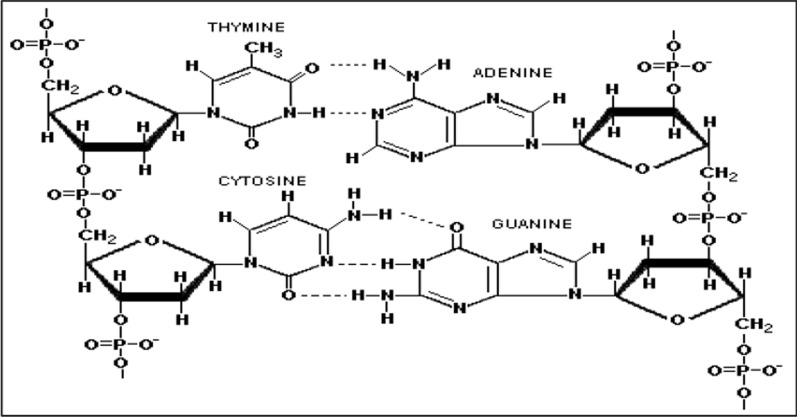 Figure 1
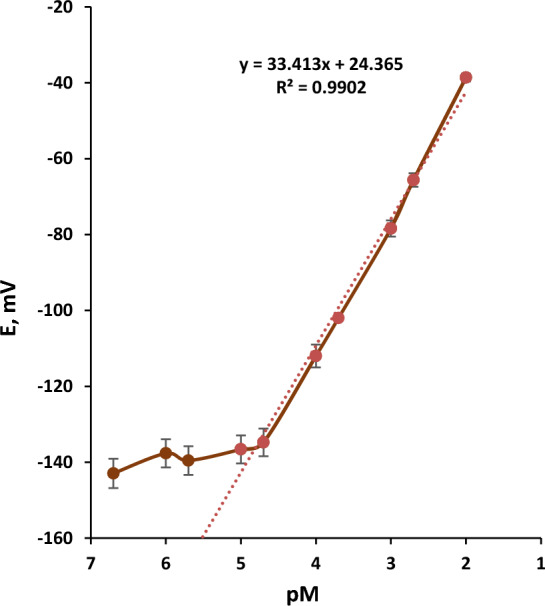 Figure 2
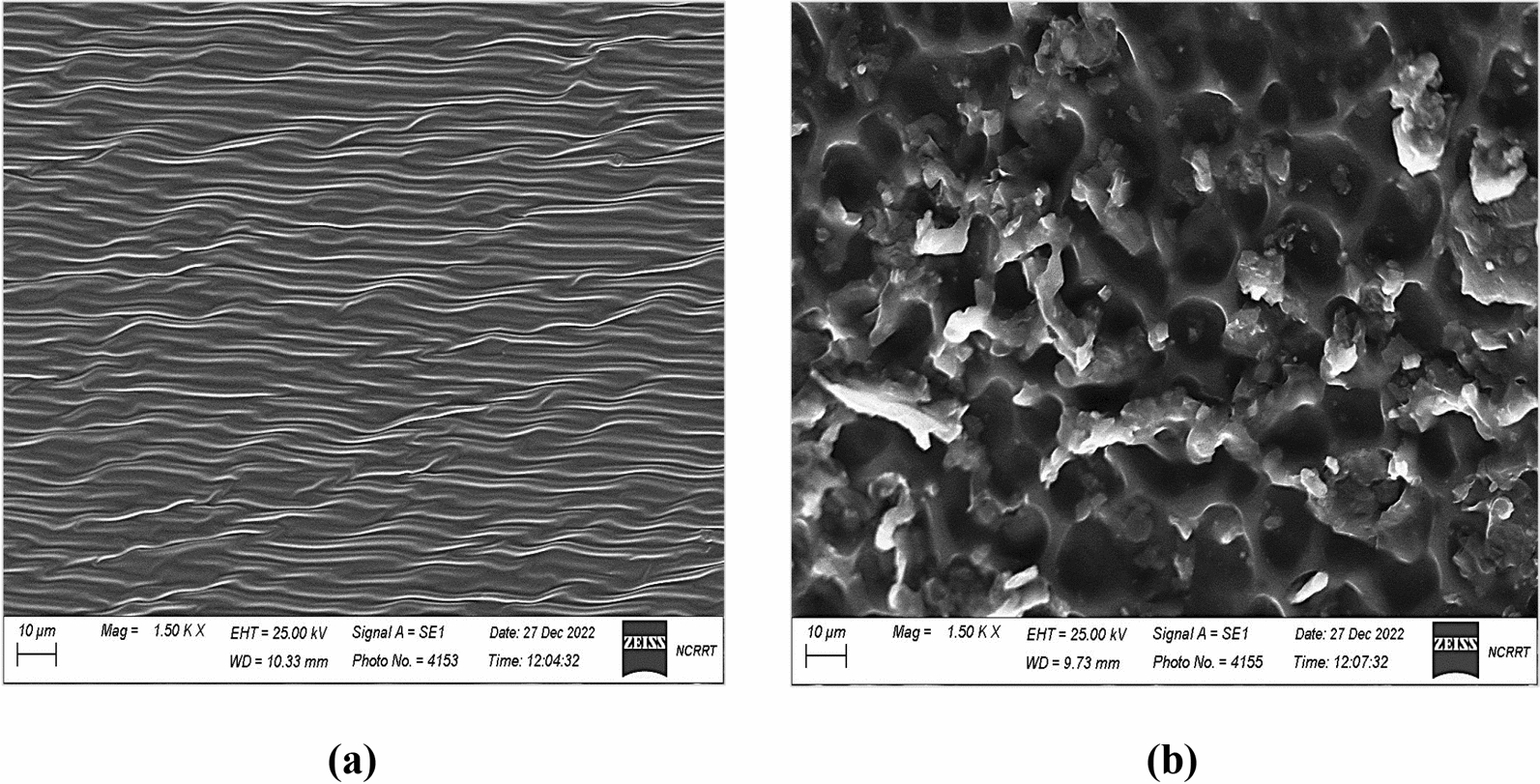 Figure 3
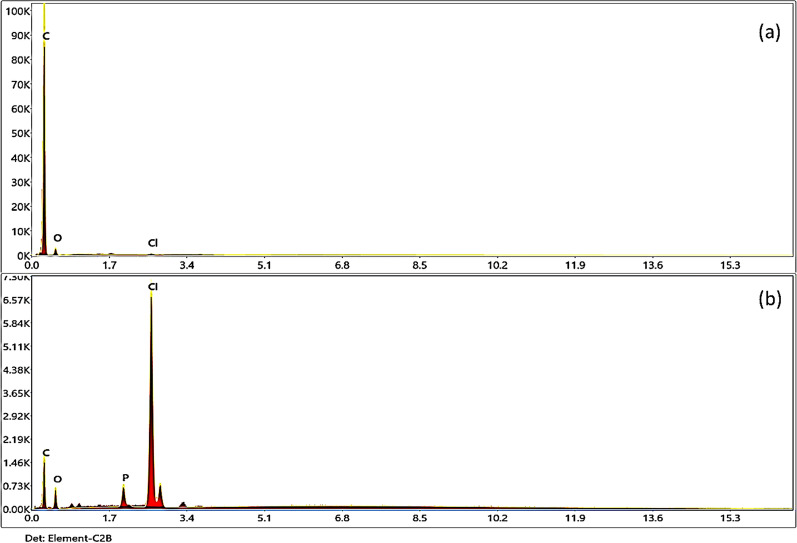 Figure 4
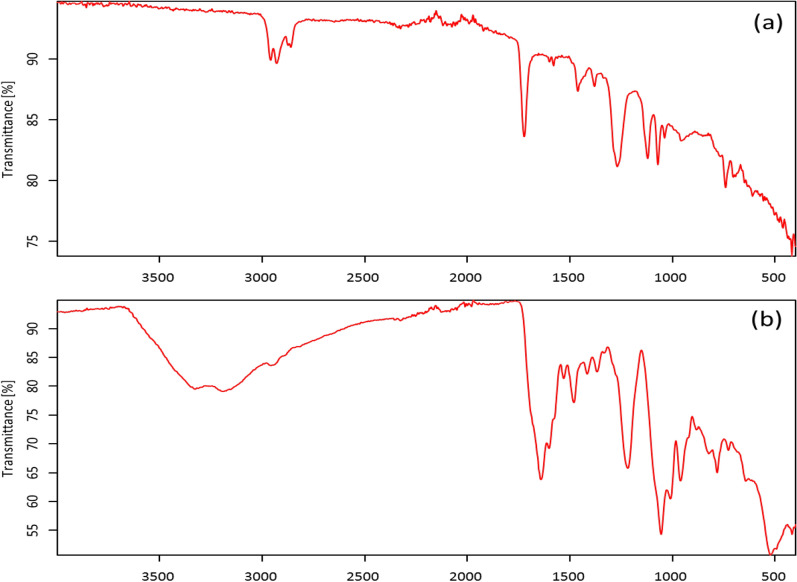 Figure 5
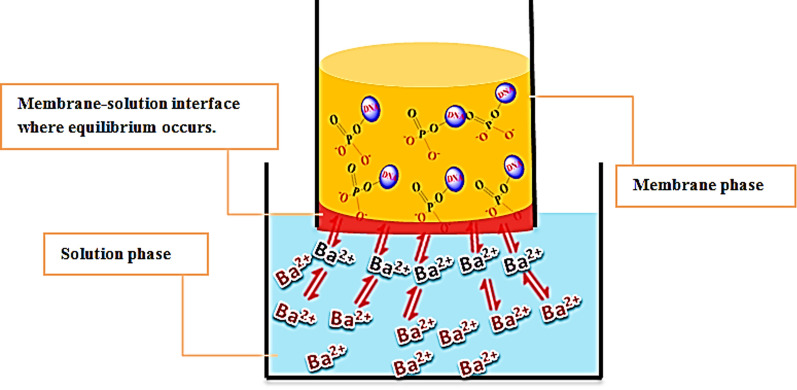 Figure 6
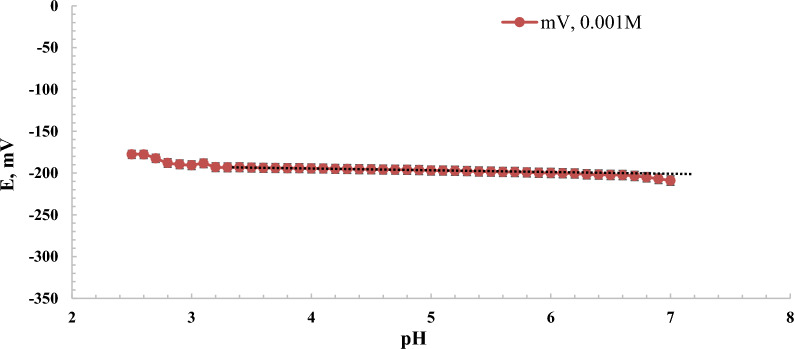 Figure 7
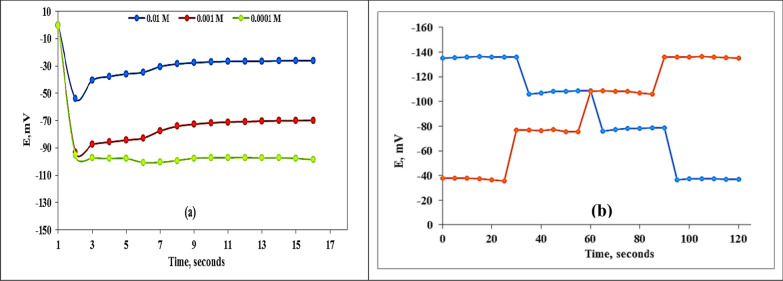 Figure 8
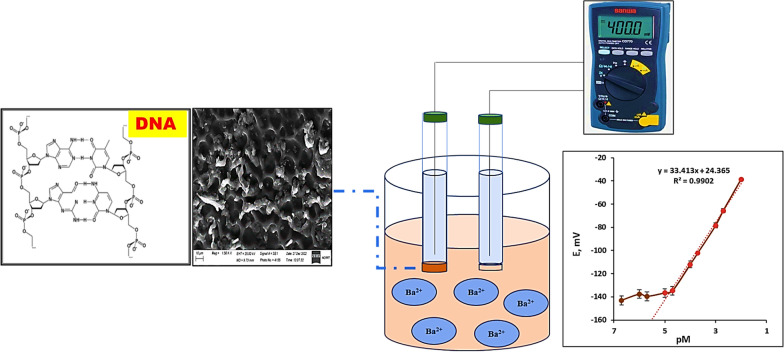 Figure 9
Peer Reviews
No public reviews on file for this paper yet. If you reviewed it on a platform where reviews are public (OpenReview, ICLR, NeurIPS, ICML), you can paste yours below so the community can read it here.
Videos
No videos yet. Explain this paper in a talk, walkthrough, or lecture? Add one.
Taxonomy
TopicsAnalytical Chemistry and Sensors · Advanced biosensing and bioanalysis techniques · Electrochemical Analysis and Applications