Assisting the Diagnosis of Cirrhosis in Chronic Hepatitis C Patients Based on Machine Learning Algorithms: A Novel Non‐Invasive Approach
Emre Dirican, Tayibe Bal, Yusuf Onlen, Figen Sarigul, Ulku User, Nagehan Didem Sari, Behice Kurtaran, Ebubekir Senates, Alper Gunduz, Esra Zerdali, Hasan Karsen, Ayse Batirel, Ridvan Karaali, Hatice Rahmet Guner, Tansu Yamazhan, Sukran Kose, Nurettin Erben, Nevin Koc Ince

TL;DR
This study uses machine learning to accurately detect cirrhosis in hepatitis C patients using routine lab tests, identifying key features and thresholds for non-invasive diagnosis.
Contribution
A novel non-invasive machine learning approach for cirrhosis detection using routine lab data and determining cut-off values for key features.
Findings
Random Forest achieved 89% accuracy in predicting cirrhosis using lab test data.
Platelet, AFP, age, GGT, and PT were identified as the most important features for cirrhosis classification.
Cut-off values for these features were determined, offering actionable thresholds for clinical use.
Abstract
This study aimed to determine the important features and cut‐off values after demonstrating the detectability of cirrhosis using routine laboratory test results of chronic hepatitis C (CHC) patients in machine learning (ML) algorithms. This retrospective multicenter (37 referral centers) study included the data obtained from the Hepatitis C Turkey registry of 1164 patients with biopsy‐proven CHC. Three different ML algorithms were used to classify the presence/absence of cirrhosis with the determined features. The highest performance in the prediction of cirrhosis (Accuracy = 0.89, AUC = 0.87) was obtained from the Random Forest (RF) method. The five most important features that contributed to the classification were platelet, αlpha‐feto protein (AFP), age, gamma‐glutamyl transferase (GGT), and prothrombin time (PT). The cut‐off values of these features were obtained as platelet <…
Genes, proteins, chemicals, diseases, species, mutations and cell lines named across the full text — each resolved to its canonical identifier and authoritative record.
Click any figure to enlarge with its caption.
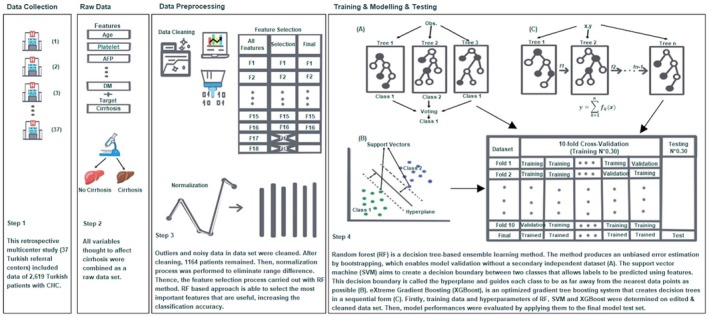 Figure 1
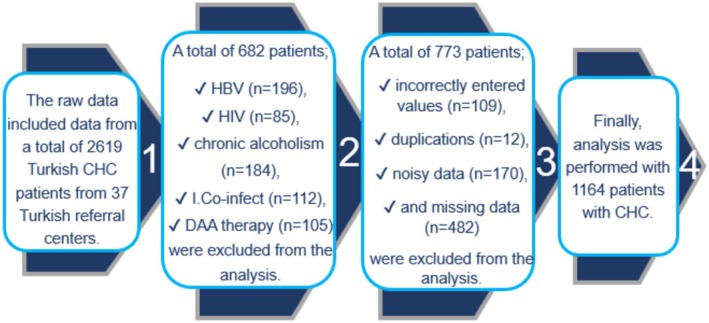 Figure 2
 Figure 3
 Figure 4
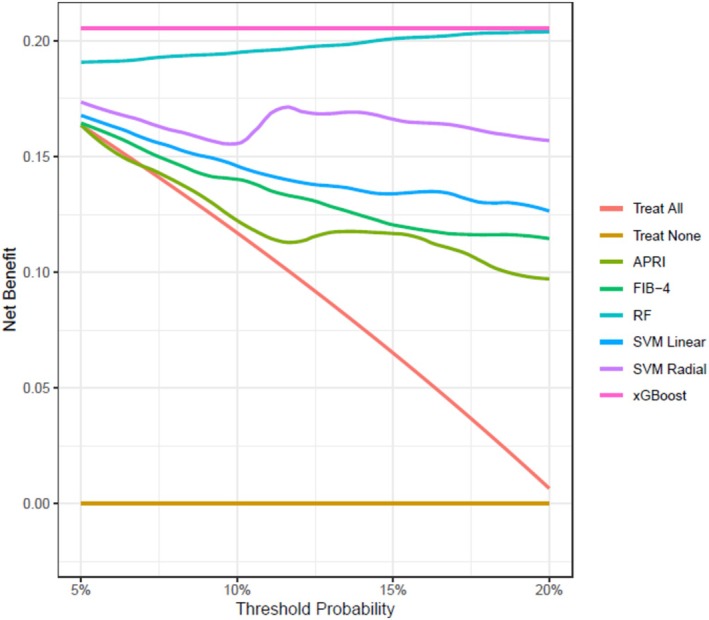 Figure 5
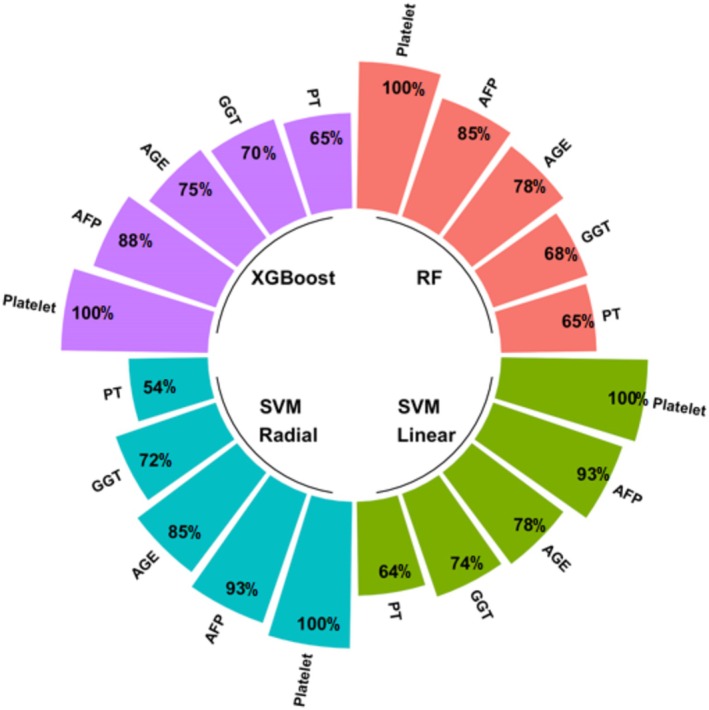 Figure 6
Peer Reviews
No public reviews on file for this paper yet. If you reviewed it on a platform where reviews are public (OpenReview, ICLR, NeurIPS, ICML), you can paste yours below so the community can read it here.
Videos
No videos yet. Explain this paper in a talk, walkthrough, or lecture? Add one.
Taxonomy
TopicsLiver Disease Diagnosis and Treatment · Hepatitis C virus research · Hepatitis B Virus Studies