Sudden acquired retinal degeneration syndrome may be an acquired primary ciliopathy, phenotypically similar to human Alström and Bardet-Biedl syndromes
Steven Toler, Kenneth Abrams, Daniel Ward

TL;DR
This paper suggests that SARDS in dogs may be an acquired ciliopathy, similar to human genetic disorders like Alström and Bardet-Biedl syndromes.
Contribution
The paper proposes a novel hypothesis that SARDS is an acquired primary ciliopathy rather than an immunologic or endocrinologic disorder.
Findings
SARDS shares clinical features with Alström and Bardet-Biedl syndromes, including retinal degeneration and Cushingoid symptoms.
Systemic cortisol levels in SARDS patients do not differ significantly from normal patients, challenging endocrinopathy theories.
Dysfunctional or absent primary cilia may explain the symptoms of SARDS, similar to human ciliopathies.
Abstract
Sudden acquired retinal degeneration syndrome (SARDS) is an acquired canine disease that presents as rapidly progressive retinal degeneration, often accompanied by polyphagia, weight gain, polydipsia, polyuria, and hyposmia. Alström syndrome (AS) and Bardet-Biedl syndrome (BBS) are rare human autosomal recessive genetic disorders marked by progressive retinopathy, polyphagia, obesity, polydipsia, polyuria, and hyposmia, with varying degrees of phenotypic severity. While the etiology of AS and BBS is partially understood, the cause of acquired SARDS remains elusive. Historically, scientific inquiry has focused on an immunologic insult and/or endocrinopathy as the cause of SARDS. Clinicians have often pointed to these Cushingoid symptoms mentioned above in SARDS patients as evidence of a contributing endocrinopathy. However, systemic cortisol concentrations, both pre- and post-ACTH…
Genes, proteins, chemicals, diseases, species, mutations and cell lines named across the full text — each resolved to its canonical identifier and authoritative record.
Click any figure to enlarge with its caption.
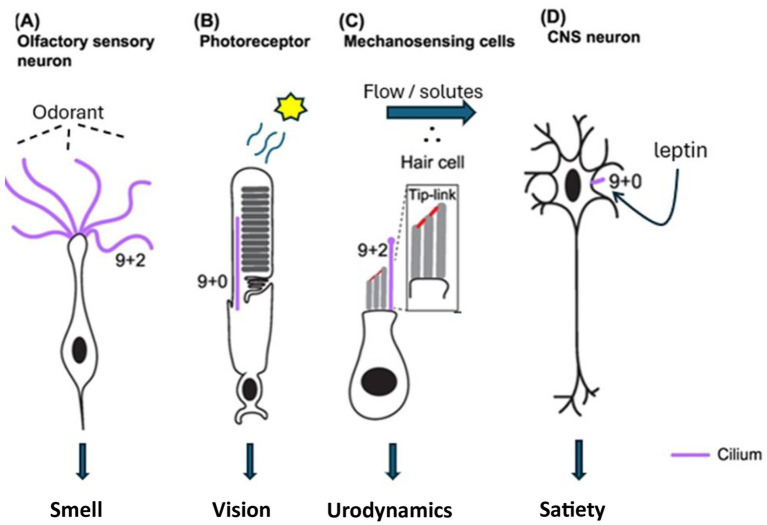 Figure 1
Peer Reviews
No public reviews on file for this paper yet. If you reviewed it on a platform where reviews are public (OpenReview, ICLR, NeurIPS, ICML), you can paste yours below so the community can read it here.
Videos
No videos yet. Explain this paper in a talk, walkthrough, or lecture? Add one.
Taxonomy
TopicsGenetic and Kidney Cyst Diseases · Genetic Syndromes and Imprinting · Amino Acid Enzymes and Metabolism