Laparoscopic intercostal segment 7 resection for intrahepatic lithiasis due to low phospholipid-associated cholelithiasis syndrome. A case report
Ramiro Vargas Aignasse, Rodrigo Antonio Gasque, Germán Rodrigo Viscido, Maria Eugenia Chianalino, Micaela Noemí Ávila, Fernando Andrés Alvarez

TL;DR
A rare liver condition called LPAC syndrome was successfully treated with a minimally invasive liver surgery in a young woman who had ongoing biliary symptoms after gallbladder removal.
Contribution
This case report demonstrates the effectiveness of laparoscopic intercostal segment VII resection for treating localized intrahepatic lithiasis in LPAC syndrome.
Findings
Laparoscopic resection of liver segment VII was safely performed and confirmed to treat intrahepatic lithiasis.
Histopathology confirmed hepatolithiasis with acute and chronic cholangitis in the patient.
Minimally invasive liver surgery is a feasible option for selected LPAC syndrome cases with localized disease.
Abstract
Low phospholipid-associated cholelithiasis (LPAC) syndrome is a rare biliary disorder caused by mutations in the ABCB4 gene, which encodes the MDR3 phosphatidylcholine transporter. It primarily affects young adults and may persist or recur following cholecystectomy. LPAC is characterized by intrahepatic lithiasis and recurrent biliary symptoms. We report the case of a 27-year-old woman with a history of recurrent acute pancreatitis and prior laparoscopic cholecystectomy, who presented with ongoing episodes of biliary colic. Laboratory tests revealed leukocytosis (12,000/μL), while liver function tests remained within normal limits. Abdominal ultrasound identified multiple echogenic foci with posterior acoustic shadowing in segment VII of the liver, along with bile duct ectasia. Further evaluation with computed tomography and magnetic resonance imaging excluded alternative diagnoses. A…
Genes, proteins, chemicals, diseases, species, mutations and cell lines named across the full text — each resolved to its canonical identifier and authoritative record.
Click any figure to enlarge with its caption.
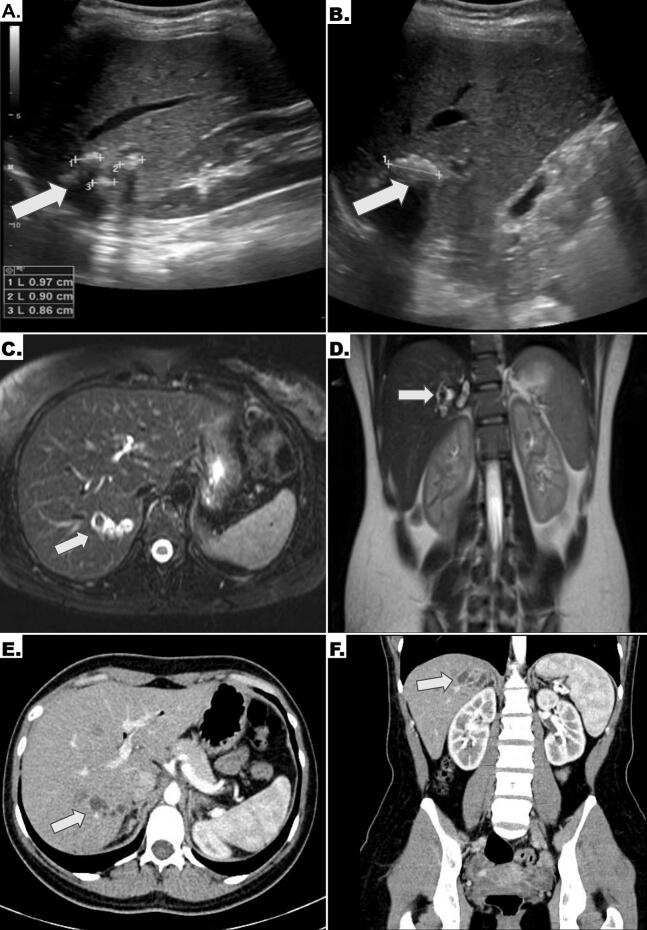 Figure 1
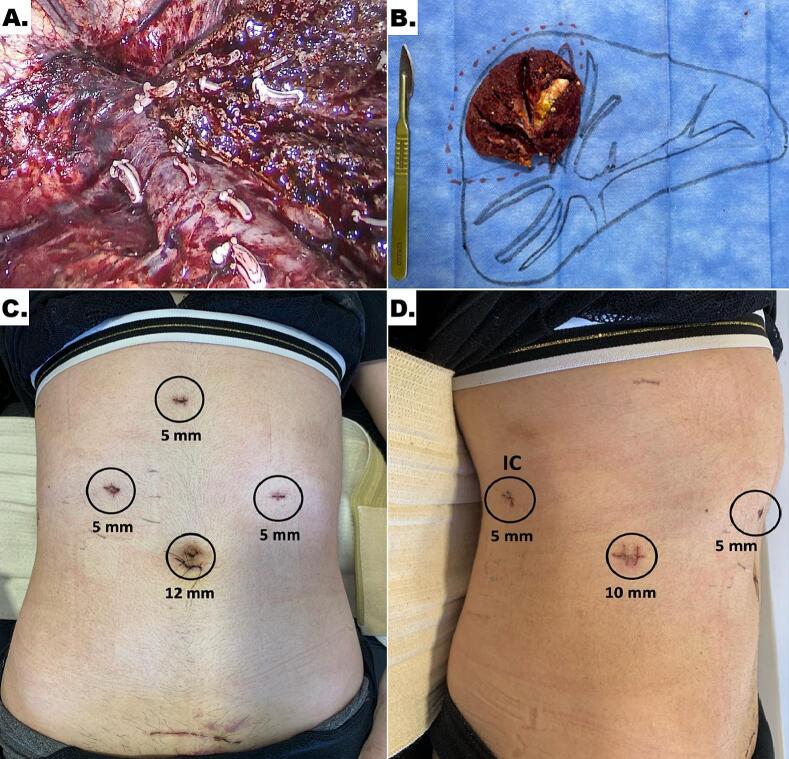 Figure 2
Peer Reviews
No public reviews on file for this paper yet. If you reviewed it on a platform where reviews are public (OpenReview, ICLR, NeurIPS, ICML), you can paste yours below so the community can read it here.
Videos
No videos yet. Explain this paper in a talk, walkthrough, or lecture? Add one.
Taxonomy
TopicsGallbladder and Bile Duct Disorders · Pediatric Hepatobiliary Diseases and Treatments · Gastrointestinal disorders and treatments