Early diabetes screening via red blood cell mechanics using microfluidic chip integration
Yibo Feng, Bingchen Che, Yonggang Liu, Cangmin Zhang, Jiameng Niu, Jiangcun Yang, Guangyin Jing, Dan Sun, Xiaobo Gong, Ce Zhang

TL;DR
This study explores using red blood cell mechanics with a microfluidic chip to detect diabetes early, offering a more sensitive alternative to traditional blood glucose tests.
Contribution
A novel microfluidic chip with a hyperbolic structure is developed to assess red blood cell deformability for early diabetes detection.
Findings
Red blood cell deformability correlates significantly with age but not with gender.
Microfluidic chips can detect mechanical changes in red blood cells indicative of early diabetes.
The chip's design allows for high-throughput screening, suitable for large-scale clinical use.
Abstract
Early diagnosis of diabetes is crucial, as diabetes, particularly type 2, can eventually lead to irreversible changes and complications. Conventional techniques, such as the Fasting Plasma Glucose (FPG) Test and Hemoglobin A1c (HbA1c) Test, measure blood glucose levels, which fluctuate over time and are insensitive to early stages. In this study, we focus on measuring the mechanical properties of red blood cells, as their irreversible changes can indicate early pathological impacts of diabetes. We developed a microfluidic chip with a symmetrical hyperbolic structure. By periodically altering the state of the valve membrane, we generate a reciprocating shear flow field that repeatedly acts on groups of RBCs. We then quantify the morphological parameters of the RBCs, establishing a correlation between the reciprocating shear flow field and the morphological changes of the cells. Using the…
Genes, proteins, chemicals, diseases, species, mutations and cell lines named across the full text — each resolved to its canonical identifier and authoritative record.
Click any figure to enlarge with its caption.
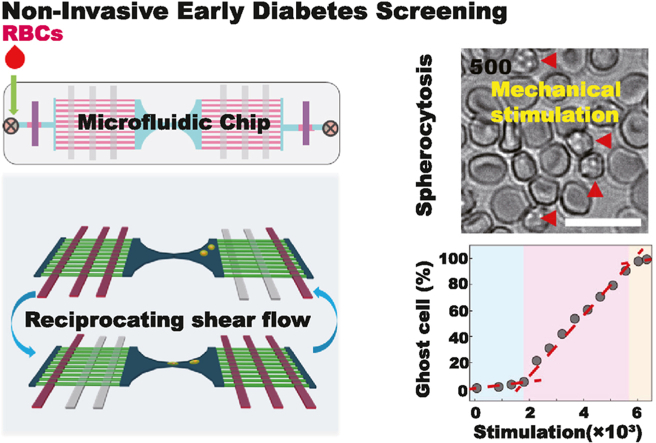 Figure 1
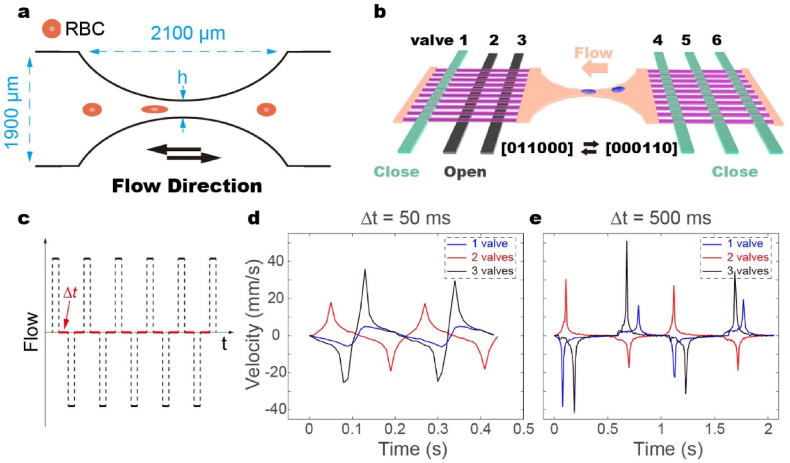 Figure 2
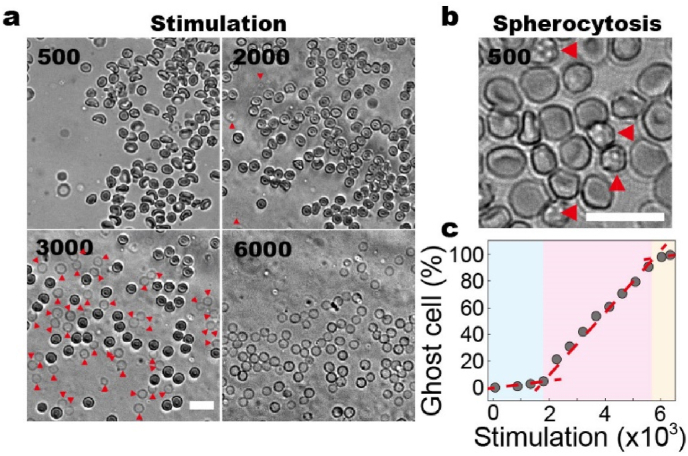 Figure 3
 Figure 4
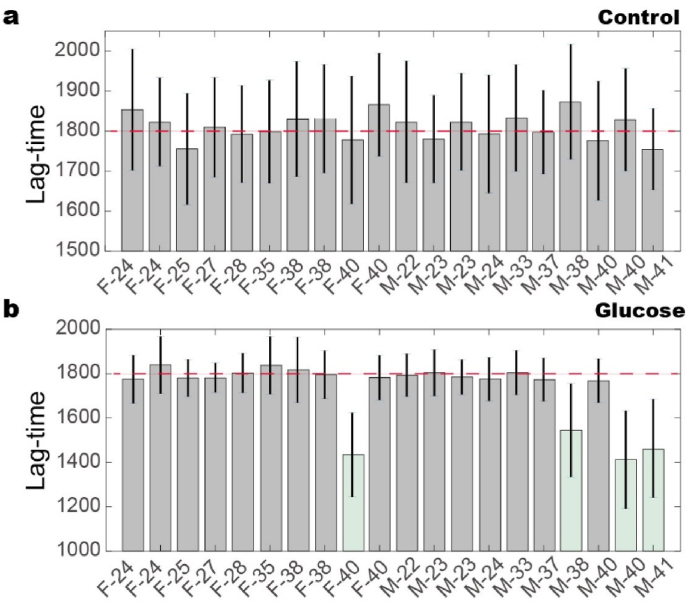 Figure 5
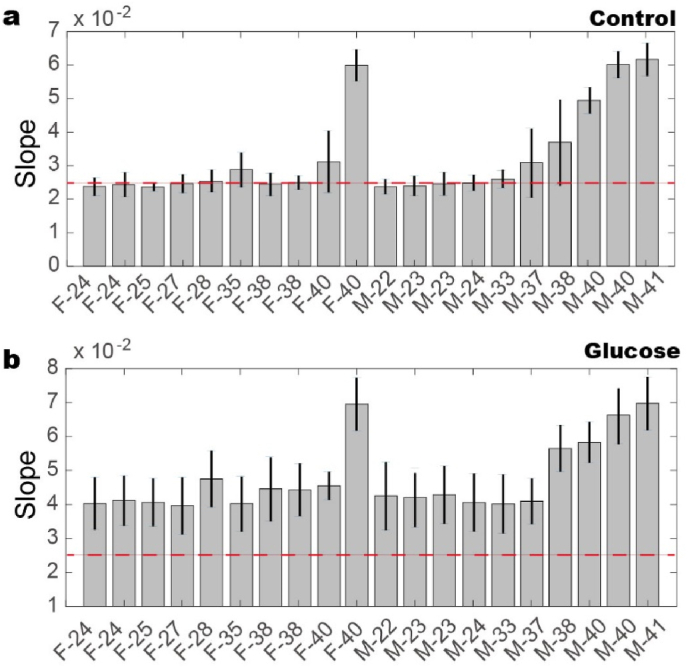 Figure 6
Peer Reviews
No public reviews on file for this paper yet. If you reviewed it on a platform where reviews are public (OpenReview, ICLR, NeurIPS, ICML), you can paste yours below so the community can read it here.
Videos
No videos yet. Explain this paper in a talk, walkthrough, or lecture? Add one.
Taxonomy
TopicsBlood properties and coagulation · Erythrocyte Function and Pathophysiology · Microfluidic and Bio-sensing Technologies