Plantar Dermal Deposition of Wild-Type Transthyretin Amyloid (ATTR): A Case Report of a Unique and Challenging Histopathological Manifestation of Cutaneous ATTR Amyloidosis
Shojiro Ichimata, Akane Aikawa, Takayuki Ishii, Michiro Maruyama, Tsuneaki Yoshinaga, Mitsuto Sato, Nagaaki Katoh, Fuyuki Kametani, Masahide Yazaki, Yoshiki Sekijima, Shin Ishizawa

TL;DR
A 74-year-old man had a skin lesion on his foot that was found to contain wild-type transthyretin amyloid, a rare and early sign of a systemic amyloidosis condition.
Contribution
This case report highlights plantar dermal ATTRwt amyloidosis as a unique histopathological manifestation and potential early indicator of systemic disease.
Findings
Wild-type transthyretin amyloid was identified in a plantar dermal lesion through Congo red staining and proteomic analysis.
The absence of genetic mutations confirmed wild-type ATTR amyloidosis.
The case suggests that amyloid may accumulate in mechanically stressed connective tissues, aiding early detection of ATTRwt.
Abstract
A 74-year-old man presented with a cutaneous lesion on the plantar surface of his right foot. His medical history included spinal canal stenosis and bilateral carpal tunnel syndrome. The lesion was clinically suspected to be a fibroma and was subsequently resected. Histopathological examination revealed mild acanthosis and hyperkeratosis, along with eosinophilic changes and thickening of collagen bundles at the base of the specimen. Based on the patient’s medical history and the pathological findings, transthyretin amyloid (ATTR) deposition was suspected. Congo red staining confirmed the presence of amyloid deposits, which were further identified as ATTR through immunohistochemistry and proteomic analysis. Genetic testing of the transthyretin gene revealed no mutations, leading to a diagnosis of wild-type ATTR (ATTRwt) amyloidosis. Cardiac function tests showed no significant…
Genes, proteins, chemicals, diseases, species, mutations and cell lines named across the full text — each resolved to its canonical identifier and authoritative record.
Click any figure to enlarge with its caption.
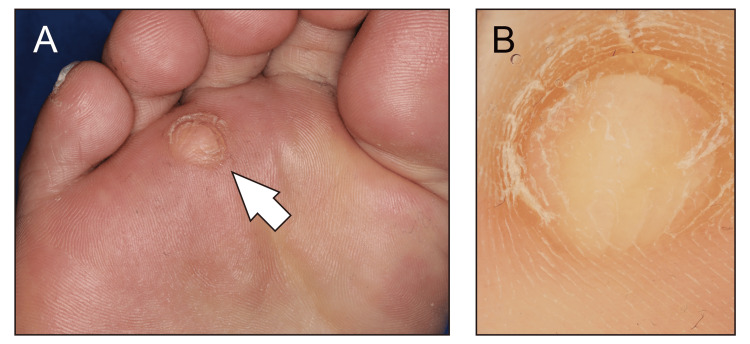 Figure 1
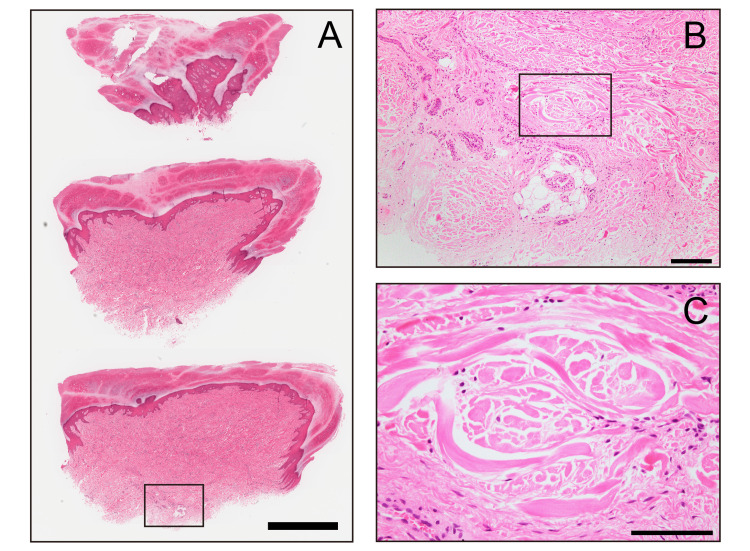 Figure 2
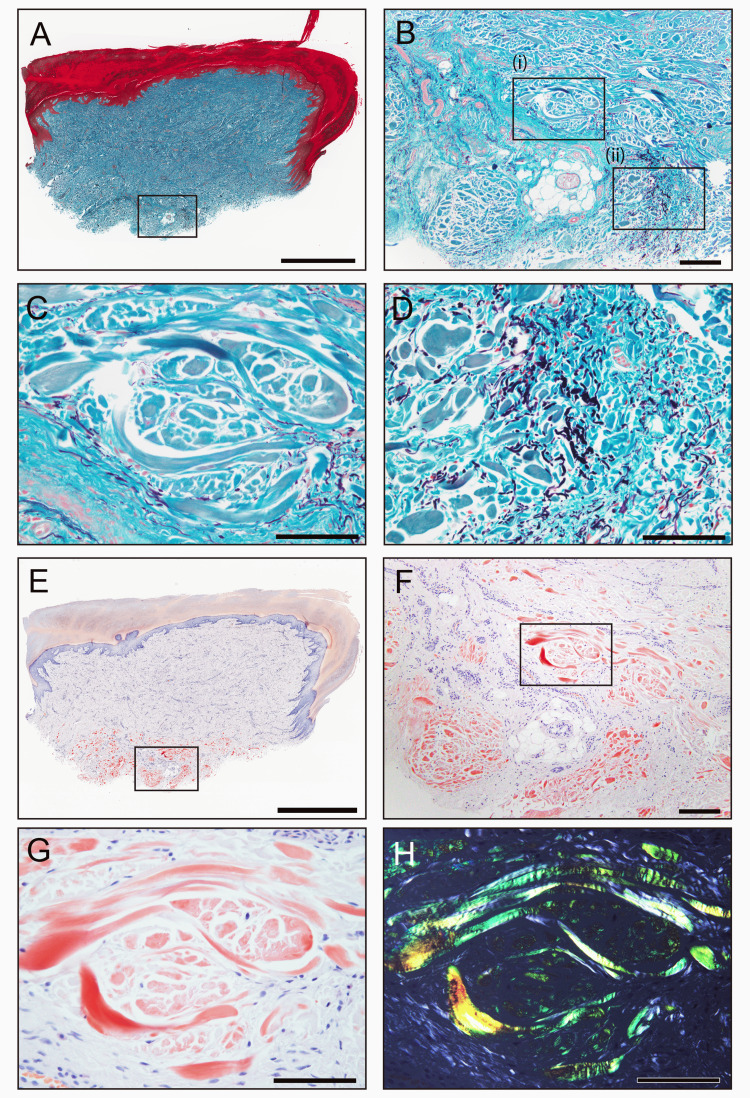 Figure 3
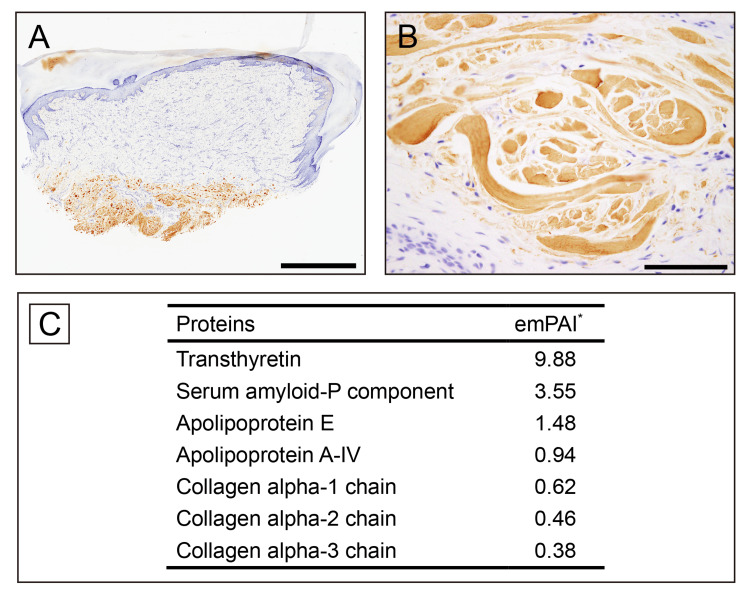 Figure 4
Peer Reviews
No public reviews on file for this paper yet. If you reviewed it on a platform where reviews are public (OpenReview, ICLR, NeurIPS, ICML), you can paste yours below so the community can read it here.
Videos
No videos yet. Explain this paper in a talk, walkthrough, or lecture? Add one.
Taxonomy
TopicsAmyloidosis: Diagnosis, Treatment, Outcomes · Dermatological and Skeletal Disorders · Parathyroid Disorders and Treatments