Lifestyle and Occupational Factors Associated with Recurrent Stroke among Working-Age Adults in Urban Areas of Thailand
Yupha Wongrostrai, Araya Chiangkhong, Charin Suwanwong, Anon Khunakorncharatphong, Norsima Nazifah Sidek, araya chaingkhong, Lamia M’barek, araya chaingkhong, araya chaingkhong

TL;DR
This study identifies lifestyle and workplace factors linked to recurrent stroke in working-age adults in Thailand, emphasizing the need for targeted prevention strategies.
Contribution
The study reveals how gender, blood sugar, drinking, sedentary behavior, and workplace support influence recurrent stroke risk in working-age adults.
Findings
High fasting blood sugar and drinking status significantly increase the risk of recurrent stroke.
A sedentary lifestyle and lack of workplace health support are strongly associated with recurrent stroke.
Risk factors for recurrent stroke vary by age group, suggesting the need for age-specific prevention strategies.
Abstract
Stroke survivors, especially working-age adults, face an increased risk of recurrent stroke within one to five years after the initial occurrence, primarily due to suboptimal risk factor management. This study aims to investigate the contributing factors associated with the risk of recurrent stroke in this demographic. This case-control study matched participants with recurrent stroke to those without recurrent stroke by age and gender. Multivariate logistic regression analyses were conducted to calculate odds ratios (ORs) with 95% confidence intervals (CIs) to identify significant factors associated with recurrent stroke. The study included 100 patients with recurrent stroke and 200 control participants recruited from the hospital database. Significant factors associated with recurrent stroke were gender (OR, 1.83; 95% CI, 1.10 to 3.29), high fasting blood sugar (OR, 3.70; 95% CI,…
Genes, proteins, chemicals, diseases, species, mutations and cell lines named across the full text — each resolved to its canonical identifier and authoritative record.
Click any figure to enlarge with its caption.
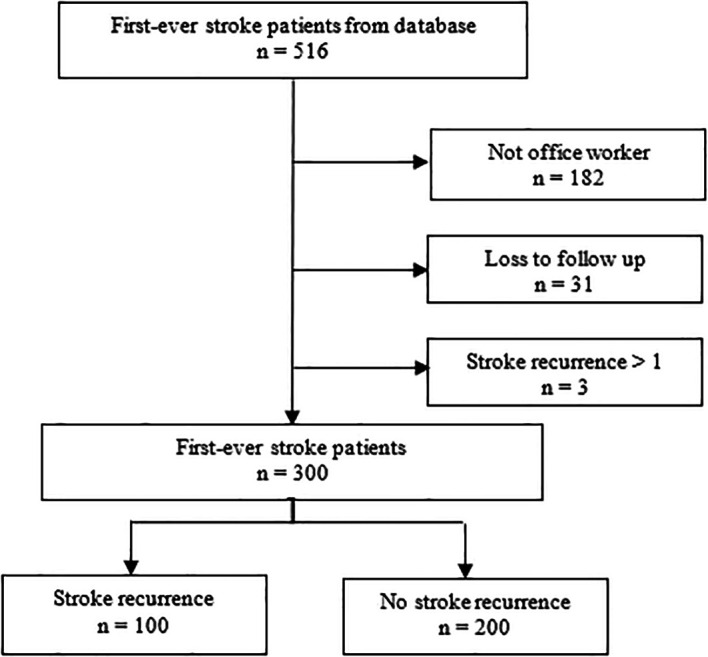 Figure 1
Peer Reviews
No public reviews on file for this paper yet. If you reviewed it on a platform where reviews are public (OpenReview, ICLR, NeurIPS, ICML), you can paste yours below so the community can read it here.
Videos
No videos yet. Explain this paper in a talk, walkthrough, or lecture? Add one.
Taxonomy
TopicsStroke Rehabilitation and Recovery · Acute Ischemic Stroke Management · Older Adults Driving Studies