Exploring Similarities and Differences Between Methods That Exploit Patterns of Local Genetic Correlation to Identify Shared Causal Loci Through Application to Genome‐Wide Association Studies of Multiple Long Term Conditions
Rebecca Darlay, Rupal L. Shah, Richard M. Dodds, Anand T. N. Nair, Ewan R. Pearson, Miles D. Witham, Heather J. Cordell, Victoria Bartle, Victoria Bartle, Heather J. Cordell, Ray Holding, Tom Marshall, Fiona E. Matthews, Paolo Missier, Ewan R. Pearson, Elizabeth Sapey

TL;DR
This paper compares different methods for identifying shared genetic regions between diseases, finding that some methods are more reliable than others.
Contribution
The paper evaluates and compares the performance of several statistical tools for identifying local genetic correlations between diseases.
Findings
LAVA and ρ-HESS were found to be the most reliable in identifying genuine shared genetic factors.
A new tool, HDL-L, also showed strong performance in detecting shared genetic regions.
Results from the methods were inconsistent, with some regions identified by multiple tools and others by only one.
Abstract
Genetic correlation analysis can provide useful insight into the shared genetic basis between traits or conditions of interest. However, most genome‐wide analyses only inform about the degree of global (overall) genetic similarity and do not identify the specific genomic regions that give rise to this similarity. Identification of the key genomic regions contributing to shared genetic correlation between traits could allow the genes in these regions to be prioritised for investigation of potential shared biological mechanisms. In recent years, several statistical tools (e.g. LAVA, ρ‐HESS, SUPERGNOVA and LOGODetect) have been developed to investigate local (in contrast to global) genetic correlation. These tools partition the genome into multiple segments and provide estimates of the genetic correlation captured by each individual segment. We applied these tools to publicly available…
Genes, proteins, chemicals, diseases, species, mutations and cell lines named across the full text — each resolved to its canonical identifier and authoritative record.
Click any figure to enlarge with its caption.
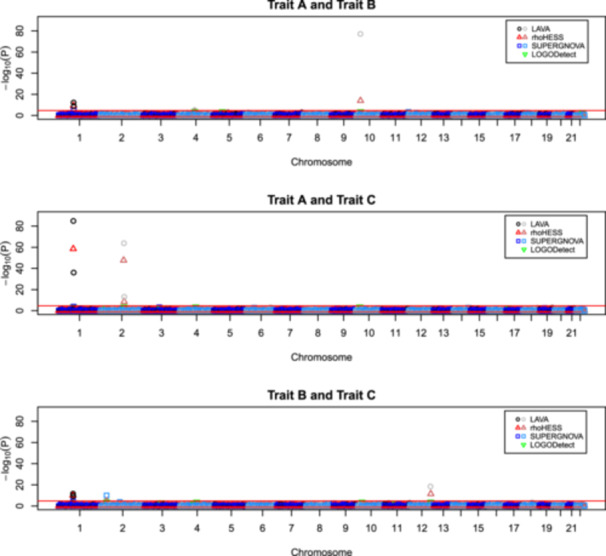 Figure 1
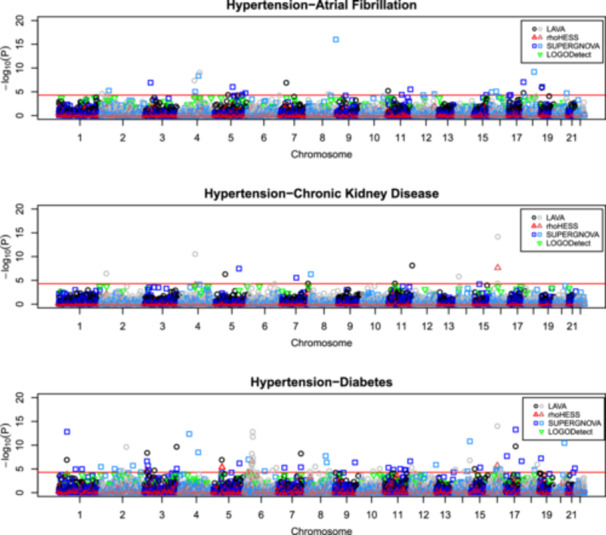 Figure 2
Peer Reviews
No public reviews on file for this paper yet. If you reviewed it on a platform where reviews are public (OpenReview, ICLR, NeurIPS, ICML), you can paste yours below so the community can read it here.
Videos
No videos yet. Explain this paper in a talk, walkthrough, or lecture? Add one.
Taxonomy
TopicsGenetic Associations and Epidemiology · Liver Disease Diagnosis and Treatment · Bioinformatics and Genomic Networks