Patterns of late Holocene and historical extinctions on Madagascar
Laurie R. Godfrey, Zachary S. Klukkert, Brooke E. Crowley, Robin R. Dawson, Peterson Faina, Benjamin Z. Freed, Evon Hekkala, Cortni Borgerson, Harimanjaka A. M. Rasolonjatovo, Patricia C. Wright, Stephen J. Burns, Luis Valente, Jordi Salmona

TL;DR
This paper reviews the causes of large vertebrate extinctions in Madagascar, showing that climate change and human agricultural expansion were key drivers.
Contribution
The paper synthesizes evidence to clarify regional differences and the prolonged timeline of extinctions on Madagascar.
Findings
Early human populations had minimal impact on large endemic vertebrates.
Aridification triggered megafaunal decline in dry regions, while farming caused it in wet regions.
Agropastoralism expansion led to island-wide extinctions of large vertebrates.
Abstract
Around 1000 years ago, Madagascar experienced the collapse of populations of large vertebrates that ultimately resulted in many species going extinct. The factors that led to this collapse appear to have differed regionally, but in some ways, key processes were similar across the island. This review evaluates four hypotheses that have been proposed to explain the loss of large vertebrates on Madagascar: Overkill, aridification, synergy, and subsistence shift. We explore regional differences in the paths to extinction and the significance of a prolonged extinction window across the island. The data suggest that people who arrived early and depended on hunting, fishing, and foraging had little effect on Madagascar’s large endemic vertebrates. Megafaunal decline was triggered initially by aridification in the driest bioclimatic zone, and by the arrival of farmers and herders in the wetter…
Genes, proteins, chemicals, diseases, species, mutations and cell lines named across the full text — each resolved to its canonical identifier and authoritative record.
Click any figure to enlarge with its caption.
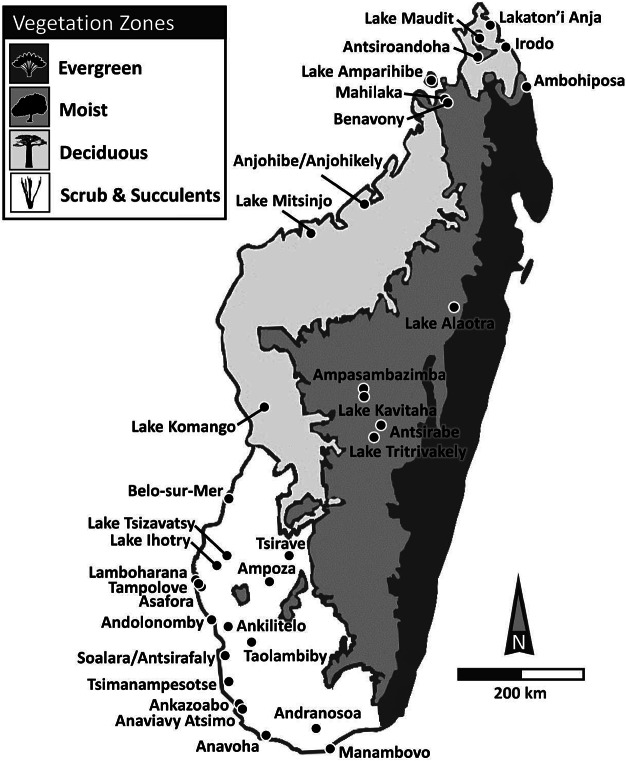 Figure 1
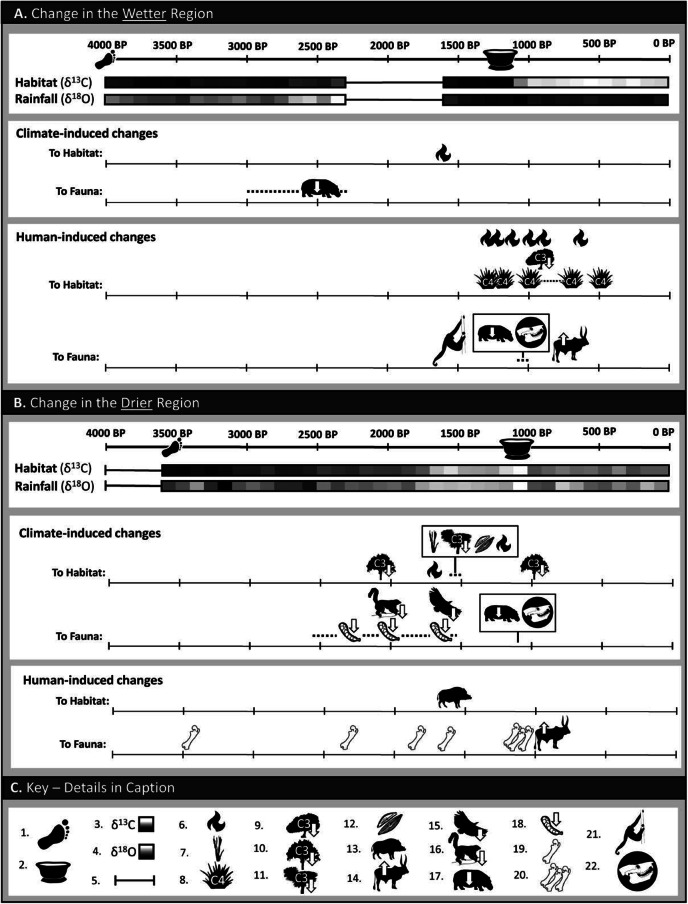 Figure 2
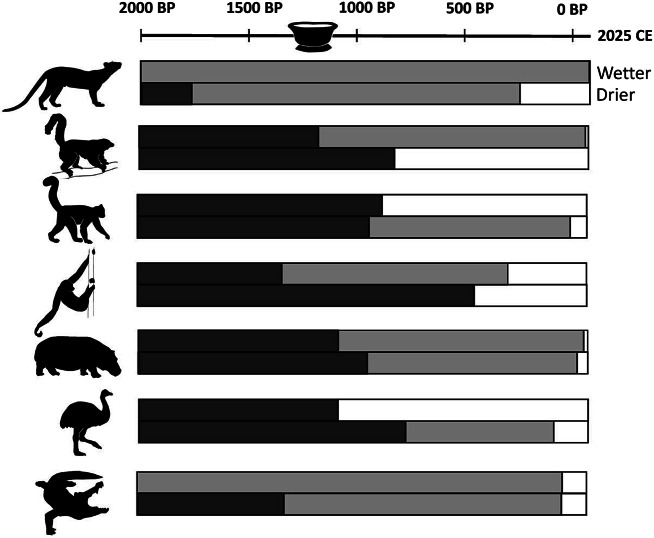 Figure 3
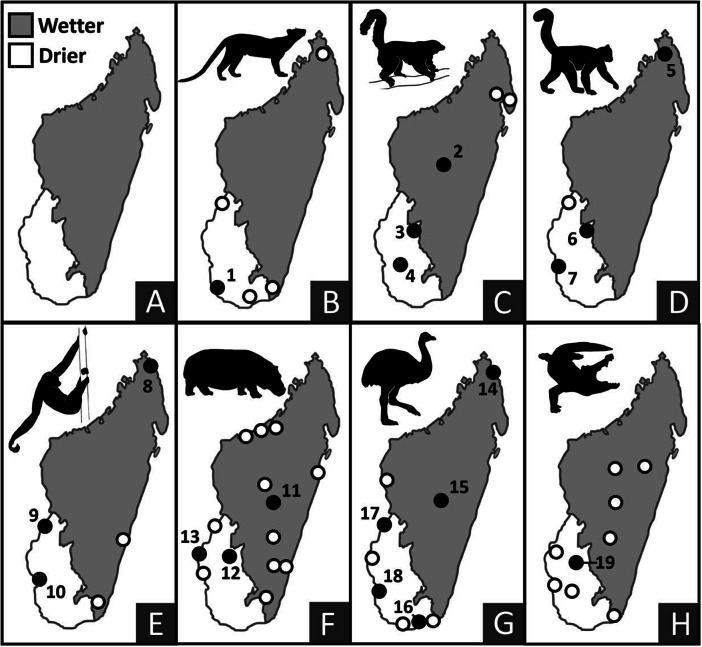 Figure 4
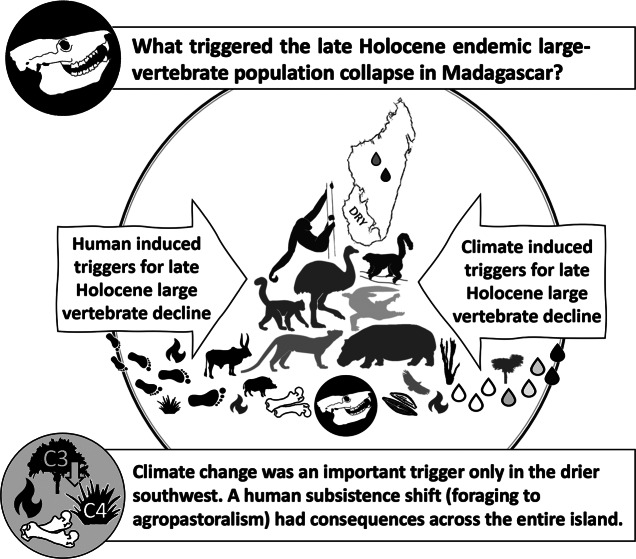 Figure 5
 Figure 6
Peer Reviews
No public reviews on file for this paper yet. If you reviewed it on a platform where reviews are public (OpenReview, ICLR, NeurIPS, ICML), you can paste yours below so the community can read it here.
Videos
No videos yet. Explain this paper in a talk, walkthrough, or lecture? Add one.
Taxonomy
TopicsPacific and Southeast Asian Studies · Pleistocene-Era Hominins and Archaeology · Primate Behavior and Ecology