Multi-ancestry genome-wide association analyses incorporating SNP-by-psychosocial interactions identify novel loci for serum lipids
Amy R. Bentley, Michael R. Brown, Solomon K. Musani, Karen L. Schwander, Thomas W. Winkler, Mario Sims, Tuomas O. Kilpeläinen, Hugues Aschard, Traci M. Bartz, Lawrence F. Bielak, Jin-Fang Chai, Kumaraswamy Naidu Chitrala, Nora Franceschini, Mariaelisa Graff, Xiuqing Guo

TL;DR
This study finds new genetic loci linked to serum lipids by considering interactions between genes and psychosocial factors in a diverse population.
Contribution
The study introduces a novel approach by incorporating gene-by-psychosocial interactions in multi-ancestry GWAS for serum lipids.
Findings
Nine novel loci were identified, seven of which required interaction modeling for detection.
Four lead variants showed very low frequency in European ancestry populations.
RRP1B, a gene linked to a known drug target, was identified as a potential candidate for drug repurposing.
Abstract
Serum lipid levels, which are influenced by both genetic and environmental factors, are key determinants of cardiometabolic health and are influenced by both genetic and environmental factors. Improving our understanding of their underlying biological mechanisms can have important public health and therapeutic implications. Although psychosocial factors, including depression, anxiety, and perceived social support, are associated with serum lipid levels, it is unknown if they modify the effect of genetic loci that influence lipids. We conducted a genome-wide gene-by-psychosocial factor interaction (G×Psy) study in up to 133,157 individuals to evaluate if G×Psy influences serum lipid levels. We conducted a two-stage meta-analysis of G×Psy using both a one-degree of freedom (1df) interaction test and a joint 2df test of the main and interaction effects. In Stage 1, we performed G×Psy…
Genes, proteins, chemicals, diseases, species, mutations and cell lines named across the full text — each resolved to its canonical identifier and authoritative record.
Click any figure to enlarge with its caption.
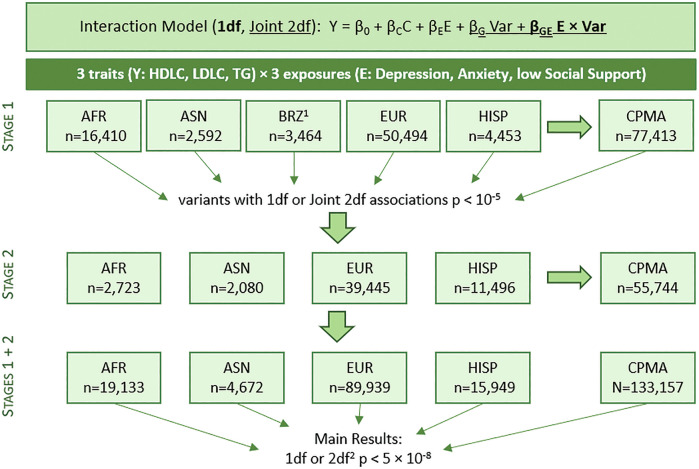 Figure 1
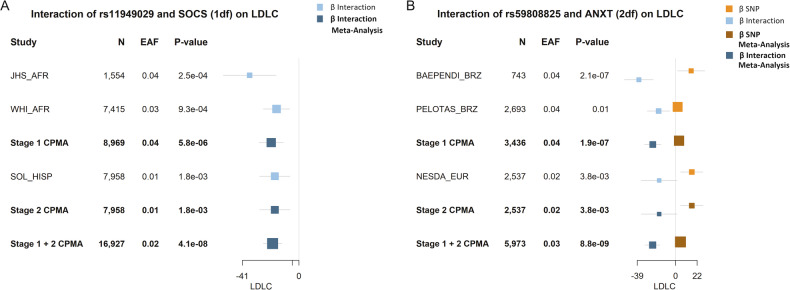 Figure 2
Peer Reviews
No public reviews on file for this paper yet. If you reviewed it on a platform where reviews are public (OpenReview, ICLR, NeurIPS, ICML), you can paste yours below so the community can read it here.
Videos
No videos yet. Explain this paper in a talk, walkthrough, or lecture? Add one.
Taxonomy
TopicsGenetic Associations and Epidemiology · Birth, Development, and Health · Nutrition, Genetics, and Disease