Examining the low uptake of LARC in Ethiopia: an analysis of individual-level predisposing and enabling factors
Mintesnot T. Teni, Travis Loux, Ness Sandoval, Anne Sebert Kuhlmann

TL;DR
This study explores why long-acting reversible contraceptives are underused in Ethiopia, focusing on individual factors like age, religion, and access to information.
Contribution
The study identifies specific individual-level factors associated with low LARC uptake in Ethiopia using the Andersen Behavioral Model.
Findings
LARC uptake was 9.7%, with older, single, nulliparous, and Muslim women showing lower use.
Smaller household size and no exposure to family planning information were linked to low LARC use.
Contraceptive autonomy was associated with higher LARC uptake, while rural and younger women were less likely to use IUDs.
Abstract
According to the 2019 Ethiopian Demographic and Health Survey (EDHS) only 11% of married reproductive-age women in Ethiopia use long-acting reversible contraceptives (LARCs). This study aimed to identify individual characteristics associated with LARC uptake compared to short-acting contraceptives, traditional and barrier methods, and non-contraceptive use. Data from the 2019 Performance Monitoring for Action (PMA) Ethiopia survey (n = 8,182) were used to run multilevel logistic regression models. The sample includes sexually active reproductive-age women (15–49 years). Independent variables were grouped into predisposing and enabling factors guided by the Andersen Behavioral Model of Health Services. LARC uptake in this study was 9.7%. Older, single, nulliparous, and Muslim women had lower LARC use than non-contraceptive and traditional/barrier method use. When compared to…
Genes, proteins, chemicals, diseases, species, mutations and cell lines named across the full text — each resolved to its canonical identifier and authoritative record.
Click any figure to enlarge with its caption.
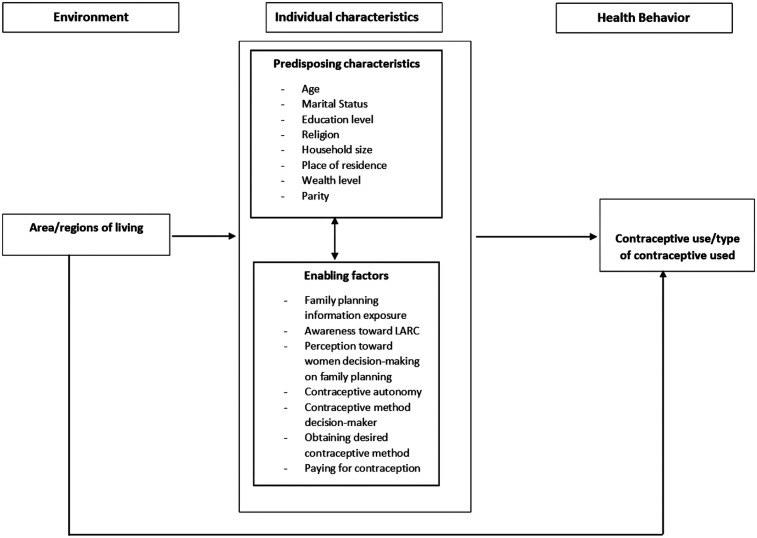 Figure 1
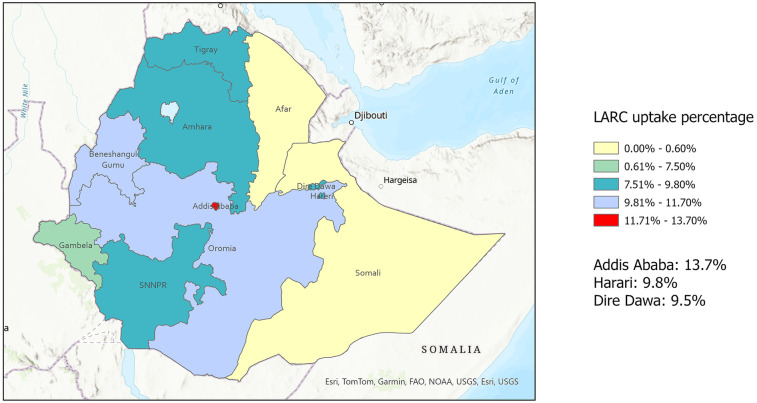 Figure 2
Peer Reviews
No public reviews on file for this paper yet. If you reviewed it on a platform where reviews are public (OpenReview, ICLR, NeurIPS, ICML), you can paste yours below so the community can read it here.
Videos
No videos yet. Explain this paper in a talk, walkthrough, or lecture? Add one.
Taxonomy
TopicsGlobal Maternal and Child Health · Reproductive Health and Contraception