Impact of meteorological factors on transmission of respiratory viruses across all age groups in the hot arid climate in Qatar
May Husein, Salma Younes, Muthanna Samara, M. Rami Alfarra, Abdullatif Al Khal, Muna Al Maslamani, Gheyath K. Nasrallah, Einas Al Kuwari, Ali Al-kinani, Peter V. Coyle, Nader Al-Dewik

TL;DR
This study examines how weather and demographics affect the spread of respiratory viruses in Qatar's hot, arid climate, finding that school age children are a key factor.
Contribution
The study provides new insights into the role of meteorological and demographic factors in respiratory virus transmission in a hot arid climate.
Findings
School age children were the primary determinant of viral transmission, especially with large waves coinciding with school reopenings.
Flu-A, Flu-B, hMPV, and RSV showed clear seasonality linked to meteorological factors like temperature and humidity.
Viruses like HRV, hBoV, and ADV had atypical or no seasonality, suggesting other transmission drivers.
Abstract
The association between meteorological parameters and viral transmission in temperate and subtropical arid climates is not fully understood. The climate in Qatar reaches extremes of heat and humidity but retains a similar pattern of transmission of respiratory viruses as in temperate climates. The need for a better understanding of the demographic and meteorological factors that drive the transmission of respiratory viruses in the community. To evaluate the relationship between meteorological and demographic factors on the transmission of 18 respiratory viruses in the State of Qatar. In total, 355,948 nasopharyngeal swabs were tested for respiratory viruses from 31-Dec-2018 to 29-Dec-2019. The study involved 18 viruses, of which only 8 viruses were included in the analysis: ADV, hBoV, Flu-A, Flu-B, hPIV3, hMPV, HRV, and RSV. Respiratory virus prevalence was compared with local…
Genes, proteins, chemicals, diseases, species, mutations and cell lines named across the full text — each resolved to its canonical identifier and authoritative record.
Click any figure to enlarge with its caption.
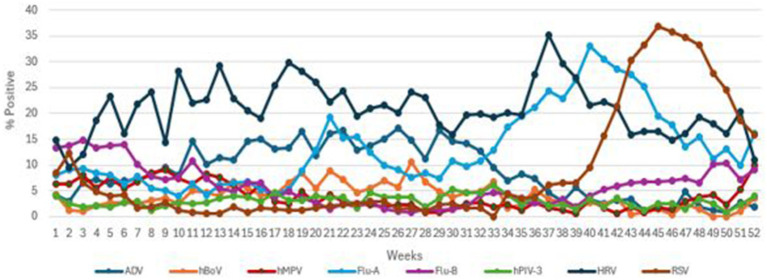 Figure 1
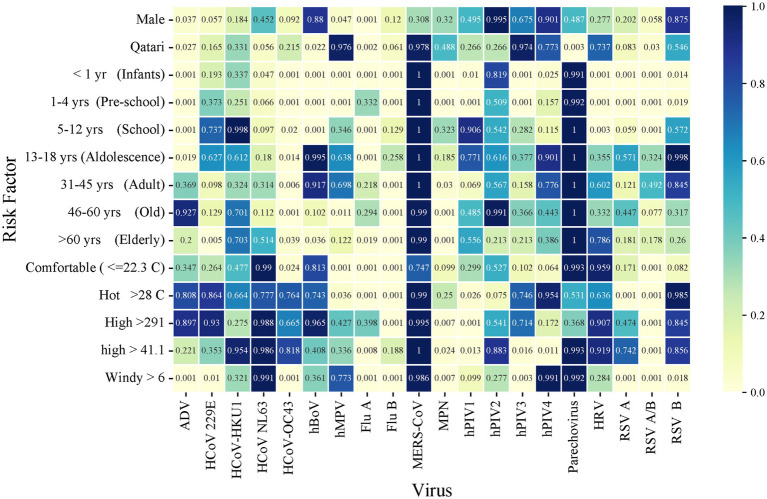 Figure 2
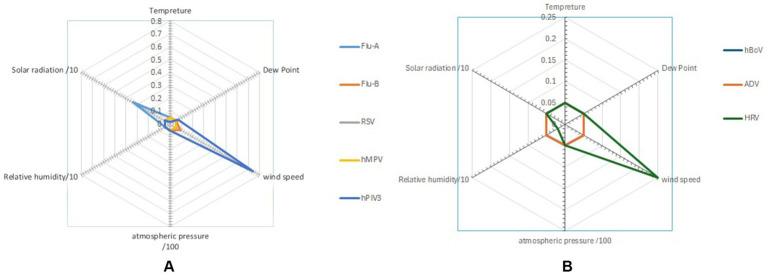 Figure 3
 Figure 4
Peer Reviews
No public reviews on file for this paper yet. If you reviewed it on a platform where reviews are public (OpenReview, ICLR, NeurIPS, ICML), you can paste yours below so the community can read it here.
Videos
No videos yet. Explain this paper in a talk, walkthrough, or lecture? Add one.
Taxonomy
TopicsRespiratory viral infections research · Viral gastroenteritis research and epidemiology · Viral Infections and Vectors