Discovery of structurally diverse polyprenylated acylphloroglucinols with quorum sensing inhibitory activity from Hypericum seniawinii Maxim
Yulin Duan, Xiaoxia Gu, Xincai Hao, Guosheng Cao, Weiguang Sun, Changxing Qi, Yonghui Zhang

TL;DR
Researchers discovered new compounds from a plant that can inhibit bacterial communication, potentially useful for fighting infections.
Contribution
Identification of structurally diverse polyprenylated acylphloroglucinols with quorum sensing inhibition from Hypericum seniawinii.
Findings
Hyperisenins A–D are new polyprenylated acylphloroglucinols with unique structural features.
Compound 4 inhibits quorum sensing in Pseudomonas aeruginosa by reducing rhamnolipid levels.
Compound 4 may bind to lasR and pqsR to disrupt bacterial communication.
Abstract
Four previously undescribed polyprenylated acylphloroglucinols, hyperisenins A–D (1–4), along with two known analogues (5 and 6), were obtained from the aerial part of Hypericum seniawinii Maxim. Compounds 1 and 2 were two highly degraded polyprenylated acylphloroglucinols with a cyclohexanone-monocyclic skeleton, while compound 3 was the first example of O-prenylated acylphloroglucinols with a 6/6/6 ring system. Their structures were identified by analyzing NMR, HRESIMS data, and quantum chemical calculations. The biosynthetic pathway of 1 and 2 might originate from bicyclic polyprenylated acylphloroglucinols via a series of complex retro-Claisen, keto − enol tautomerism, and intramolecular cyclization. The bioassay results showed that 4 exhibited quorum sensing inhibitory activity against Pseudomonas aeruginosa, which could decrease the activation of the rhl system, and significantly…
Genes, proteins, chemicals, diseases, species, mutations and cell lines named across the full text — each resolved to its canonical identifier and authoritative record.
Click any figure to enlarge with its caption.
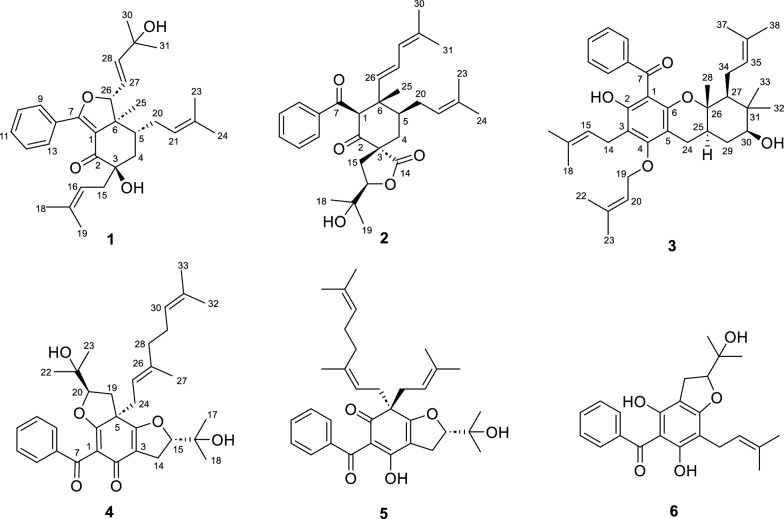 Figure 1
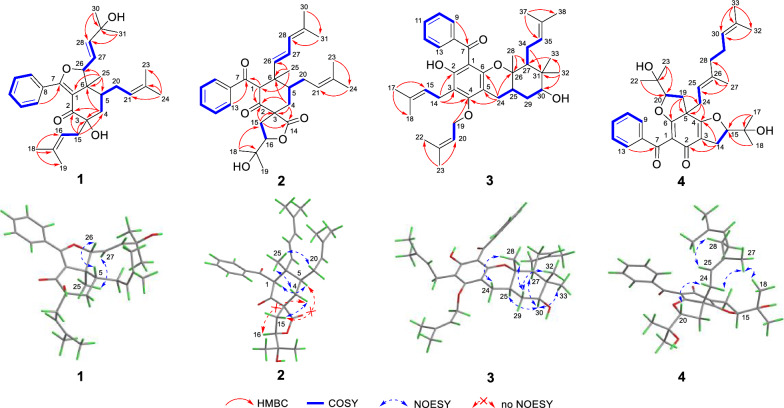 Figure 2
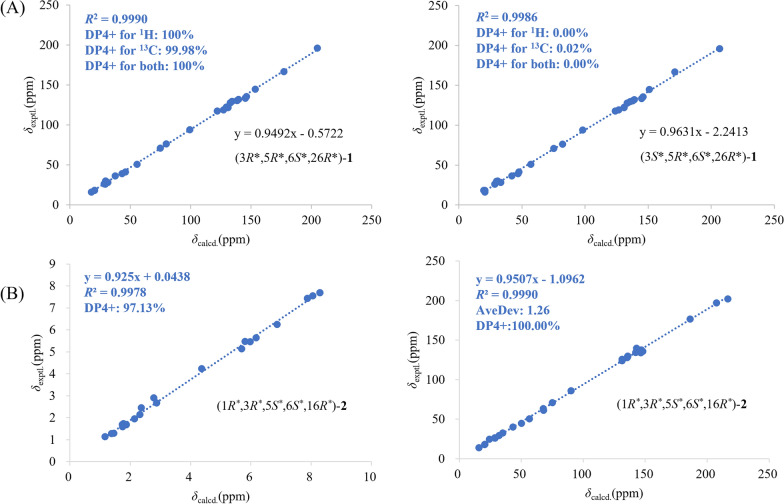 Figure 3
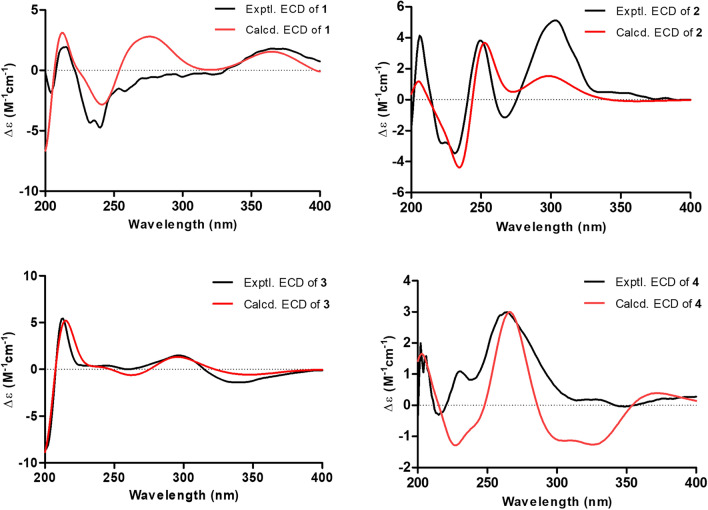 Figure 4
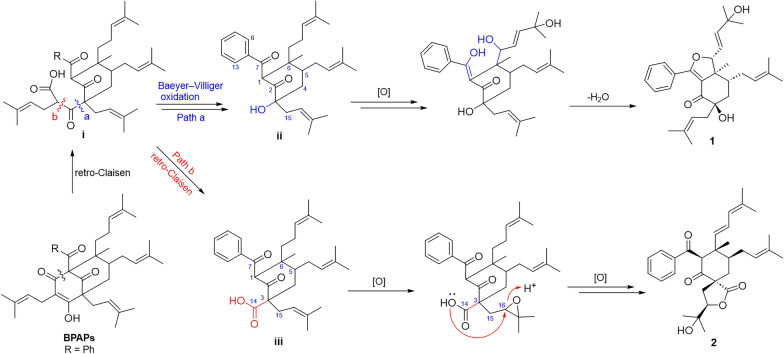 Figure 5
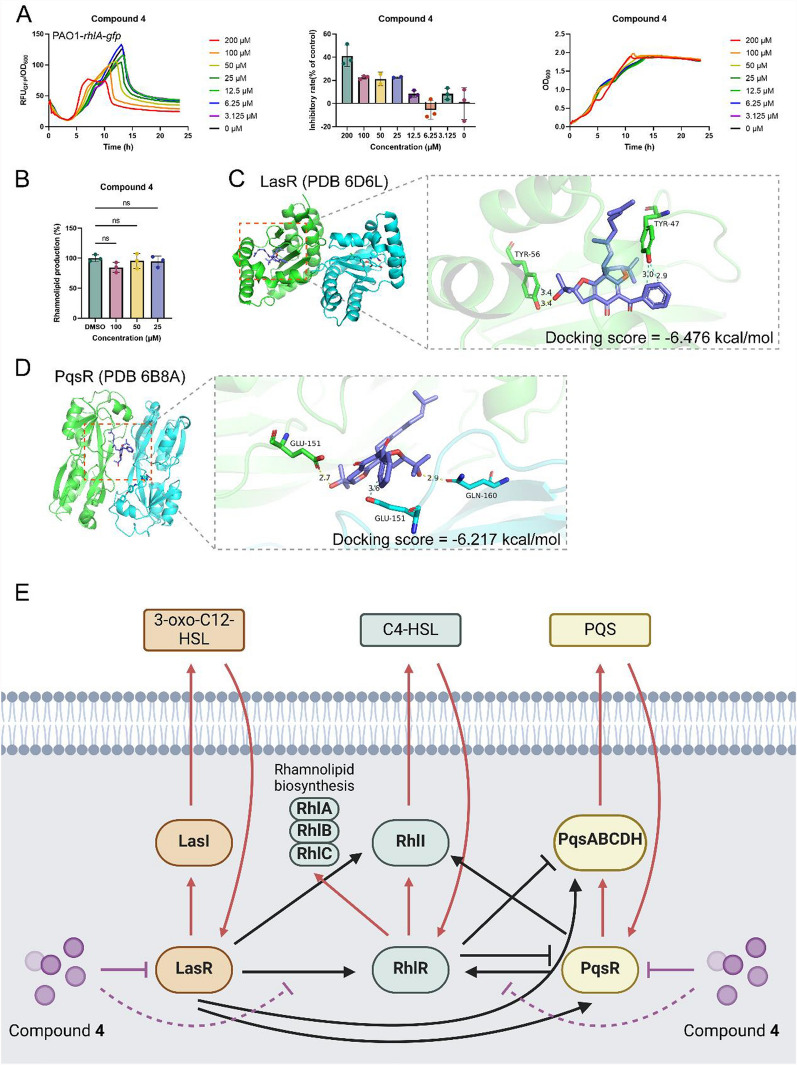 Figure 6
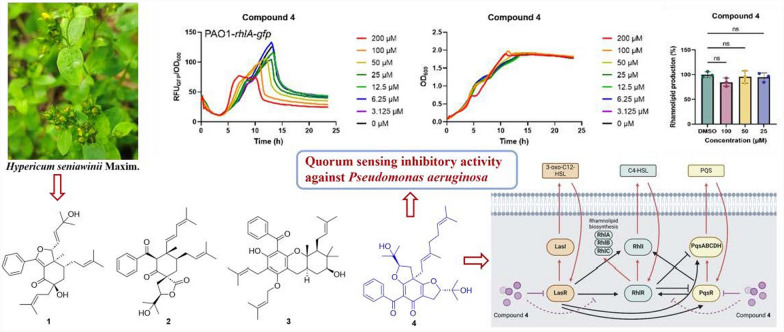 Figure 7
Peer Reviews
No public reviews on file for this paper yet. If you reviewed it on a platform where reviews are public (OpenReview, ICLR, NeurIPS, ICML), you can paste yours below so the community can read it here.
Videos
No videos yet. Explain this paper in a talk, walkthrough, or lecture? Add one.
Taxonomy
TopicsNatural Compound Pharmacology Studies · Polysaccharides and Plant Cell Walls · Carbohydrate Chemistry and Synthesis