The Astrocyte Elevated Gene- 1 Expression and other Risk Factors for Different Varieties of Diabetic Optic Neuropathy in Egyptian Patients with Diabetic Retinopathy
Noha Rabie Bayomy, Sameh Mohamed Elgouhary, Eman Masoud Abd El Gayed, Karema Abdelhady Diab, Mai A. Kamel, Nashwa Mahmoud Mouhamed Muharram

TL;DR
This study investigates how AEG-1 gene expression and other factors contribute to diabetic optic neuropathy in Egyptian patients with diabetic retinopathy.
Contribution
The study identifies AEG-1 gene expression and metabolic factors as novel risk factors for different types of diabetic optic neuropathy.
Findings
AEG-1 mRNA and protein levels are significantly higher in diabetic patients with optic neuropathy.
AEG-1 mRNA and protein are significant risk factors for all types of diabetic optic neuropathy.
Blood glucose and diabetes duration are linked to specific optic neuropathy subtypes.
Abstract
To assess the role of the mRNA and protein expression of Astrocyte Elevated Gene- 1 (AEG-1) and other possible risk factors for diabetic optic neuropathy (DON) in Egyptian patients with diabetic retinopathy (DR). This case–control study constituted 450 diabetic patients divided into three groups: Group 1 included 150 DR patients with any sign of DON (diabetic papillopathy (DP), non-arteritic anterior ischemic optic neuropathy (AION), and optic atrophy (OA)). Group 2 included 150 DR patients without any sign of DON. Group 3 included 150 sex and age-matched diabetic patients without any sign of DR or DON. The expression level of AEG-1 mRNA was assessed by real-time PCR. Serum AEG-1 was determined by ELISA. Multivariate logistic regression analysis was conducted to assess the DON risk factors. The mRNA expression of the AEG-1 gene and AEG-1 protein levels were significantly increased (P <…
Genes, proteins, chemicals, diseases, species, mutations and cell lines named across the full text — each resolved to its canonical identifier and authoritative record.
Click any figure to enlarge with its caption.
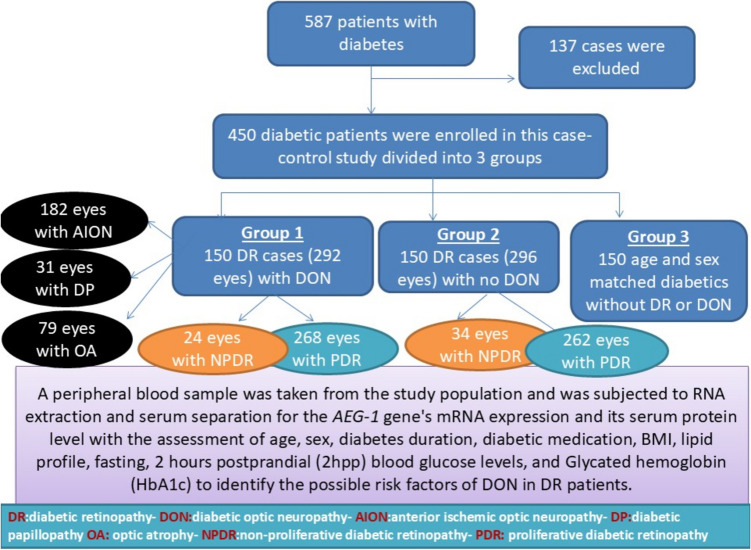 Figure 1
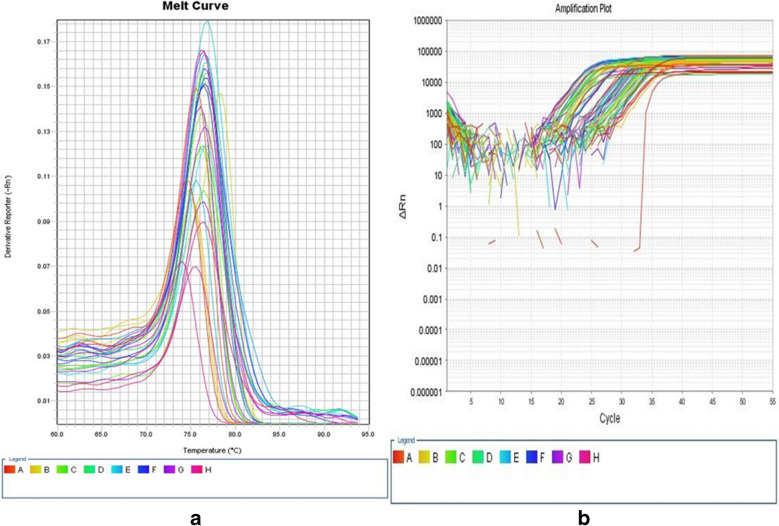 Figure 2
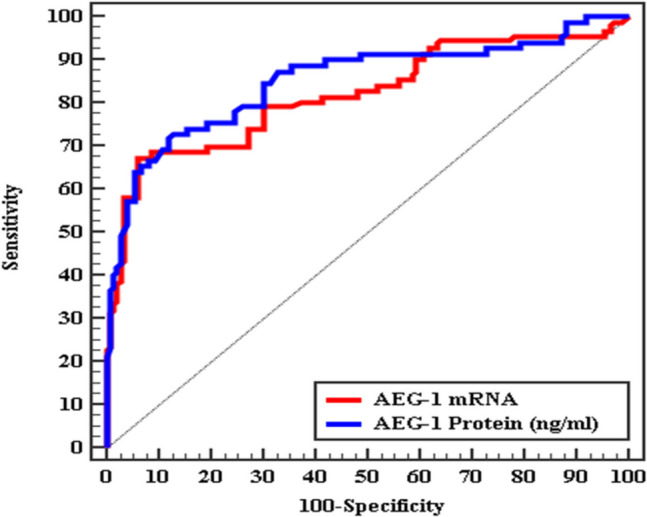 Figure 3
Peer Reviews
No public reviews on file for this paper yet. If you reviewed it on a platform where reviews are public (OpenReview, ICLR, NeurIPS, ICML), you can paste yours below so the community can read it here.
Videos
No videos yet. Explain this paper in a talk, walkthrough, or lecture? Add one.
Taxonomy
TopicsCancer Mechanisms and Therapy · Ocular Diseases and Behçet’s Syndrome · Natural Compounds in Disease Treatment