Is AI currently capable of identifying wild oysters? A comparison of human annotators against the AI model, ODYSSEE
Brendan Campbell, Alan Williams, Kleio Baxevani, Alyssa Campbell, Rushabh Dhoke, Rileigh E. Hudock, Xiaomin Lin, Vivek Mange, Bernhard Neuberger, Arjun Suresh, Alhim Vera, Arthur Trembanis, Herbert G. Tanner, Edward Hale

TL;DR
This study compares an AI model called ODYSSEE with human annotators in identifying live oysters in field images, finding that while the AI is faster, it is less accurate than both experts and non-experts.
Contribution
The study evaluates the ODYSSEE AI model's performance against human annotators for identifying live oysters and identifies factors affecting its accuracy.
Findings
ODYSSEE is faster than both expert and non-expert annotators in identifying live oysters.
The model overpredicts live oysters and achieves lower accuracy (63%) compared to human annotators (74-75%).
Image quality significantly affects model and human performance, with better images improving human accuracy but worsening model accuracy.
Abstract
Oysters are ecologically and commercially important species that require frequent monitoring to track population demographics (e.g., abundance, growth, mortality). Current methods of monitoring oyster reefs often require destructive sampling methods and extensive manual effort. However, these methods are destructive and are suboptimal for small-scale or sensitive environments. A recent alternative, the ODYSSEE model, was developed to use deep learning techniques to identify live oysters using video or images taken in the field of oyster reefs to assess abundance. The validity of this model in identifying live oysters on a reef was compared to expert and non-expert annotators. In addition, we identified potential sources of prediction error. Although the model can make inferences significantly faster than expert and non-expert annotators (39.6 s, 2.34±0.61 h, 4.50±1.46 h,…
Genes, proteins, chemicals, diseases, species, mutations and cell lines named across the full text — each resolved to its canonical identifier and authoritative record.
Click any figure to enlarge with its caption.
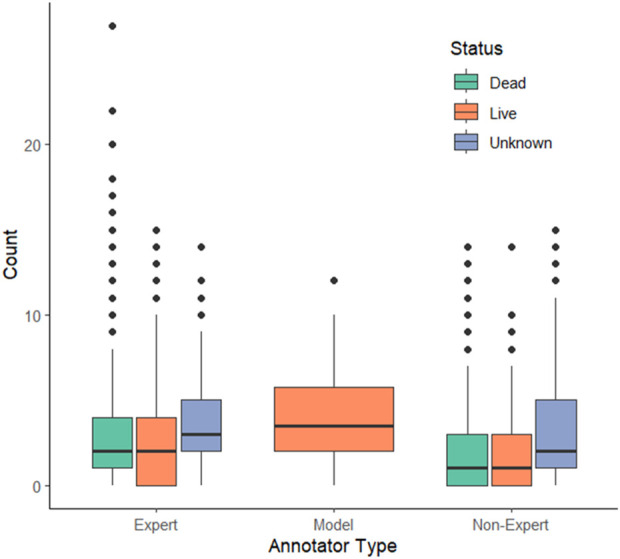 Figure 1
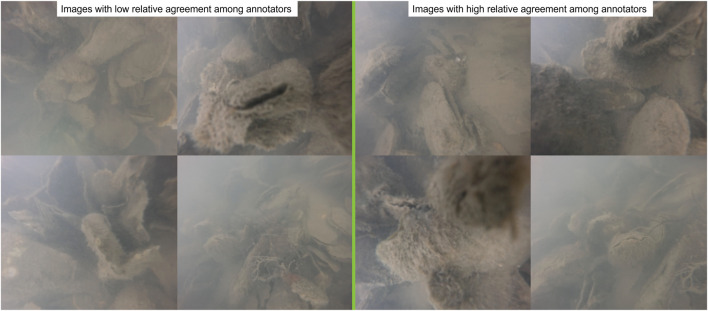 Figure 2
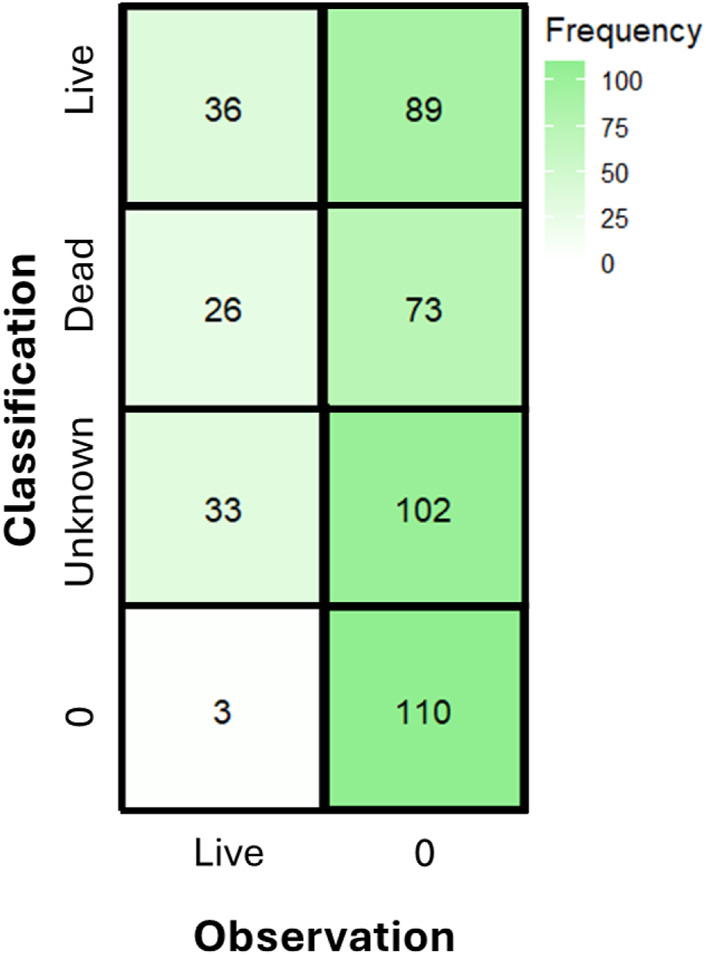 Figure 3
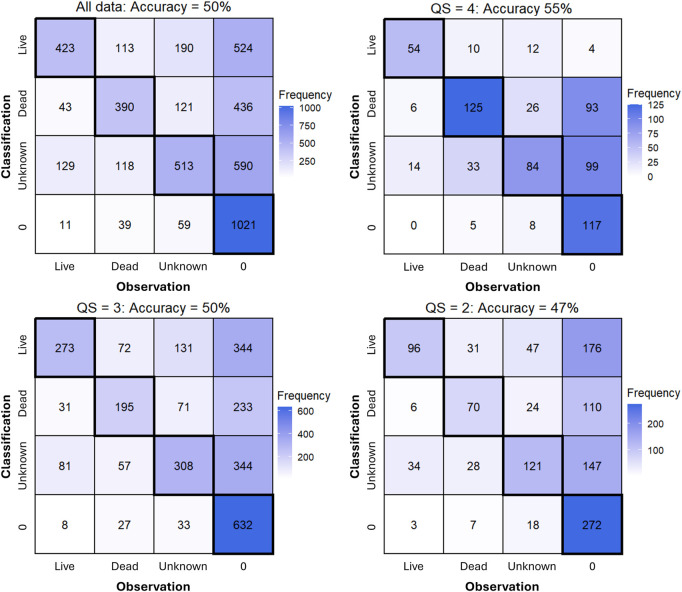 Figure 4
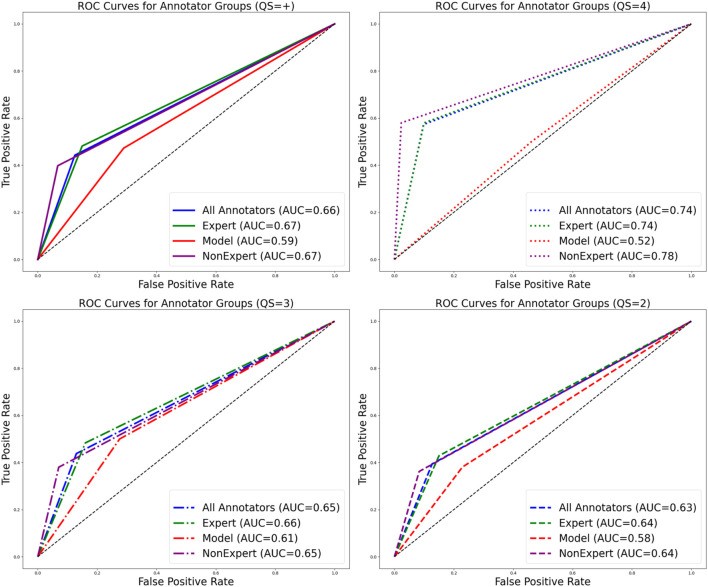 Figure 5
Peer Reviews
No public reviews on file for this paper yet. If you reviewed it on a platform where reviews are public (OpenReview, ICLR, NeurIPS, ICML), you can paste yours below so the community can read it here.
Videos
No videos yet. Explain this paper in a talk, walkthrough, or lecture? Add one.
Taxonomy
TopicsMarine Bivalve and Aquaculture Studies · Marine and fisheries research · Marine Biology and Ecology Research