Recurrent Post-traumatic Morel-Lavallée Lesion of the Hip and Thigh Treated With Open Capsulectomy and Povidone-Iodine Sclerotherapy: A Case Report
Jung su Lee, Oh young Kwon, Jong soon Kim, Young hun Jung

TL;DR
A patient with a recurring hip and thigh injury was successfully treated with povidone-iodine injections after other methods failed.
Contribution
Povidone-iodine is proposed as an alternative treatment for recurrent Morel-Lavallée lesions when standard agents are unavailable.
Findings
Open capsulectomy failed to prevent recurrence of the lesion.
Ultrasound-guided povidone-iodine sclerotherapy reduced the lesion size after two sessions.
Povidone-iodine is suggested as a viable alternative sclerosant for MLLs.
Abstract
Morel-Lavallée lesions (MLLs) are closed internal degloving injuries that may lead to persistent post-traumatic fluid collections. We report the case of a 65-year-old male patient with a recurrent MLL over the left hip and thigh following a fall. Initial management with aspiration and corticosteroid injection was unsuccessful, and open capsulectomy also failed to prevent recurrence. Due to the unavailability of conventional sclerosing agents, ultrasound-guided sclerotherapy using 10% povidone-iodine was performed. After two sessions, there was a marked reduction in the size of the lesion without complications. This case suggests that povidone-iodine may serve as a viable alternative sclerosant for recurrent MLLs when standard agents are inaccessible.
Genes, proteins, chemicals, diseases, species, mutations and cell lines named across the full text — each resolved to its canonical identifier and authoritative record.
Click any figure to enlarge with its caption.
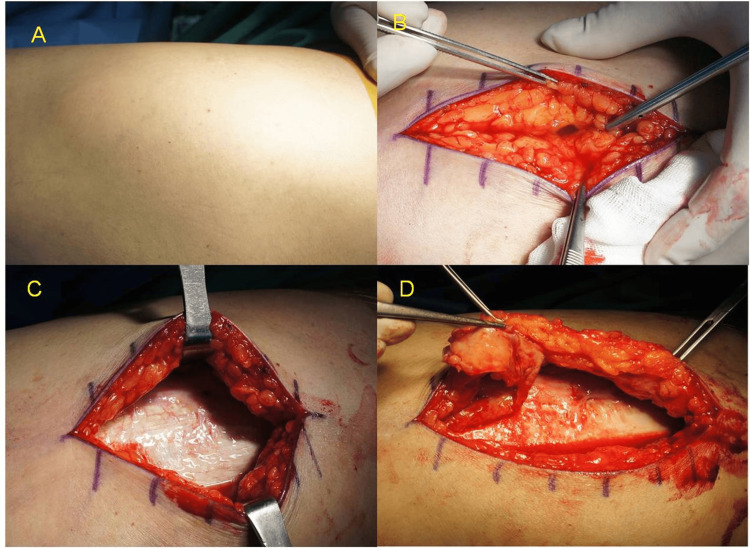 Figure 1
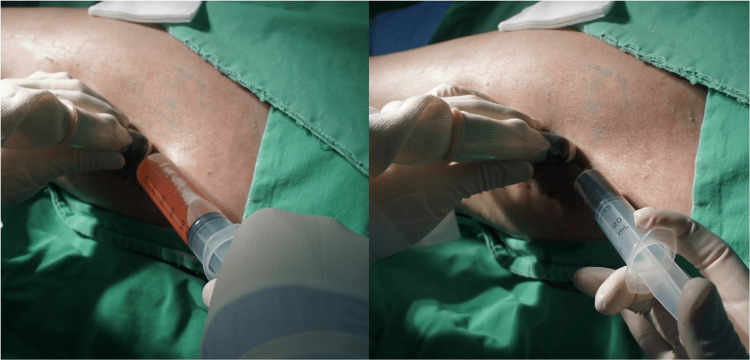 Figure 2
Peer Reviews
No public reviews on file for this paper yet. If you reviewed it on a platform where reviews are public (OpenReview, ICLR, NeurIPS, ICML), you can paste yours below so the community can read it here.
Videos
No videos yet. Explain this paper in a talk, walkthrough, or lecture? Add one.
Taxonomy
TopicsPelvic and Acetabular Injuries · Spinal Fractures and Fixation Techniques · Management of metastatic bone disease