Identifying factors associated with mental health status following climate-related disasters: a nationwide longitudinal panel study in Korea
Eunjin Oh, Jaelim Cho, Changsoo Kim, Hyungryul Lim, Kyoung-Nam Kim

TL;DR
This study explores how climate-related disasters affect mental health in Korea and identifies who is most vulnerable.
Contribution
The study provides new insights into how disaster severity and demographic factors influence mental health outcomes after climate events.
Findings
Higher disaster severity is linked to increased depression, anxiety, and PTSD symptoms.
Older adults, women, and those with low income or education show stronger associations between casualty experience and anxiety.
Findings suggest the need for targeted mental health interventions for vulnerable groups post-disaster.
Abstract
Despite the increasing frequency and intensity of climate-related disasters, identifying factors associated with mental health status remains challenging. This study aimed to determine the factors linked to symptoms of depression, anxiety, and post-traumatic stress disorder (PTSD) following heavy rainfall and typhoons. National data on climate-related disaster victims (n=825 for heavy rainfall and n=1,220 for typhoon) from a longitudinal panel in Korea (“Long-term Survey on the Change of Life of Disaster Victims”) and data from individuals unaffected by disasters (n=893) were used. Generalized linear mixed models were employed to evaluate the factors associated with mental health status following climate-related disasters. Greater disaster severity (e.g., experiencing casualties or asset loss) was associated with higher scores for depression (Patient Health Questionnaire-9), anxiety…
Genes, proteins, chemicals, diseases, species, mutations and cell lines named across the full text — each resolved to its canonical identifier and authoritative record.
Click any figure to enlarge with its caption.
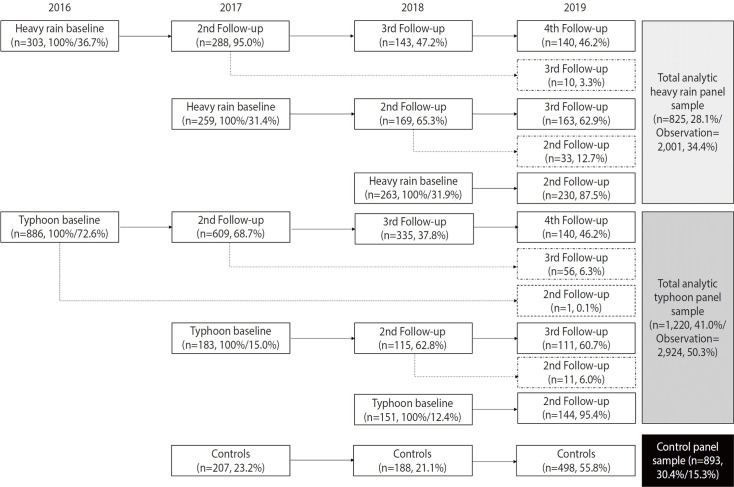 Figure 1
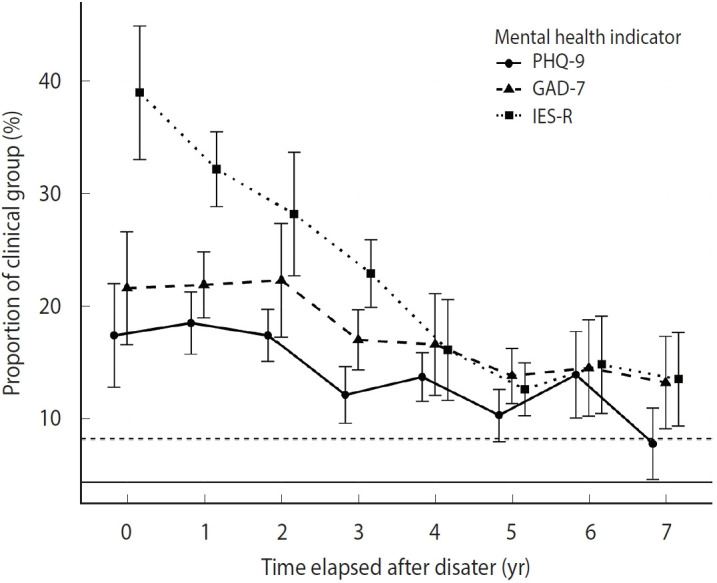 Figure 2
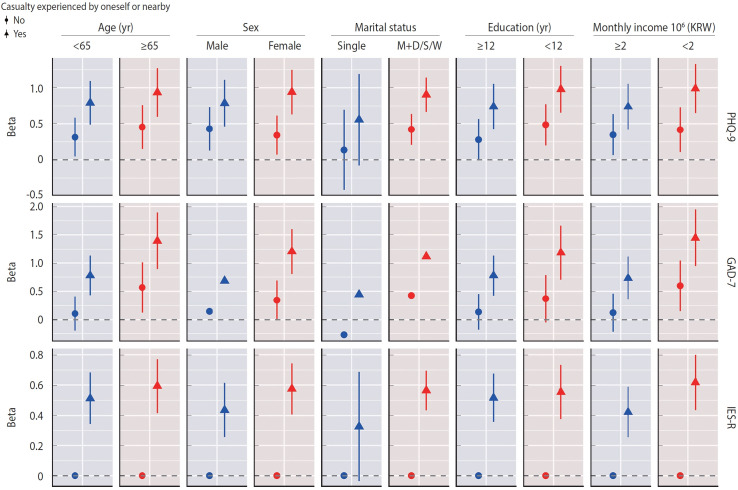 Figure 3
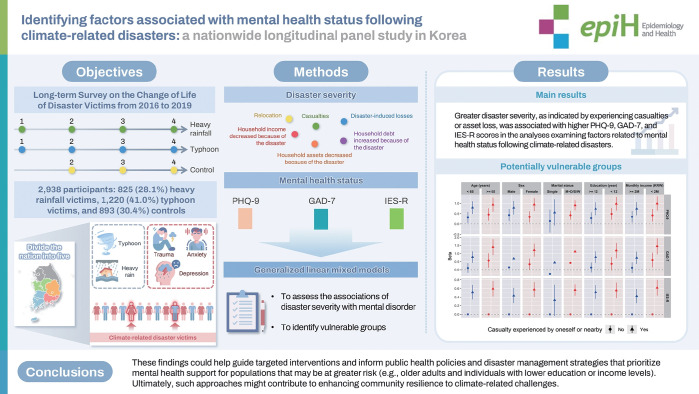 Figure 4
Peer Reviews
No public reviews on file for this paper yet. If you reviewed it on a platform where reviews are public (OpenReview, ICLR, NeurIPS, ICML), you can paste yours below so the community can read it here.
Videos
No videos yet. Explain this paper in a talk, walkthrough, or lecture? Add one.
Taxonomy
TopicsResilience and Mental Health