Predictive Value of Brain Volumetry in the Response to Subthalamotomy Using High-Intensity Focused Ultrasound Treatment in Patients With Parkinson's Disease
Alfaro-Nasta E., Gonzalez-Mendez P., Lorenzoni J., Juri C., Andia M.E.

TL;DR
This study shows that brain volumetry can predict how well Parkinson's patients will respond to a noninvasive ultrasound treatment.
Contribution
The study introduces brain volumetry as a predictive tool for treatment response in MRg-FUS subthalamotomy for Parkinson's disease.
Findings
PCA identified two patient clusters with 80% sensitivity and specificity in predicting treatment response.
Brain volume, cortical thickness, and gray/white matter volume positively correlate with treatment response.
Increased ventricular volume negatively correlates with treatment response.
Abstract
Objective: Subthalamotomy using magnetic resonance-guided high-intensity focused ultrasound (MRg-FUS) is a noninvasive therapy that improves the cardinal symptoms of Parkinson's disease. However, clinical outcomes show high variability even when all inclusion criteria for this treatment are met. In this work, we aim to study the relationship between brain volumetry and clinical response in patients undergoing this treatment. Methods: Twenty patients who underwent MRg-FUS subthalamotomy were included and evaluated at baseline and 3 months post-treatment. Brain volumes were obtained from pretreatment MRI scans processed with the open-source package FreeSurfer. The treatment response was assessed using the movement disorder society unified Parkinson's disease rating scale (MDS-UPDRS). Principal component analysis (PCA) and clustering methods were used to identify groups of patients with…
Genes, proteins, chemicals, diseases, species, mutations and cell lines named across the full text — each resolved to its canonical identifier and authoritative record.
Click any figure to enlarge with its caption.
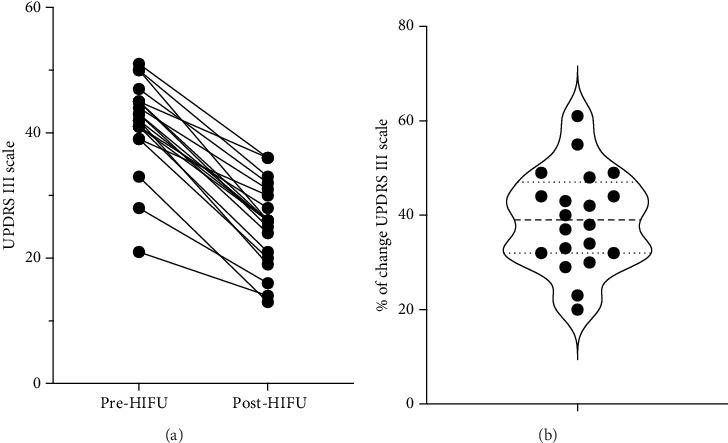 Figure 1
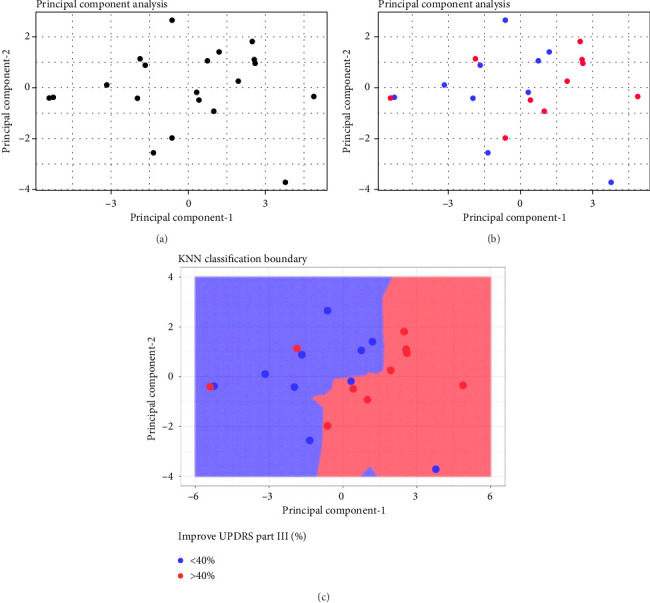 Figure 2
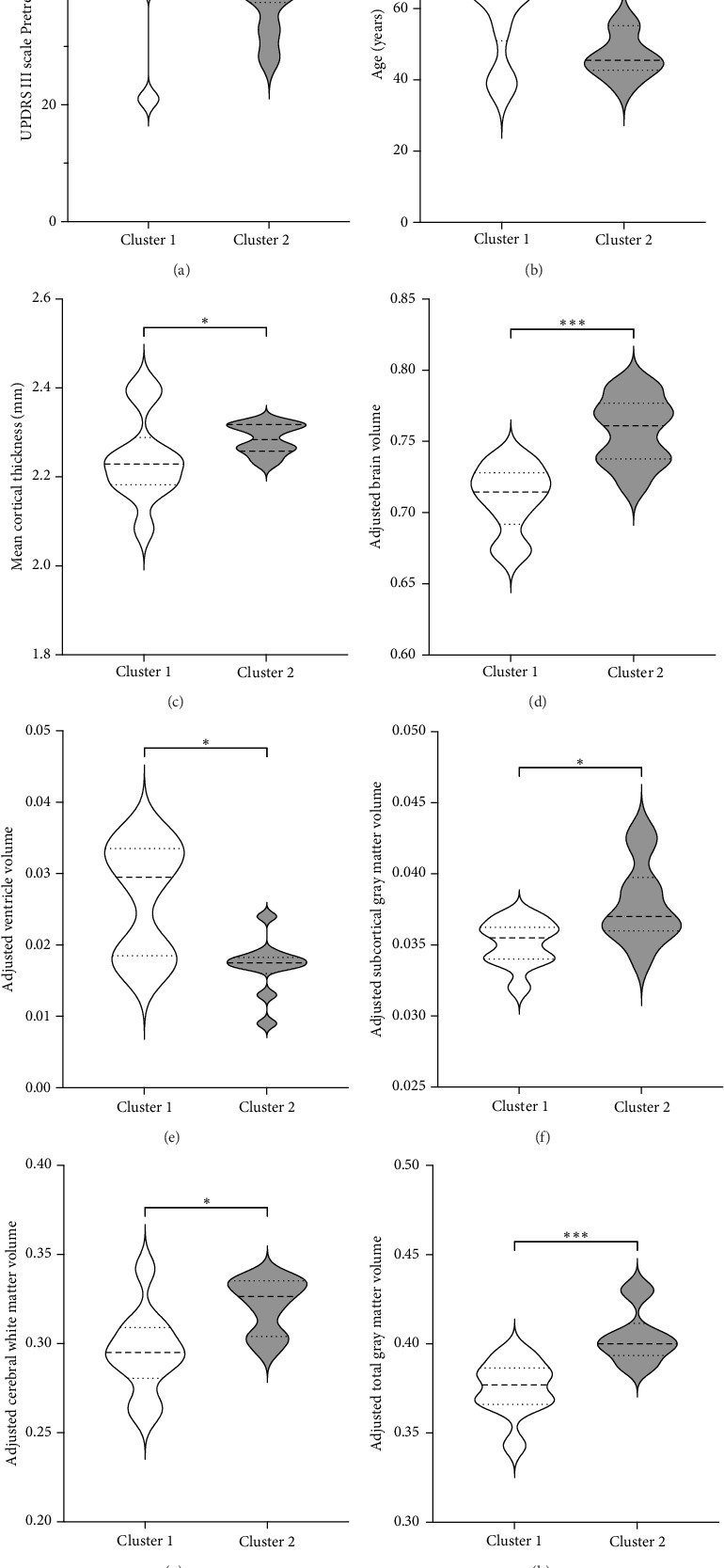 Figure 3
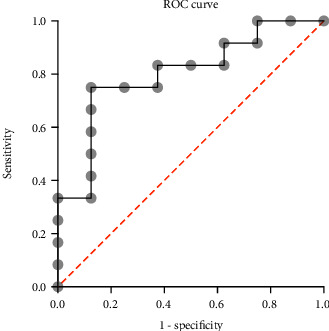 Figure 4
Peer Reviews
No public reviews on file for this paper yet. If you reviewed it on a platform where reviews are public (OpenReview, ICLR, NeurIPS, ICML), you can paste yours below so the community can read it here.
Videos
No videos yet. Explain this paper in a talk, walkthrough, or lecture? Add one.
Taxonomy
TopicsParkinson's Disease Mechanisms and Treatments · Neurological disorders and treatments · Botulinum Toxin and Related Neurological Disorders