Burden of Treatment in Children and Adolescents With Type 1 Diabetes Evaluated by Focus Groups
Sophie Le Fur, Iva Gueorguieva, Kevin Perge, Fatiha Guémazi, Nathalie Frament, Natacha Bouhours-Nouet, Berthe Razafimahefa, Pascale Trioche-Eberschweiler, Ramona Nicolescu, Patricia Pigeon-Kherchiche, Fabienne Dalla Vale, Claire Rodet, Alice Bonin, Nadège Bourvis

TL;DR
This study identifies the treatment burdens faced by children and teens with type 1 diabetes through focus groups, revealing key concerns that could improve treatment adherence and quality of care.
Contribution
The study introduces a new method to quantify treatment burden using focus group-derived concerns specific to pediatric type 1 diabetes patients.
Findings
3640 verbatim statements were analyzed to extract 24 main concerns about treatment burden.
Concerns were categorized into physical/material/care organization (15) and psychological (9) types.
Gender significantly influenced the concerns expressed (p=0.002).
Abstract
Objective: Taking into account the burden of treatment (BOT) should favor psychological fulfillment and adherence of young patients to treatment, which largely determines the quality of type 1 diabetes (T1D) control. To identify BOT components, the Ariane study carried out a focus group survey among 84 children and adolescents with T1D aged 12.6 ± 3.7 years. Research Design and Methods: Focus groups were organized in 10 pediatric diabetes centers, a qualitative research method that brings together a small group of patients to express their perception of treatment and answer questions in a moderated nonmedical setting. Results: A total of 3640 verbatim voicing children's concerns were recorded, transcribed, and analyzed by five working groups composed of pediatric diabetologists, specialized nurses, adults with childhood-onset T1D, and two groups from the civil society. Each group…
Genes, proteins, chemicals, diseases, species, mutations and cell lines named across the full text — each resolved to its canonical identifier and authoritative record.
Click any figure to enlarge with its caption.
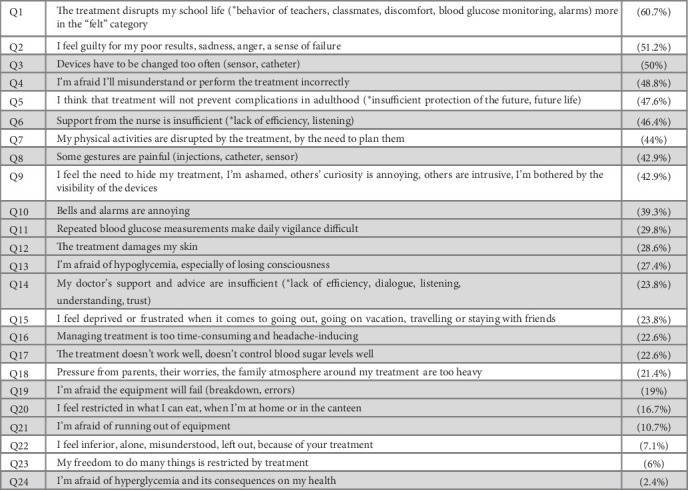 Figure 1
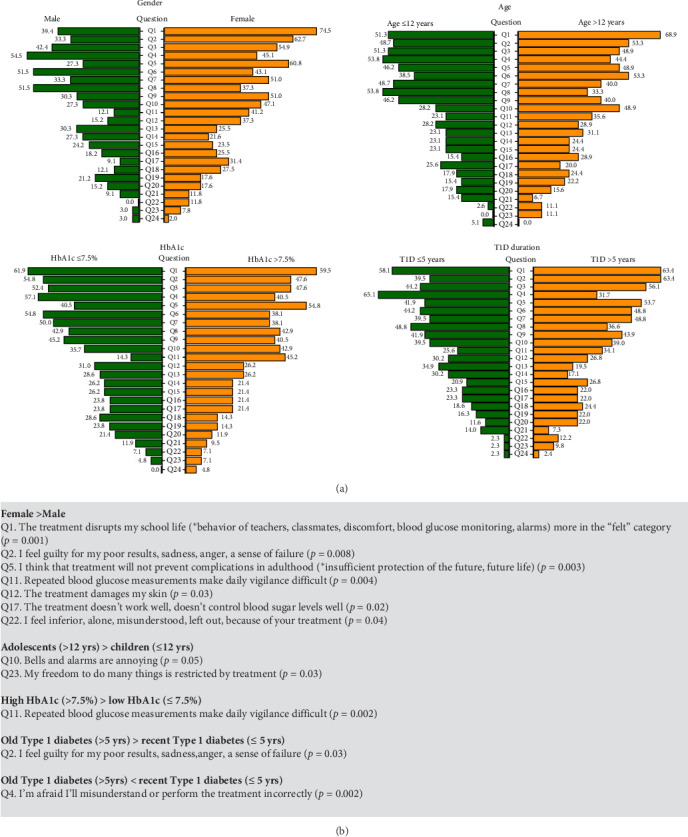 Figure 2
Peer Reviews
No public reviews on file for this paper yet. If you reviewed it on a platform where reviews are public (OpenReview, ICLR, NeurIPS, ICML), you can paste yours below so the community can read it here.
Videos
No videos yet. Explain this paper in a talk, walkthrough, or lecture? Add one.
Taxonomy
TopicsDiabetes Management and Research · Adolescent and Pediatric Healthcare · Pharmaceutical studies and practices