Transmission routes of cluster 3 Tembusu virus in ducks and chickens
Luzhao Li, Dawei Yan, Dun Shuo, Xiaona Shi, Minghao Yan, Chunxiu Yuan, Qiaoyang Teng, Bangfeng Xu, Xue Pan, Monique M. van Oers, Qinfang Liu, Gorben P. Pijlman, Zejun Li

TL;DR
This study shows how a new strain of Tembusu virus spreads in ducks and chickens, highlighting the role of mosquitoes and direct contact in transmission.
Contribution
The study provides first-time laboratory evidence of mosquito-mediated TMUV transmission and clarifies species-specific transmission routes.
Findings
TMUV SD infects both ducks and chickens, but only ducks shed the virus through throat and cloacal swabs.
Direct transmission occurs in ducks without mosquitoes, but chickens require mosquitoes for transmission.
Viral excretion through respiratory and digestive tracts is critical for TMUV's direct contact transmission.
Abstract
Tembusu virus (TMUV) is an emerging mosquito-borne flavivirus, primarily transmitted by Culex spp. mosquitoes. The 2010 outbreak of TMUV in ducks revealed that the virus had acquired direct contact and aerosol transmission routes, enabling its rapid spread in duck farms. Recently, cluster 3 TMUV has increasingly been isolated from chickens, ducks and geese. In this study, we examined the pathogenicity and transmission routes of the cluster 3 TMUV Shandong 2021 (SD) strain in ducks and chickens. Our results show that TMUV SD can infect both species, but only in ducks could TMUV be detected in throat and cloacal swabs. In ducks, the virus can spread without mosquito involvement to co-housed naïve birds, demonstrating direct transmission capability. Conversely, no virus shedding and direct transmission were observed in chickens, suggesting that mosquitoes are required for virus…
Genes, proteins, chemicals, diseases, species, mutations and cell lines named across the full text — each resolved to its canonical identifier and authoritative record.
Click any figure to enlarge with its caption.
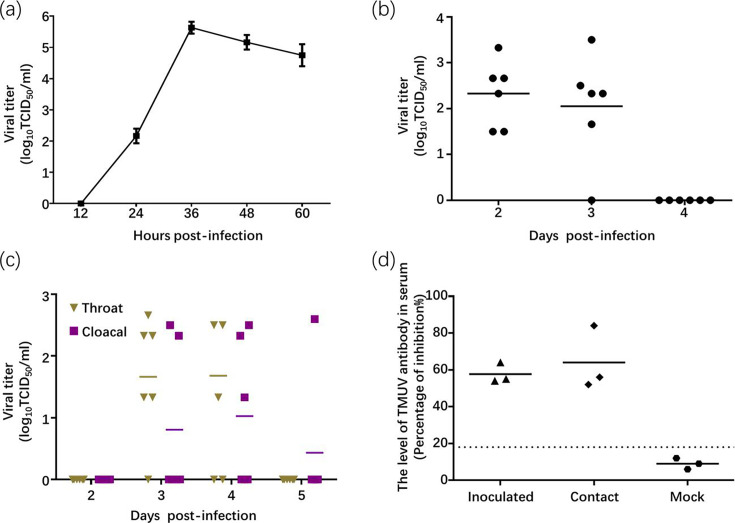 Figure 1
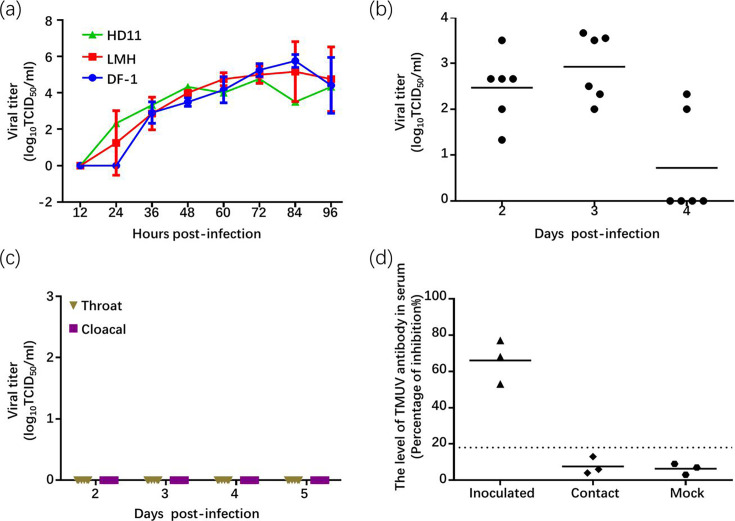 Figure 2
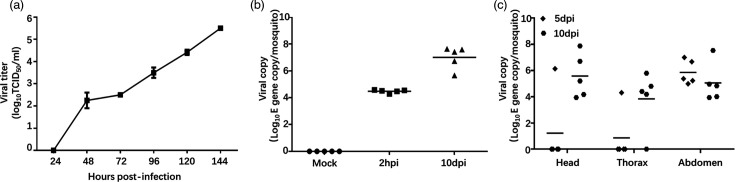 Figure 3
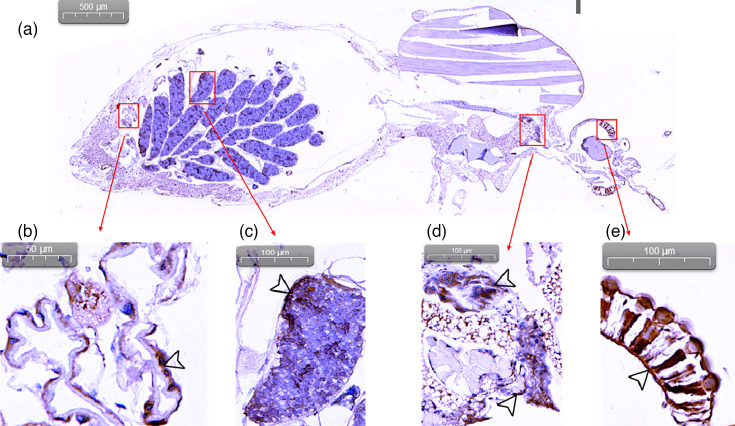 Figure 4
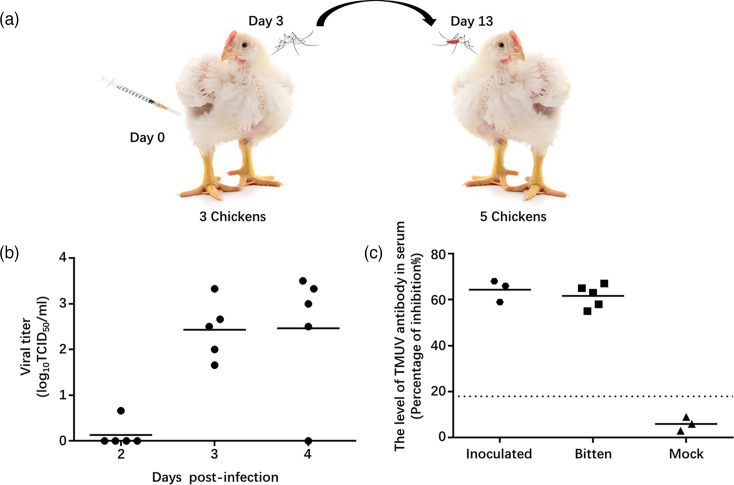 Figure 5
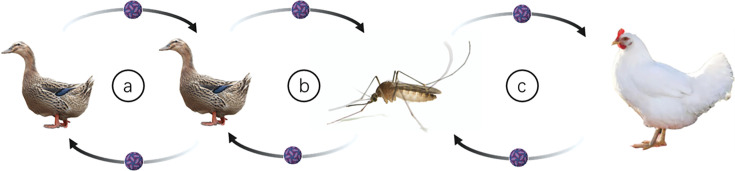 Figure 6
Peer Reviews
No public reviews on file for this paper yet. If you reviewed it on a platform where reviews are public (OpenReview, ICLR, NeurIPS, ICML), you can paste yours below so the community can read it here.
Videos
No videos yet. Explain this paper in a talk, walkthrough, or lecture? Add one.
Taxonomy
TopicsMosquito-borne diseases and control · Viral Infections and Vectors · Insect symbiosis and bacterial influences