A Rare Case of Co-existent Superior Semicircular Dehiscence and Sigmoid Sinus Plate Dehiscence Contributing to Pulsatile Tinnitus
Mounika Reddy Y., Anoop Kumar Pandey

TL;DR
This paper presents a rare case where two ear-related conditions together caused pulsatile tinnitus in a patient.
Contribution
The novelty lies in identifying and reporting the coexistence of two specific dehiscence conditions contributing to pulsatile tinnitus.
Findings
A 40-year-old woman had pulsatile tinnitus caused by superior semicircular canal dehiscence.
She also had sigmoid sinus plate dehiscence, which contributed to her symptoms.
Thorough clinical and radiological evaluation is crucial for diagnosing multiple causes in PT cases.
Abstract
Pulsatile tinnitus (PT) is an uncommon but often debilitating symptom, frequently associated with vascular etiologies, tumors, or structural abnormalities of the temporal bone. We present the case of a 40-year-old woman diagnosed with concurrent unilateral superior semicircular canal dehiscence (SSCD) and sigmoid sinus plate dehiscence (SSPD), both contributing to her symptoms. This case highlights the critical role of thorough clinical and radiological assessment in detecting multiple coexisting etiologies in patients with PT.
Genes, proteins, chemicals, diseases, species, mutations and cell lines named across the full text — each resolved to its canonical identifier and authoritative record.
Click any figure to enlarge with its caption.
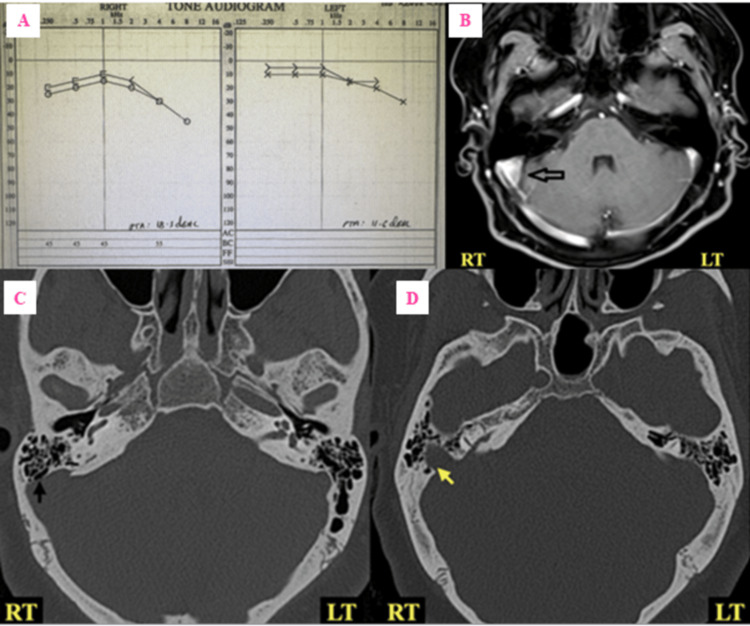 Figure 1
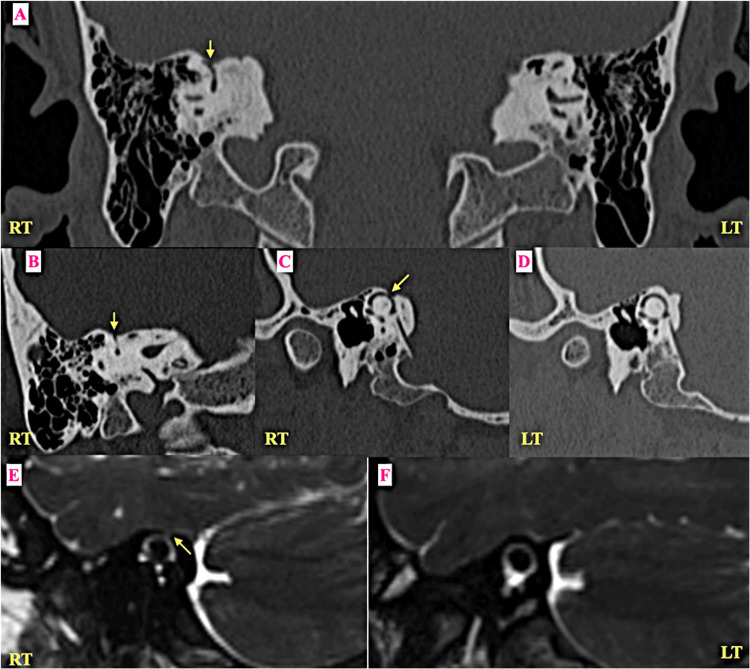 Figure 2
Peer Reviews
No public reviews on file for this paper yet. If you reviewed it on a platform where reviews are public (OpenReview, ICLR, NeurIPS, ICML), you can paste yours below so the community can read it here.
Videos
No videos yet. Explain this paper in a talk, walkthrough, or lecture? Add one.
Taxonomy
TopicsVestibular and auditory disorders · Cerebral Venous Sinus Thrombosis · Ophthalmology and Eye Disorders