Utilizing enantiomerically pure organic spacers for anion-centred clusters in a hybrid inorganic–organic lead-halide crystal
Markus W. Heindl, Joachim Ballmann, Felix Deschler

TL;DR
A new chiral material with a layered structure was synthesized using enantiomerically pure precursors to form bromide-centered clusters.
Contribution
The use of enantiomerically pure precursors to form anion-centered clusters without bi-functional spacers is novel.
Findings
The material (S-2AH)4[Pb2Br7]Br has a chiral, quasi-2D structure confirmed by single crystal X-ray diffraction.
Anion-centered clusters are formed in the organic layer due to the steric properties of enantiomerically pure precursors.
Abstract
In this work, we present structural data of the novel, chiral material (S-2AH)4[Pb2Br7]Br obtained from single crystal X-ray diffraction (SCXRD). This quasi-2D material displays anion-centred clusters within its organic layer, without the need for bi-functional spacers. Instead, the structure is based on the steric properties of the used enantiomerically pure precursors. We report the synthesis and structure of the novel, chiral material (S-2AH)4[Pb2Br7]Br with a layered structure. Through the use of enantiomerically pure precursors, bromide-centered clusters within the non-polar, organic spacer layer are formed.
Genes, proteins, chemicals, diseases, species, mutations and cell lines named across the full text — each resolved to its canonical identifier and authoritative record.
Click any figure to enlarge with its caption.
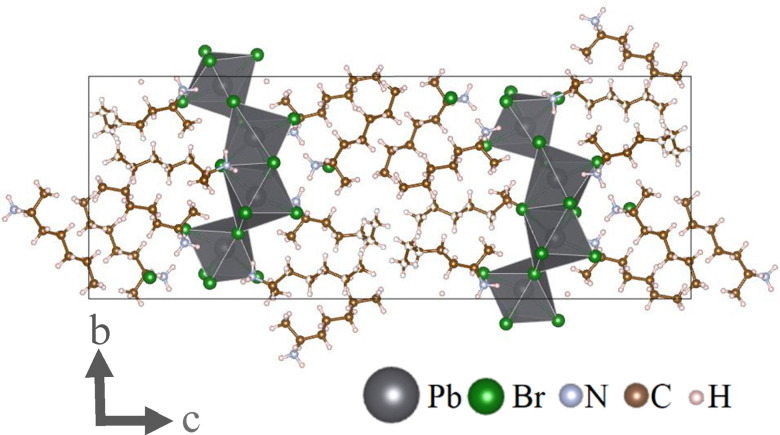 Figure 1
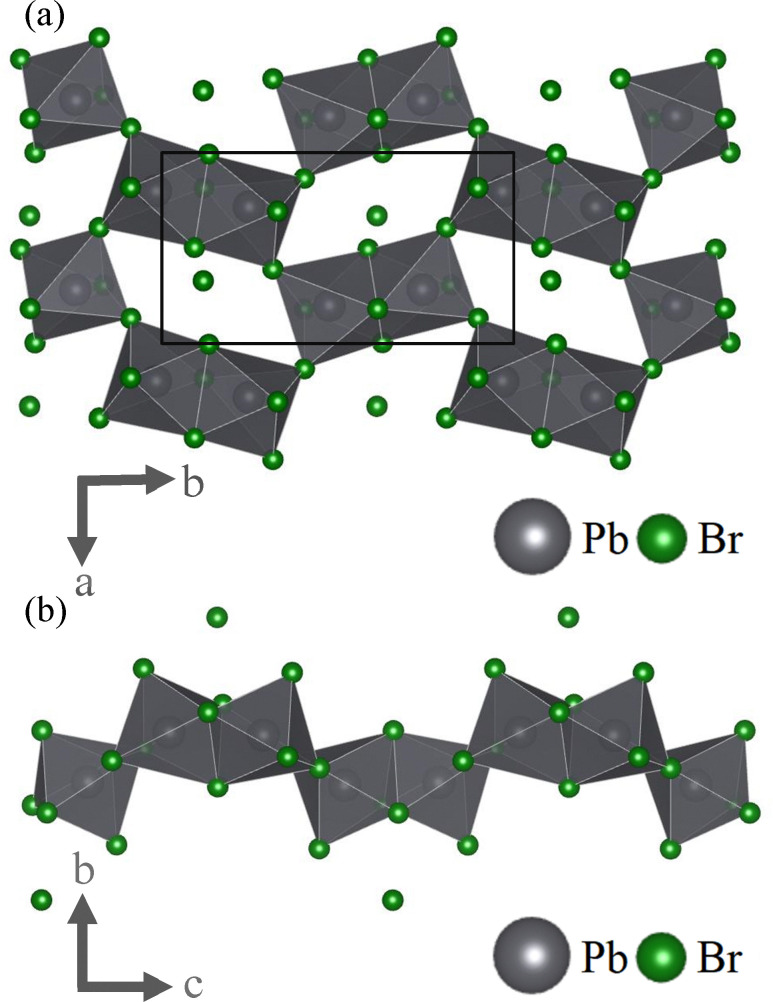 Figure 2
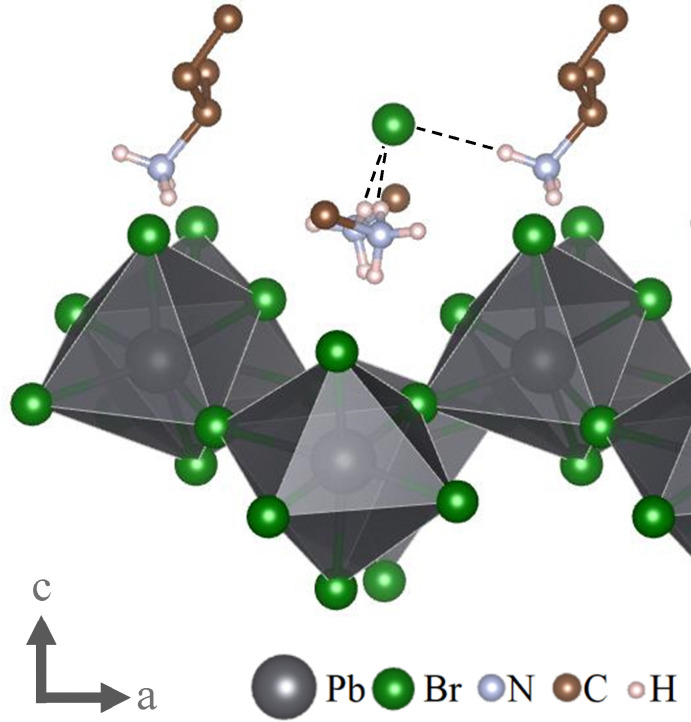 Figure 3
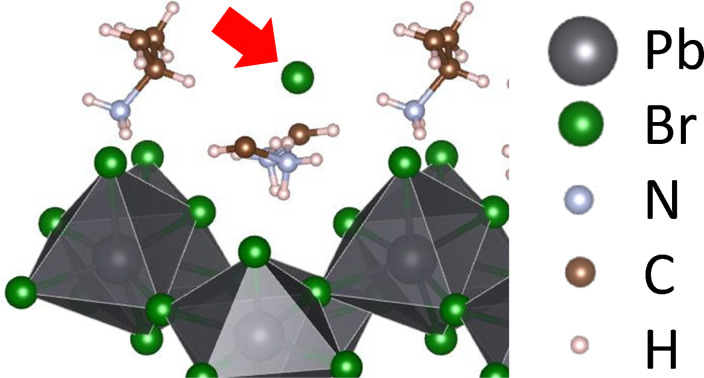 Figure 4
Peer Reviews
No public reviews on file for this paper yet. If you reviewed it on a platform where reviews are public (OpenReview, ICLR, NeurIPS, ICML), you can paste yours below so the community can read it here.
Videos
No videos yet. Explain this paper in a talk, walkthrough, or lecture? Add one.
Taxonomy
TopicsPerovskite Materials and Applications · Solid-state spectroscopy and crystallography · Crystal Structures and Properties